Tag Archives: Cobh

Titanic Chronology-Titanic Arrives Queenstown & First Days at Sea (11 – 13 April 1912)

Roches Point Lighthouse Cobb, Ireland (2017)
Photo: Larry Mills
Wikimedia Commons (Originally from Flickr)

At 11:30 am Titanic arrived at Cork Harbour on the south coast of Ireland. Cork Harbour is a both a natural harbour and river estuary of the River Lee. Considered one of the larger natural harbours in the world, it has been used as a working port for centuries. Roches Point Lighthouse would have been seen by Titanic. The lighthouse has been there since 1817 but was rebuilt in 1835 as it was too small. The lighthouse is operational to this day but was automated in 1995 and its surrounding buildings auctioned off.

The day was warm but with a brisk wind with some clouds in the sky. Queenstown (known today as Cobh) would be Titanic’s last European stop before heading across the Atlantic. Lacking facilities to dock a ship of its size, tenders brought passengers and their belongings to Titanic. 123 passengers would board at Queenstown: 3 First Class passengers, 7 Second Class passengers, and 113 Third Class. 7 people would disembark including Fr. Francis Browne, S.J. who as an avid photographer took photos of the ship while he was aboard. His photos, which became famous after the sinking, give us a glimpse of that unique world. Kate Odell, another cross-channel passenger who got off in Queenstown, also took some photos as well.

Titanic’s passengers on the A-Deck’s aft promenade: the six-year-old Robert Douglas Speden, throwing a spinning top, under the watchful eye of his father, Frederick.
11 April 1912
Taken by Father Browne, SJ
Public Domain via Wikimedia Commons

At 1:30 pm Titanic weighed anchor and departed Queenstown to complete her maiden voyage. A few rare photographs of her in port and departing have been found. Sadly, they would be the last photographs of RMS Titanic ever taken in 1912.

Titanic Leaving Queenstown 11 April 1912. Believed to be the last photograph of ship before it sank. Taken by Kate Odell as she disembarked off Queenstown (now Cobh), Ireland, April 11, 1912
Public Domain

Once Titanic pulled out to sea and enroute to New York, people aboard the ship settled into familiar patterns. Mealtimes were a time to meet your fellow travelers. While First and Second Class could mingle, Third Class was restricted to their area. Everyone was provided three meals a day though First-Class passengers had access to the A la Carte restaurant. Titanic and its sister ship Olympic provided ample food portions for the passengers. A dedicated crew of food professionals made sure each mealtime was an event. Many went on walks around the deck to work off their meals. Or they could make use of the exercising equipment aboard Titanic.

Titanic gym on 11 April 1912. Instructor McCawley demostrates the rowing machine. William Parr test another piece of the equipment.
11 April 1912
Photo: Father Francis Browne, SJ
Public Domain via Wikimedia Commons

The gymnasium was quite impressive with punching bags, cycle racing machines (stationary bikes), electric horse and camel, and a squash court. Many enjoyed the mechanical rowing machine and the Turkish bath. For those wanting to swim, there was a heated saltwater pool on Deck F but accessible only to First Class passengers. The pool was six feet deep and only thirty feet long and fourteen feet wide making it small by standards today. There was a small fee to pay to use the pool (which came with a bathing suit) but children were not allowed.

There was also an electric bath one could use, if you were brave enough. Today it would be more like a tanning bed. It was a wooden stand with a green sheet metal cabinet lid that had ultraviolet lights in it. An attendant would open the lid, the person would lie down, and the lid would be closed. A timer was set for thirty minutes and then you would get out; staying too long was considered hazardous. A similar one was also on Olympic. It certainly took courage to get inside essentially what was an iron lung.

Sources

Archbold, Rick, and Dana McCauley. Last Dinner on the Titanic Menus and Recipes From the Great Liner. Hachette Books, 1997.

Behe, George TITANIC: SAFETY, SPEED AND SACRIFICE, Transportation Trails, Polo, IL 1997

Behe, G. (2012). On board RMS Titanic: Memories of the Maiden Voyage. The History Press.

Brewster, H. (2013). Gilded Lives, Fatal Voyage: The Titanic’s First-Class Passengers and Their World. National Geographic Books.

Cameron, Stephen. Titanic: Belfast’s Own. Colourpoint, 2011.

Eaton John P. & Haas Charles, TITANIC TRIUMPH AND TRAGEDY, SECOND EDITION, W.W. Norton & Company, New York, New York, 1995 First American Edition

Fitch, Tad, J. Kent Layton, and Bill Wormstedt. On a Sea of Glass: The Life & Loss of the RMS Titanic. Reprint. Amberley Publishing, 2015.

Lord, Walter

A NIGHT TO REMEMBER, Holt Rinehart and Winston, New York, New York, 1955. Multiple revisions and reprints, notably Illustrated editions (1976,1977,1978 etc.)

THE NIGHT LIVES ON, Willian Morrow and Company, New York, New York, 1986 (First Edition)

Lynch, Don & Marshall Ken, TITANIC AN ILLUSTRATED HISTORY, Madison Press Books, Toronto, Ontario Canada, 1992

Internet

“The Titanic: Sinking & Facts | HISTORY.” HISTORY. Last modified March 26, 2026. https://www.history.com/articles/titanic.

“Encylopedia Titanica.” https://www.encyclopedia-titanica.org/.

“RMS Titanic – the Radio Officers Association.” https://radioofficers.com/archives/rms-titanic/.

“Titanic Facts • 1,000+ Fascinating Facts and Figures,” Titanic Facts, last modified October 7, 2023, https://titanicfacts.net/.

Titanic Chronology:Titanic Arrives Queenstown (Cobh) 11 April 1912

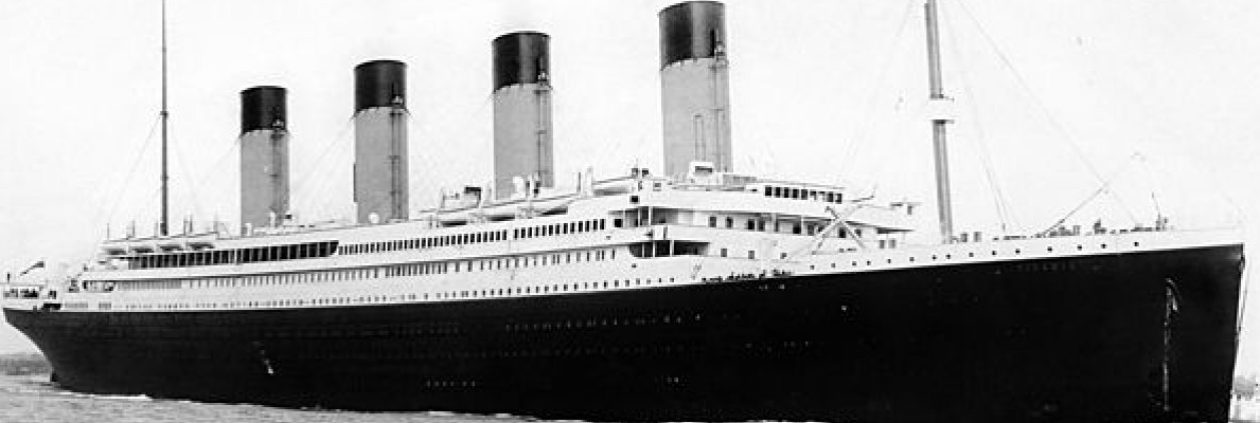
RMS Titanic pictured in Queenstown, Ireland 11 April 1912
Source:Cobh Heritage Centre, Cobh Ireland/Wikimedia Commons

Titanic arrives in Queenstown (now Cobh) Ireland at 11:30 am at Roches Point, the outer anchorage of Queenstown Harbor. Tenders PS Ireland and PS America would transport passengers from the White Star Line pier to the ship. The tenders also picked up mail bags at Deepwater Quay that had been brought in by train. 123 passengers embarked from Queenstown. Of the 123, three were first class, seven second class, and the remaining third class (called steerage back then). One of those disembarking was Francis Brown (later Father Brown, SJ) with his camera and photos of life aboard ship. Titanic departed at 1:30 pm for New York.


Sources:

Books

Behe, George TITANIC: SAFETY, SPEED AND SACRIFICE, Transportation Trails, Polo, IL 1997

Eaton John P. & Haas Charles, TITANIC TRIUMPH AND TRAGEDY, SECOND EDITION, W.W. Norton & Company, New York, New York, 1995 First American Edition

Lord, Walter, A NIGHT TO REMEMBER, Holt Rinehart and Winston, New York, New York, 1955. Multiple revisions and reprints, notably Illustrated editions (1976,1977,1978 etc)

Lord, Walter, THE NIGHT LIVES ON, Willian Morrow and Company, New York, New York, 1986 (First Edition)

Lynch, Don & Marshall Ken, TITANIC AN ILLUSTRATED HISTORY, Madison Press Books, Toronto, Ontario Canada, 1992

Internet

Britannica.com
Cobh Heritage Center
Encyclopedia Titanica
History.com

,,,

Titanic Chronology:Titanic Arrives Queenstown (Cobh) 11 April 1912

RMS Titanic pictured in Queenstown, Ireland 11 April 1912
Source:Cobh Heritage Centre, Cobh Ireland/Wikimedia Commons

Titanic arrives in Queenstown (now Cobh) Ireland at 11:30 am at Roches Point, the outer anchorage of Queenstown Harbor. Tenders PS Ireland and PS America would transport passengers from the White Star Line pier to the ship. The tenders also picked up mail bags at Deepwater Quay that had been brought in by train. 123 passengers embarked from Queenstown. Of the 123, three were first class, seven second class, and the remaining third class (called steerage back then). One of those disembarking was Francis Brown (later Father Brown, SJ) with his camera and photos of life aboard ship. Titanic departed at 1:30 pm for New York.


Sources:

Books

Behe, George TITANIC: SAFETY, SPEED AND SACRIFICE, Transportation Trails, Polo, IL 1997

Eaton John P. & Haas Charles, TITANIC TRIUMPH AND TRAGEDY, SECOND EDITION, W.W. Norton & Company, New York, New York, 1995 First American Edition

Lord, Walter, A NIGHT TO REMEMBER, Holt Rinehart and Winston, New York, New York, 1955. Multiple revisions and reprints, notably Illustrated editions (1976,1977,1978 etc)

Lord, Walter, THE NIGHT LIVES ON, Willian Morrow and Company, New York, New York, 1986 (First Edition)

Lynch, Don & Marshall Ken, TITANIC AN ILLUSTRATED HISTORY, Madison Press Books, Toronto, Ontario Canada, 1992

Internet

Britannica.com
Cobh Heritage Center
Encyclopedia Titanica
History.com

,,,


Titanic News-Laughter on Titanic, The Man who Had the Key to Titanic Binoculars, Titanic Tour

Titanic Exhibition: The Londoner And The Captain Who Were Seized By Fits Of Giggles After The Ship Hit An Iceberg (MyLondon. 13 Nov 2021)

We’re so used to hearing tales of doom and tragedy about the sinking of the Titanic that’s it’s surprising to find a funny story about it. As a major exhibition prepares to open in London next year at an as-yet-undisclosed location to mark the 110th anniversary of the 1912 tragedy, MyLondon is investigating the lives of the Londoners who were aboard the ill-fated ship. In the process, MyLondon came across the rather incredible yet touching story of the 22-year-old signalman who was cracking up in fits of laughter while sending SOS signals from the freezing ship.

==

Seaman Blamed for Sinking Titanic Was A TRUE Hero: Bravery Medals Of Officer Who Unwittingly Pocketed Key For Binoculars Cabinet Before Disembarking Doomed Ship Are Set To Fetch £15,000 At Auction (Daily Mail, 12 Nov 2021)

He’s infamous as the sailor who was blamed by some for the sinking of the Titanic, but the collection of medals which belonged to David Blair reveal his true heroism. In his haste to disembark, however, he forgot to leave a key which was needed in the crow’s nest to access binoculars and a telescope. As such, Blair is known to history for his unwitting part in the sinking – but the officer had in fact won a series of prestigious medals for his bravery and military service. Roughly a year after the Titanic sank, Aldridge was serving as first officer on the SS Majestic – another White Star ocean liner – when he swam to the rescue of a drowning man who had thrown himself overboard. For his bravery, King George V awarded Blair a Sea Gallantry Medal at Buckingham Palace. He earned further medals during the First World War, when he served with distinction in the navy.

==

Travel: Titanic Tour Offers a Tale Of Two Irish Ports Linked By Tragic Ship (The Sunday Post, 12 Nov 2021)

The Titanic Centre in Belfast is one of the island’s most popular attractions. Located next to the Titanic slipways and the former shipyard Drawing Offices, the centre is at the heart of where the Titanic was planned, designed, built and launched. It took Belfast a long time to come to terms with the Titanic’s fate. The Titanic Centre was opened to mark the centenary of the sinking. The long gestation was due to a mixture of shame and embarrassment surrounding the ship’s tragic end. For a long time, the city’s tour guides quipped “she was all right when she left here” but ultimately it was realised that other cities around the world such as Halifax, Nova Scotia and Orlando, Florida were telling a story, through exhibitions, that could really only be told properly in Belfast.


Titanic Chronology:Titanic Arrives Queenstown (Cobh) 11 April 1912

RMS Titanic pictured in Queenstown, Ireland 11 April 1912
Source:Cobh Heritage Centre, Cobh Ireland/Wikimedia Commons

Titanic arrives in Queenstown (now Cobh) Ireland at 11:30 am at Roches Point, the outer anchorage of Queenstown Harbor. Tenders PS Ireland and PS America would transport passengers from the White Star Line pier to the ship. The tenders also picked up mail bags at Deepwater Quay that had been brought in by train. 123 passengers embarked from Queenstown. Of the 123, three were first class, seven second class, and the remaining third class (called steerage back then). One of those disembarking was Francis Brown (later Father Brown, SJ) with his camera and photos of life aboard ship. Titanic departed at 1:30 pm for New York.

Sources:

Books

Behe, George TITANIC: SAFETY, SPEED AND SACRIFICE, Transportation Trails, Polo, IL 1997

Eaton John P. & Haas Charles, TITANIC TRIUMPH AND TRAGEDY, SECOND EDITION, W.W. Norton & Company, New York, New York, 1995 First American Edition

Lord, Walter, A NIGHT TO REMEMBER, Holt Rinehart and Winston, New York, New York, 1955. Multiple revisions and reprints, notably Illustrated editions (1976,1977,1978 etc)

Lord, Walter, THE NIGHT LIVES ON, Willian Morrow and Company, New York, New York, 1986 (First Edition)

Lynch, Don & Marshall Ken, TITANIC AN ILLUSTRATED HISTORY, Madison Press Books, Toronto, Ontario Canada, 1992

Internet

Britannica.com
Cobh Heritage Center
Encyclopedia Titanica
History.com

,,,


Welcome to June

Why Titanic’s First Call For Help Wasn’t An SOS Signal (National Geographic, 28 May 20)

But by 1912 when Titanic sailed, there was another, competing distress signal on the scene: “SOS.” There’s a common misnomer that the distress call is short for “Save Our Ship” or “Save Our Souls,” but the letters didn’t stand for anything—it was an adaptation of an existing German radio call. The signal consisted of three dots, three dashes, and another three dots—simple to tap out in Morse code during an emergency and easy to understand, even in poor conditions. An international group including the United Kingdom had ratified SOS as the official international distress signal four years earlier in 1908, but British and Marconi telegraph operators took their time adopting the new signal. (The United States, which resisted early international radio regulation, did not initially sign on to the SOS agreement.)

Cork Historian Teams Up With US Company To Bring Titanic Trail Online (EchoLive.ie, 27 May 20)

Acclaimed historian and lifelong Titanic researcher, Dr Michael Martin is collaborating with American travel experiences company Walks to provide an online tour of Cobh, the Titanic’s last port of call. The Titanic Trail, established in 1998 by Dr Martin is a daily guided walking tour that explores the heritage of Cobh, providing an insight into the maritime, military and social heritage of the town and harbour.  The renowned tour is now going online for a limited time as part of Walks ‘Spotlight Series’ With many walking tours affected as a result of Covid-19, the Spotlight Series brings fascinating tours online, which people can enjoy from the comfort of their own home. 

Bouquet of beautiful red roses
Davidjose365, May 2015
Wikimedia Commons

June is the sixth month on both the Gregorian and Julian calendars. June has the summer solstice in the Northern Hemisphere and the winter solstice in the Southern Hemisphere. Traditionally this is on June 21 but that can vary each year.  Ancient Romans thought the period from Mid-March to Mid-June was a bad time to get married. June’s birthstones are the pearl, alexandrite and moonstone. The rose and honeysuckle are June flowers.

Titanic Chronology: 1 April – 12 April 1912

Poster Advertising Vinolia Otto Soap for Titanic
Image:Public Domain

1 April-Titanic’s sea trials postponed by bad weather.
2 April- 0600: Sea trials begin. Fire in boiler room six coal hold.
2000 (8.00 p.m.): Trials completed; Titanic returns to Southampton.
4 April-Titanic berths at Southampton around midnight.
10 April-Titanic departs Southampton at 12 noon. While departing,suction from propellers causes New York to break moorings.Collision is averted by tugs and extra speed from Titanic.
17:30 (5:30 p.m.): Arrival at Cherbourg, France. 274 passengers board including John Jacob Astor.22 passengers disembark.
20:30 (8:30 p.m.): Departs Cherbourg for Queenstown,(Cobh), Ireland.
11 April-11:30 (11:30 a.m.) Titanic arrives in Queenstown. 120 passengers board. Among those who depart Titanic is Francis Brown
(later Father Brown, SJ) with his camera and photos of life aboard ship.
13:30 (1:30 p.m.). Titanic departs Queenstown bound for New York with 2,206 passengers and crew.
12 April-Titanic travels 326 miles.

Titanic Chronology: 1 April – 12 April 1912

Poster Advertising Vinolia Otto Soap for Titanic Image:Public Domain
Poster Advertising Vinolia Otto Soap for Titanic
Image:Public Domain

1 April-Titanic’s sea trials postponed by bad weather.
2 April- 0600: Sea trials begin. Fire in boiler room six coal hold.
2000 (8.00 p.m.): Trials completed; Titanic returns to Southampton.
4 April-Titanic berths at Southampton around midnight.
10 April-Titanic departs Southampton at 12 noon. While departing,suction from propellers causes New York to break moorings.Collision is averted by tugs and extra speed from Titanic.
17:30 (5:30 p.m.): Arrival at Cherbourg, France. 274 passengers board including John Jacob Astor.22 passengers disembark.
20:30 (8:30 p.m.): Departs Cherbourg for Queenstown,(Cobh), Ireland.
11 April-11:30 (11:30 a.m.) Titanic arrives in Queenstown. 120 passengers board. Among those who depart Titanic is Francis Brown
(later Father Brown, SJ) with his camera and photos of life aboard ship.
13:30 (1:30 p.m.). Titanic departs Queenstown bound for New York with 2,206 passengers and crew.
12 April-Titanic travels 326 miles.


Titanic Chronology: 1 April – 12 April 1912

Poster Advertising Vinolia Otto Soap for Titanic Image:Public Domain
Poster Advertising Vinolia Otto Soap for Titanic
Image:Public Domain

1 April-Titanic’s sea trials postponed by bad weather.
2 April- 0600: Sea trials begin. Fire in boiler room six coal hold.
2000 (8.00 p.m.): Trials completed; Titanic returns to Southampton.
4 April-Titanic berths at Southampton around midnight.
10 April-Titanic departs Southampton at 12 noon. While departing,suction from propellers causes New York to break moorings.Collision is averted by tugs and extra speed from Titanic.
17:30 (5:30 p.m.): Arrival at Cherbourg, France. 274 passengers board including John Jacob Astor.22 passengers disembark.
20:30 (8:30 p.m.): Departs Cherbourg for Queenstown,(Cobh), Ireland.
11 April-11:30 (11:30 a.m.) Titanic arrives in Queenstown. 120 passengers board. Among those who depart Titanic is Francis Brown
(later Father Brown, SJ) with his camera and photos of life aboard ship.
13:30 (1:30 p.m.). Titanic departs Queenstown bound for New York with 2,206 passengers and crew.
12 April-Titanic travels 326 miles.


Titanic’s Last Stop:Queenstown(now Cobh),Ireland

Cobh (formerly Queenstown) Ireland was the final stop for Titanic before setting off to New York. Titanic arrived on 11 April at 11:30 a.m and took on 120 passengers. One notable person to depart was Francis Brown (later Father Brown,SJ)whose photographs of the ship on its only sailing would become an important historical artifact.

Titanic at Cobh Harbor, 11 April 1912 Public Domain (Cobh Heritage Centre, Cobh, Ireland)
Titanic at Cobh Harbor, 11 April 1912
Public Domain (Cobh Heritage Centre, Cobh, Ireland)