Tag Archives: Marconi Wireless

Titanic Chronology-Titanic Final Day and Sinking (14-15 1912)

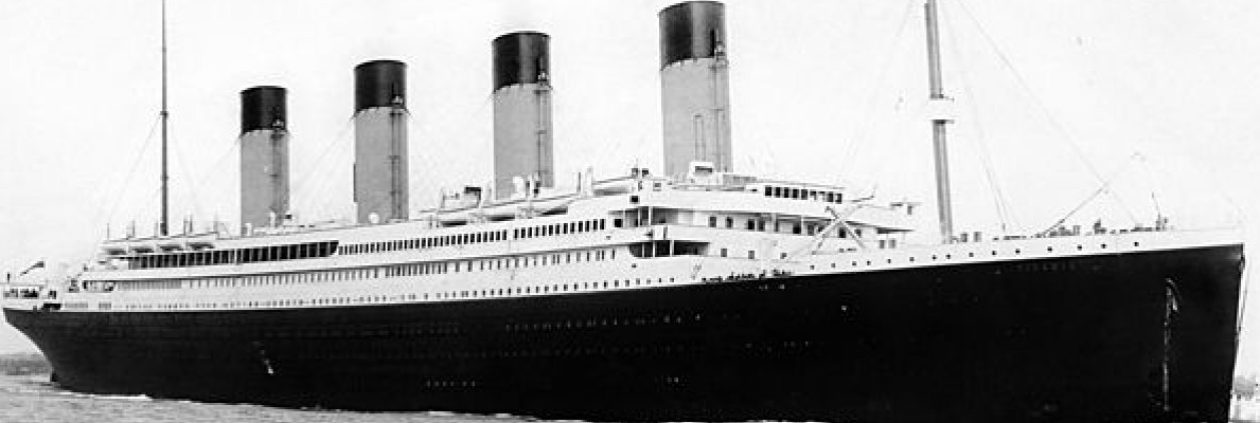
RMS Titanic pictured in Queenstown, Ireland 11 April 1912
Source:Cobh Heritage Centre, Cobh Ireland/Wikimedia Commons


Helen Candee awoke early on Sunday and went out on the deck to view the sunrise. She was not disappointed. This was to be the final day of the maiden voyage for tomorrow the ship would dock in New York. Little did anyone know that it would be the last sunrise Titanic would ever see.

At 10:30 am, a religious service was held in the First-Class dining room with a nice meal that followed for both First and Second class. On the bridge, ice warnings from other ships had been received but since such sightings were common, they were not of serious concern. No one had thought it serious enough to plot them. At noon the ship’s officers got together on the wing bridge to calculate Titanic’s position.

White Star liner Baltic reported at 1:42 pm of large quantities of ice providing coordinates. The message was delivered to Captain Smith who also showed the message to J. Bruce Ismay, chairman of the White Star Line. The SS Amerika spotted an iceberg at 1:45 and provided its coordinates. By afternoon, the temperature was falling fast and by 7:30 pm was 33F (1 C). Captain Smith ordered a course change to south and west around 5:50 pm possibly due to ice warnings.

RMS Olympic’s A la Carte Restaurant, located in B-Deck level. Circa May 1911
Robert John Welch (1859-1936), official photographer for Harland & Wolff
Public Domain/Wikimedia Commons

Meanwhile passengers enjoyed their last night on Titanic. Many survivors believe this was the best night of the trip. The food was exemplary and everyone was dressed in their finest clothes.  There was joyful celebration of their last night together on Titanic. On the bridge, Second Officer Charles Lightoller was going over a report from the California that reported three large icebergs that came in at 7:30 pm. Noting the drop in temperature to near freezing, he ordered the crew to watch the fresh water. Captain Smith returned to the bridge after dinner around 8:55 pm and conferred with Lightoller about the weather and icebergs. He then retired for the night advising Lightoller to awaken him “if becomes at all doubtful’. Lightoller at 9:30 pm advised the lookouts to watch for icebergs.

The only picture of the Marconi radio room onboard the Titanic. Harold Bride is seated at his station. Photo was taken by Father Francis Browne, SJ, while aboard Titanic.
Public Domain/Wikimedia Commons

Down in the Marconi telegraph office, Jack Phillips was busy handling heavy passenger traffic when a message for Mesaba came in warning about heavy pack ice and icebergs at 9:40 pm. The message never made it to the bridge, so they were unaware of it. First Officer William Murdoch relieved Lightoller at 10 pm. New lookouts took over as well, Frederick Fleet and Reginald Lee, who were advised to watch for icebergs. It was a moonless night with unusually calm seas, so they had to be especially alert for ice fields and icebergs. Unfortunately, the binoculars they should have had had been misplaced. By this time, the temperature had dropped to 31 F.

Public Domain

The captain of the SS Californian, Stanley Lord, decides to stop his ship for the night due to a large ice field in the way. The telegraph operator, Cyril Evans, sent out warnings to all ships in the area but Jack Phillips on Titanic sent back a blunt response: shut up. He was busy sending messages through Cape Race. Evans shut off his equipment and went to bed leaving the Californian with no wireless communications till morning. On Titanic, most were either asleep or heading to their cabins at 11 pm. Only a few were lingering over drinks, a card game, or reading. By 11:30 pm, around the time Cyril Evans went to bed, Titanic had settled in for the night.

Photograph of iceberg taken by chief steward of Prinz Adalbert on morning of 15 April 1912 near where Titanic sank. At the time he had not learned of the Titanic disaster. Smears of red paint along the base caught his attention. The photo and accompanying statement were sent to Titanic’s lawyers, which hung in their boardroom until the firm dissolved in 2002. Public Domain

Then just before 11:40 pm, the lookouts spotted an iceberg 500 feet away. Frederic Fleet rang the bell three times and calls the bridge telling Murdoch ‘Iceberg, right ahead.’ Titanic was going 21 knots (or slightly less) at the time. Murdoch ordered hard a starboard,” orders the engines stopped then full astern, and seals the watertight doors. Due to its size, Titanic had a larger turning radius, and this made it look like it would hit the iceberg dead on. Then it slowly veered to port making it appear the ship would pass the iceberg on the starboard side. Some speculate that it may have been a rare blue berg meaning it flipped over and was much larger underwater. The iceberg impacted on the starboard ship resulting in large and small punctures as it scraped the ship. Captain Smith came to the bridge to determine what happened learning they had struck an icebox. At first the damage reports seemed okay then it turned ominous with reports of water in the mailroom and other areas of the ship. Thomas Andrews assesses the damage himself and reports to Captain Smith that the ship is doomed. He tells Smith that the forward five compartments had been compromised and water is coming in. With water pulling the ship down at the bow, there was no way to prevent sinking. Titanic could stay afloat with one or two taking water but not all five at the same time.

Titanic Captain Edward J Smith, 1911
Author unknown. Published after sinking in 1912
Public Domain/Wikipedia Commons

For Captain Edward J. Smith, who had an illustrious career and set to retire after this voyage, this was a major shock. Unlike what has been dramatized, he had to be prodded by his officers to order lifeboats be lowered, muster the crew, and evacuate the passengers. Worse, despite having more than the required lifeboats per British Board of Trade regulations, it was still woefully short since the regulations were based on tonnage and not capacity. Of the 2,227 passengers and crew, only 1,178 would fit into them providing that they were filled completely to capacity. Wireless operators Jack Phillips and Harold Bride were ordered by Smith to send a distress call at 12:15 am. They first used the older one, CQD, and later switched to the newer one SOS. While many ships received the distress message, most were too far away to help. The SS Carpathia, about 58 miles away, received the distress call at 12:20 am. Harold Cottam quickly responded back to confirm the distress call and got the reply:

“Come at once. We have struck a berg. It’s a CQD, old man.”


Capt. Arthur H. Rostron, R.D., R.N.R, while serving as master of the Cunard liner RMS Carpathia in 1912
Public Domain via Wikimedia Commons

Cottam awakened Captain Arthur Rostron to inform him of the news. Rostron immediately gave out numerous orders to prepare the ship to take on survivors. And Carpathia quickly moved at high speed through the dangerous ice field in the hopes of getting there fast; they would arrive in three hours. However back on Titanic Andrews had told Smith that Titanic that the ship would sink in about 1 ½ hours to 2 hours making getting there before the ship sank impossible. Aboard Titanic, there was no central way to notify passengers, so stewards and others knocked on doors to rouse and inform them they had to put on life jackets and go topside. Many doubted they were in serious trouble and many of the staff did not know how dire the situation was. Up on deck, the crew had not any training–nor any drills–on how to operate the lifeboats. They required manual operation to be lowered into the water, and some were not sure if the davits were strong enough. And no one had told them that the lifeboats could carry 65 people, which is why some lifeboats that left could have taken on a lot more. Lightoller was strict in implementing the “women and children first “rule but seemed to interpret it meant no men could go aboard lifeboats (except for crew to steer it). However, on the other side of the ship, that rule was not carried out and many men boarded lifeboats there.

To try and get other ships in the area to respond, Titanic fired rockets. The crew on the Californian saw them but did not know its source nor did they investigate or awaken the wireless operator. They did think there was a ship that was ten miles away that appeared to be moving away, so it obviously was not in distress. Titanic tried using its Morse lamp as well but to no avail. Some believe it was a mirage while others wonder if it was an illegal Norwegian sealer, but that has never been confirmed. By 12:55 am lifeboats 5 and 6 were being lowered. Molly Brown was aboard Lifeboat 6 along with lookout Frederic Fleet and Quartermaster Robert Hitchens. Hitchens had been at the helm when Titanic hit the iceberg, and his testimony would prove valuable at the inquiries. However, his refusal to look for survivors would bring harsh criticism later.

Lifeboats 1 and 3 would be lowered around 1:00 am. Lifeboat 1, Emergency Cutter 1 has only 12 people (and can carry 40 people) while Lifeboat 3 has 39. Aboard Lifeboat 1 is Sir Cosmo Edmund-Duff Gordon and his wife, Lucy Duff-Gordon. She was a well-known British fashion designer known for innovative designs. Sir Cosmo handed out £5 notes to each of the crew aboard the lifeboat. Some argued later it was to keep others off the lifeboat. He strenuously denied the allegation and pointed out it was to help them replace lost clothing and gear. At 1:10 am Lifeboat 8 was lowered containing only 28 people that had aboard Noel, the Countess of Rothes. Both Isidor and Ida Straus were offered seats on the lifeboat but declined. Isidor, who had helped found Macy’s department store, believed only women and children should go first but Id did not want to leave her husband. She said famously: “Where you go, I go.” They would both perish when Titanic sank.

Lifeboat 9 launched at 1:20 am only had 30 people on it and was loaded by Purser Hugh McElroy and First Officer William Murdoch.  It had 30 people on it with 17 crew members, possibly stewards and cooks according to one survivor. Another account puts it between 35-40 with 12 ladies, 6-7 men passengers, and 18 male crew members. The mistress to Benjamin Guggenheim, Léontine Aubart, was on this lifeboat. He and his valet choose to dress properly and go down with the ship as gentleman. Lifeboat 10 is launched at 1:47 am had 57 people when it was launched but some transfers to other lifeboats brought it down to 50. Nine-week-old Milvina Deam was on this lifeboat. She along with her mother and brother would survive while her father died on Titanic. She became known later to many in the Titanic community living a long life dying at the age of 97 in 2009.

RMS Olympic Arrives In New York on Maiden Voyage, 21 June 1911
Source: U.S. Library of Commerce/Wikimedia Commons
Public Domain

Olympic received Titanic’s distress call but there was confusion because of many mixed signals and messages bouncing around; they did not know the severity of the disaster. They thought at one point Titanic was sailing towards them but got a quick message back they were putting women off in the lifeboats. They would learn of Titanic’s sinking later from Carpathia. Meanwhile on Titanic panic was setting in as it was obvious Titanic was sinking. Near Lifeboat 14 Fourth Officer Joseph Boxhall was forced to discharge his gun to calm things down, He would take command of Lifeboat 14 later transferring people to other boats so they could look for survivors. Lifeboats 13 and 15 are lowered but 15 starts drifting underneath the other lowering lifeboat. Quick action in 13 by crew averts disaster.

Sometime between 1:35 -1:40 am Lifeboat 16 and Collapsible C is lowered. White Star chairman J. Bruce Ismay is aboard C. Criticism that he boarded before women and children would haunt him after the sinking. He claimed that neither were around when he boarded C, so he boarded. Emergency Cutter 2 is lowered and not long afterwards Lifeboats 11 and 4. A pregnant Madeline Astor is aboard Lifeboat 4. John Jacob Astor did ask if he could join her, but Lightoller denied the request. By 2 am only the collapsible boats remain but Titanic was slowly rising in the stern with its propellers visible. Collapsible D was the only one successfully launched and would carry 20 in it. A is washed off the deck and fills partly with water while B falls and is swept off before it is righted. Before this Captain Smith has released the crew saying it is now “every man for himself.” Wireless operator Phillips sends the final distress signal at 2:17 am. He would get to Collapsible B but would die later from exposure and his body would never be recovered.

By 2 am only the collapsible boats remain. Titanic had sunk low enough that the stern propellers were visible. Collapsible lifeboat D is launched from the roof of the officer’s quarters and would have 20 people in it. Collapsible A is washed off the deck and partly filled with water. Fifth Officer Harold Lowe in lifeboat 14 finds only 12 of the 20 that got into it are alive. Collapsible B falls and is swept off before it can be righted. The now overturned lifeboats are used by 30 people including Lightoller and wireless operator Bride. At this point, Captain Smith releases the crew saying, “it’s every man for himself.” Smith was last seen on the bridge and his body was never recovered. Wireless operator Phillips sends the final distress signal at 2:17 am. He made it to collapsible lifeboat B but died from exposure. His body would not be recovered.

Meanwhile the ship was plunged into darkness as the power went off. People frantically ran to the stern. Some would jump into the water while others hoped that by some miracle they would be spared. It is around 2:18 am when Titanic, suffering tremendous strain midsection would break in two between the third and fourth funnels. The bow sank into the water and for a time the stern seemed to float on its own but slowly sank. Those remaining on the stern would just swim away since there was no suction. Then it too slowly began to rise becoming vertical and sink beneath the waves. By 2:20 am, Titanic was gone. J. Bruce Ismay turned away before this; he did not want to see Titanic sink. The cries of those in the water was a sound no one in the boats would ever forget. And would haunt many for the rest of their lives.

RMS Carpathia (date unknown)
Image: public domain

Carpathia would arrive in the area firing rockets to get attention at around 3:30 am. Lifeboat 2 was the first to reach the rescue ship. It would take several hours to pick up all the survivors. Ismay would send a message to the White Star Line office informing Titanic sank. He then would isolate himself in a cabin for the remainder of the voyage to New York. The Californian arrived on scene at around 8 am. Carpathia asked her to look for any bodies, but they would find none and depart. Meanwhile aboard Carpathia, they held a service for the four bodies they had recovered. They would see one more as they steamed around the area but did not pick it up. Before 9 am, Carpathia sounded its whistle and began steaming towards New York

Meanwhile the Carpathia’s purser compiled a list of the Titanic survivors, which Rostron ordered Cottam to transmit the list to Cape Race but due to the limited range of their transmitter, this could not be achieved. They could get signals from Cape Race but not send them back. Cottam was besieged with messages wanting information and Titanic survivors wanting to send messages as well. Harold Bride, the surviving Titanic wireless operator, assisted him so he could get sleep. Rostron allowed no communications with the press. Eventually they were able to use Olympic, which had a more powerful transmitter, to transmit the names of those who were aboard Carpathia.

Outside the White Star Line Office after Titanic Disaster, New York, April 1912.
Bain News Service, U.S. Library of Congress, digital id#ggbain 10352

In New York, bedlam had reigned. Due to mixed up messages, there were many false reports about Titanic. Some reports indicated all was well and people picked up by Olympic. People gathered outside the White Star Line offices in New York for information. Initially White Star was hopeful and believed Titanic was safe. But the New York Times realized communication from Titanic had stopped after 2:20 am and ran the story she had sunk. The message from Ismay from Carpathia ended all doubt; people wept. Titanic, the pride of the White Star Line, had sunk taking with her over 1,500 plus lives and only 705 survivors. Now they awaited the arrival of Carpathia.

Sources

Behe, George TITANIC: SAFETY, SPEED AND SACRIFICE, Transportation Trails, Polo, IL 1997

Behe, G. (2012). On board RMS Titanic: Memories of the Maiden Voyage. The History Press.

Ballard, Robert D. Exploring the Titanic. Reprint. Madison Press Books, 2014.

Ballard, Robert D., and Rick Archbold. The Discovery of the Titanic. New York, N.Y.?: Warner Books, 1987.

Ballard, Robert D., Lost Liners: From the Titanic to the Andrea Doria the Ocean Floor Reveals Its Greatest Lost Ships(Hyperion, 1998).

Brewster, H. (2013). Gilded Lives, Fatal Voyage: The Titanic’s First-Class Passengers and Their World. National Geographic Books.

Cameron, Stephen. Titanic: Belfast’s Own. Colourpoint, 2011.

Eaton John P. & Haas Charles, TITANIC TRIUMPH AND TRAGEDY, SECOND EDITION, W.W. Norton & Company, New York, New York, 1995 First American Edition

Fitch, Tad, J. Kent Layton, and Bill Wormstedt. On a Sea of Glass: The Life & Loss of the RMS Titanic. Reprint. Amberley Publishing, 2015.

Lord, Walter

A NIGHT TO REMEMBER, Holt Rinehart and Winston, New York, New York, 1955. Multiple revisions and reprints, notably Illustrated editions (1976,1977,1978 etc.)

THE NIGHT LIVES ON, Willian Morrow and Company, New York, New York, 1986 (First Edition)

Lynch, Don & Marshall Ken, TITANIC AN ILLUSTRATED HISTORY, Madison Press Books, Toronto, Ontario Canada, 1992

Titanic News Channel is a participant in the Amazon Services LLC Associates Program, an affiliate advertising program designed to provide a means for sites to earn advertising fees by advertising and linking to Amazon.com.

Titanic Chronology: Titanic Adds Crew (6 April 1912)

[This has been modified to correct inaccurate information about crew, add new details and information, and include newer sources]

The only picture of the Marconi radio room onboard the Titanic. Harold Bride is seated at his station. Photo was taken by Father Francis Browne, SJ, while aboard Titanic.
Public Domain/Wikimedia Commons

After journeying from Belfast to Southampton, the remaining crew needed for Titanic would be hired to approximately 908 crew and officers. Some members of the crew technically were not employees of White Star Line but accepted token payments to be under the command of Captain Smith. The two wireless operators, Harold Bride and Jack Phillips, were employees of Marconi. For ship organization purposes, they were made part of the Victualling Department as their service was not considered an essential to shop operation. The Titanic orchestra were employees of the Liverpool firm C.W. & F.N Black which provided musicians for many British liners. They were treated as second class passengers and thus had nicer accommodations on Titanic than on other ships.

A recent coal strike resulted in a severe shortage of coal. When the strike ended on 6 April, Titanic was in desperate need of coal to meet its sailing deadline on 10 April. Coal was transferred from other White Star ships forcing those ships to cancel their departures. Passengers on those ships were offered equivalent accommodations on Titanic. Some of the more notable persons effected was Titanic survivor Eva Hart. She and her parents were going to sail on the SS Philadelphia bound ultimately to Canada before the sailing was canceled. The Hart family was transferred to Titanic and traveled as Second Class passengers.

Many passengers planning to board Titanic in France were making their way to Cherbourg. John Jacob Astor and his wife Madeline had been celebrating their honeymoon in Egypt were now enroute along with famous artist Frank Millet. Sir Cosmo and Lady Duff Gordon, Molly Brown, and Benjamin Guggenheim were enroute as well.

Sources

Books

Behe, George TITANIC: SAFETY, SPEED AND SACRIFICE, Transportation Trails, Polo, IL 1997

Behe, G. (2012). On board RMS Titanic: Memories of the Maiden Voyage. The History Press.

Eaton John P. & Haas Charles, TITANIC TRIUMPH AND TRAGEDY, SECOND EDITION, W.W. Norton & Company, New York, New York, 1995 First American Edition

Lord, Walter

A NIGHT TO REMEMBER, Holt Rinehart and Winston, New York, New York, 1955. Multiple revisions and reprints, notably Illustrated editions (1976,1977,1978 etc.)

THE NIGHT LIVES ON, Willian Morrow and Company, New York, New York, 1986 (First Edition)

Lynch, Don & Marshall Ken, TITANIC AN ILLUSTRATED HISTORY, Madison Press Books, Toronto, Ontario Canada, 1992

Internet

———. “The Titanic: Sinking & Facts | HISTORY.” HISTORY. Last modified March 26, 2026. Accessed April 5, 2026. https://www.history.com/articles/titanic.

“RMS Titanic.” Encyclopedia Titanica. Accessed April 5, 2026. https://www.encyclopedia-titanica.org/titanic/.

Crump, Ian. “Nationwide Coal Strike Affected Southampton and RMS Titanic.” Daily Echo, August 3, 2025. https://www.dailyecho.co.uk/news/25333132.nationwide-coal-strike-affected-southampton-rms-titanic/.

Videos

Titanic: Honor & Glory, “Titanic’s Stay at Southampton – April 5th-9th, 1912,” Video, YouTube, April 9, 2025, https://www.youtube.com/watch?v=KifJCl3Phb0.

Titanic News Channel is a participant in the Amazon Services LLC Associates Program, an affiliate advertising program designed to provide a means for sites to earn advertising fees by advertising and linking to Amazon.com.

Titanic History: Titanic Adds Crew (6 April 1912)

The only picture of the Marconi radio room onboard the Titanic. Harold Bride is seated at his station. Photo was taken by Father Francis Browne, SJ, while aboard Titanic.
Public Domain/Wikimedia Commons

Titanic fills the remaining vacancies in ship’s crew. Coal and cargo also begin loading today

688 crew members would be aboard Titanic when it sailed. The wireless operators, Harold Bride and Jack Phillips, were actually employees of Marconi. For ship purposes, they were made part of the Victualling Department as they provided a service rather an essential operation. The ship’s orchestra were not employees of White Star but contracted from the Liverpool firm of C.W. & F.N. Black. This firm provided musicians for most British liners. They were treated as second class passengers.

Due to a miners’ strike that ended on 6 April, there was a shortage of coal. To make up for the shortage, coal from other White Star ships were transferred to Titanic so she could sail on 10 April. Passengers on those ships would be transferred as well to Titanic.  The ship would carry 5, 892 tons, which was more than sufficient for the voyage.

Sources:

Purchase Titanic Books on Amazon.

Books

Behe, George TITANIC: SAFETY, SPEED AND SACRIFICE, Transportation Trails, Polo, IL 1997

Eaton John P. & Haas Charles, TITANIC TRIUMPH AND TRAGEDY, SECOND EDITION, W.W. Norton & Company, New York, New York, 1995 First American Edition

Lord, Walter, A NIGHT TO REMEMBER, Holt Rinehart and Winston, New York, New York, 1955. Multiple revisions and reprints, notably Illustrated editions (1976,1977,1978 etc)

Lord, Walter, THE NIGHT LIVES ON, Willian Morrow and Company, New York, New York, 1986 (First Edition)

Lynch, Don & Marshall Ken, TITANIC AN ILLUSTRATED HISTORY, Madison Press Books, Toronto, Ontario Canada, 1992

Internet

Britannica.com
Encyclopedia Titanica
History.com

Titanic Chronology: Titanic Adds Crew (6 April 1912)

The only picture of the Marconi radio room onboard the Titanic. Harold Bride is seated at his station. Photo was taken by Father Francis Browne, SJ, while aboard Titanic.
Public Domain/Wikimedia Commons

Titanic fills the remaining vacancies in ship’s crew. Coal and cargo also begin loading today

688 crew members would be aboard Titanic when it sailed. The wireless operators, Harold Bride and Jack Phillips, were actually employees of Marconi. For ship purposes, they were made part of the Victualling Department as they provided a service rather an essential operation. The ship’s orchestra were not employees of White Star but contracted from the Liverpool firm of C.W. & F.N. Black. This firm provided musicians for most British liners. They were treated as second class passengers.

Due to a miners’ strike that ended on 6 April, there was a shortage of coal. To make up for the shortage, coal from other White Star ships were transferred to Titanic so she could sail on 10 April. Passengers on those ships would be transferred as well to Titanic.  The ship would carry 5, 892 tons, which was more than sufficient for the voyage.

Sources:

Purchase Titanic Books on Amazon.

Books

Behe, George TITANIC: SAFETY, SPEED AND SACRIFICE, Transportation Trails, Polo, IL 1997

Eaton John P. & Haas Charles, TITANIC TRIUMPH AND TRAGEDY, SECOND EDITION, W.W. Norton & Company, New York, New York, 1995 First American Edition

Lord, Walter, A NIGHT TO REMEMBER, Holt Rinehart and Winston, New York, New York, 1955. Multiple revisions and reprints, notably Illustrated editions (1976,1977,1978 etc)

Lord, Walter, THE NIGHT LIVES ON, Willian Morrow and Company, New York, New York, 1986 (First Edition)

Lynch, Don & Marshall Ken, TITANIC AN ILLUSTRATED HISTORY, Madison Press Books, Toronto, Ontario Canada, 1992

Internet

Britannica.com
Encyclopedia Titanica
History.com

Titanic Chronology: Titanic Adds Crew (6 April 1912)

The only picture of the Marconi radio room onboard the Titanic. Harold Bride is seated at his station. Photo was taken by Father Francis Browne, SJ, while aboard Titanic.
Public Domain/Wikimedia Commons

Titanic fills the remaining vacancies in ship’s crew. Coal and cargo also begin loading today

688 crew members would be aboard Titanic when it sailed. The wireless operators, Harold Bride and Jack Phillips, were actually employees of Marconi. For ship purposes, they were made part of the Victualling Department as they provided a service rather an essential operation. The ship’s orchestra were not employees of White Star but contracted from the Liverpool firm of C.W. & F.N. Black. This firm provided musicians for most British liners. They were treated as second class passengers.

Due to a miners’ strike that ended on 6 April, there was a shortage of coal. To make up for the shortage, coal from other White Star ships were transferred to Titanic so she could sail on 10 April. Passengers on those ships would be transferred as well to Titanic.  The ship would carry 5, 892 tons, which was more than sufficient for the voyage.

Sources:

Books

Behe, George TITANIC: SAFETY, SPEED AND SACRIFICE, Transportation Trails, Polo, IL 1997

Eaton John P. & Haas Charles, TITANIC TRIUMPH AND TRAGEDY, SECOND EDITION, W.W. Norton & Company, New York, New York, 1995 First American Edition

Lord, Walter, A NIGHT TO REMEMBER, Holt Rinehart and Winston, New York, New York, 1955. Multiple revisions and reprints, notably Illustrated editions (1976,1977,1978 etc)

Lord, Walter, THE NIGHT LIVES ON, Willian Morrow and Company, New York, New York, 1986 (First Edition)

Lynch, Don & Marshall Ken, TITANIC AN ILLUSTRATED HISTORY, Madison Press Books, Toronto, Ontario Canada, 1992

Internet

Britannica.com
Encyclopedia Titanica
History.com

,,,

First Wireless Message Sent, photo tour of Widner estate, and Titanic Exhibition in Los Angles

The only picture of the Marconi radio room onboard the Titanic. Harold Bride is seated at his station. Photo was taken by Father Francis Browne, SJ, while aboard Titanic.
Public Domain/Wikimedia Commons

In 1901, you could send important messages by telegraph provided there was line connection going point to point. The telegraph opened up a whole new era of communication getting important messages delivered quickly. Once hooked up, you did not have to wait for a ship or train to arrive bearing a letter. Steam powered ships made shipping much faster (days or weeks instead of years), but the telegraph connected places faster. The only snag was you needed either an underwater cable or a connection of telegraph poles to connect.

Guglielmo Marconi (1909)
United States Library of Congress, digital ID cph.3a40043
Public Domain (U.S.) via Wikimedia Commons

Guglielmo Marconi (1874-1937) was not the first one to come up with the idea of wireless telegraphy but was the first to succeed. He studied physics and became aware of the experiments of the German physicist Heinrich Hertz. Experimenting n 1894, Marconi was able to send a radio signal up 1.5 miles. However, his experiments received little support in Italy, so he went to England in 1896. Forming a wireless telegraph company, he was able to send wireless transmissions further than 10 miles. He successfully sent a transmission across the English Channel in 1899. He also used two ships to report to New York newspapers on the America’s Cup yacht race using his wireless telegraph. That sparked a lot of interest about what he was doing.

On 12 December 1901, Marconi successfully transmitted the first transcontinental transmission from England to St. John’s Newfoundland. Many doubted this could be done due to the curvature of the earth, but Marconi believed otherwise. What scientists later determined was that the radio signal  headed up to space and reflected off the ionosphere back down to Canada. Much would still have to be learned, but Marconi’s development of the wireless telegraph led to more radio discoveries down the road. It also meant ships at sea could  receive messages sent to them via the wireless telegraph. Marconi’s company would soon market that to shipping companies as well (rivals would also as well). The radio would follow from this as well by the 1920’s with companies set up to deliver news, music and other information to the public who purchased radios in the home. Before the advent of television, people would gather around the radio for news and entertainment. And to listen to great play-by-play action of their favorite baseball team.

Marconi jointly received the Nobel Prize in physics with Ferdinnd Braun, the German radio innovator. Marconi would continue to work on experimenting with shorter and more powerful radio waves. He died in 1937 and the BBC observed a two minute moment of science for the man that was responsible for making what they do over the air possible.

Sources

History.com Editors, 11 Dec  2019
First radio transmission sent across the Atlantic Ocean
Retrieved 12 Nov 2022

Smith-Rose, Reginald Leslie
Guglielmo Marconi
Britannica.com, Retrieved 12 Dec 2022

=

Inside Creepy Abandoned $250 million Mansion With A Tragic Link To The Sinking Of The Titanic
The U.S. Sun, 6 Dec 2022

His stunning stately home was once regarded as one of the finest pieces of real estate in Pennsylvania, before it was left to rot. The uber-wealthy art collector and public transport pioneer began building the home in 1897, before wrapping up the project in 1900. Acclaimed architect Horace Trumbauer designed every aspect of the $250 million pad that was dubbed the “American Versailles” – thanks to its 55 bedrooms, 20 bathrooms, art gallery and gigantic ballroom. Widener’s beloved son George and grandson Harry perished at sea, while Eleanor miraculously survived the deadly voyage. The tragedy left an enormous void inside the mansion of the financier, who was then one of the world’s richest men. The emptiness somewhat foretold the future of Lynnewood Hall, which later ended up abandoned.

=

Titanic: The Exhibition In Los Angeles

Titanic: The Exhibition opened up in November and now, pardon the pun, going full steam ahead. Open every day except Tuesdays, the exhibition is being held at the Beverly Event Venue at 4327 Beverly Blvd, Los Angeles. The exhibition runs till 14 Jan 2023.

For further information and ticket information, go to https://thetitanicexhibition.com/los-angeles.


Titanic News: Titanic Copycats that Have Sunk, Marconi First Radio Broadcast, and Titanic Cake Divides Internet


Like the SS Pendleton, it appears the Titanic replicas have sunk too.

The Titanic Copy-Cats That Have Been As Ill-Fated As The Original Ship (Belfast Telegraph, 16 May 2022)

But whatever happened to the two full-size replicas, the projects for which were ‘launched’ years ago in Australia and China? Have they turned out to be as ill-fated as the original ship? The short answer is yes. Reports in Australia suggest that Palmer has got cold feet over his vanity project’s Edwardian-period details and colonial-era elegance which, frankly, are not in keeping with prospective passengers’ modern-day cruise ship expectations. At least work actually started on the ‘other’ full-scale Titanic replica at the Romandisea Seven Star International Culture Tourism Resort and theme park in China’s Sichuan Province. The £150m project itself, however, looks sunk. For ‘Unsinkable’, read ‘unsustainable’. There was an audible gasp in the room, however, when Seven Star boss Su Shaojun revealed that a replica iceberg would also be built, to help ‘simulate’ what was, in 1912, an unparalleled maritime disaster. Needless to say, this didn’t go down particularly well, especially here. Former Belfast Lord Mayor Jim Rodgers, whose grandfather had worked on the Titanic, told the Belfast Telegraph the idea was “disgraceful and shameful.” Actor Bernard Hill, who played Captain Edward Smith in the 1997 movie and took part in the Hong Kong launch, initially rejected suggestions that the replica iceberg idea was inappropriate but later regretted his involvement in the project.

==

This New ‘Titanic’ Expedition Will Take You Down to the Legendary Shipwreck Before It Disappears Entirely (Robb Report, 13 May 2022)

The 2022 Titanic Expedition will start on June 15. There are a limited number of openings for this year’s missions and a spot will set you back $250,000. Aspiring mission specialists can contact OceanGate Expeditions for additional info. Oh, and there’s another expedition slated for next year if you miss out.

==


The only picture of the Marconi radio room onboard the Titanic. Harold Bride is seated at his station. Photo was taken by Father Francis Browne, SJ, while aboard Titanic.
Public Domain/Wikimedia Commons

Marconi’s First Radio Broadcast Made 125 Years Ago
(BBC, 13 May 2022)

On 13 May 1897, Guglielmo Marconi sent the world’s first radio message across open water, and he did it while visiting a seaside resort in Somerset. Marconi came to Weston-super-Mare looking to experiment with what he called “telegraphy without wires” – known to us now as radio. He was initially interested in contacting ships, but his work led to a communications revolution. It paved the way for the radio and television broadcasts that we take for granted today.

==

Child’s ‘Inappropriate’ Birthday Cake Divides The Internet
(Honey Parenting, 13 May 2022)

An internet user took to the popular Mumsnet Talk forum this week to share an image of a child’s birthday cake and ask others if they thought it was inappropriate. The elaborate cake features a model of the Titanic ship split in two and sinking into the blue cake that depicts the North Atlantic Ocean. Nearby are fondant icebergs, as well as a ticket and a boarding pass. On close inspection, it appears the cake is for a child turning five, as the words, “Titanic 5th Birthday Tehl” are written on the ticket, while the name “Tehl” also appears on the boarding pass.

==


Titanic lost: Belfast Telegraph front page on 16 April 1912
Source: Belfast Telegraph

Chilling Video Shows What Sinking On The Titanic Would Really Look Like (Newsweek, 12 May 2022)

A haunting video showing what passengers and crew members aboard the Titanic may have experienced as the doomed luxury liner sank has gone viral on TikTok, amassing more than 3 million views. The clip, which appears to be the second part of a series, was shared by @titanichistory1912, a content creator whose account is dedicated to videos about the Titanic. “What the lighting would have really looked like,” read the text over the clip.

==

International Ice Patrol: Remembering The Titanic 110 Years Later
(Homeland Security Today, 12 Mar 2022)

This trip also included an additional mission, honoring the lives lost during the Titanic tragedy by participating in a ceremony commemorating the 110th anniversary of the sinking of the Titanic in Halifax, Nova Scotia. The crew’s first stop was in Halifax to kick off the multi-mission patrol. They were greeted by the welcoming faces of the Titanic Society of Atlantic Canada at the Local Women’s Council house. A sense of melancholy and reverence filled the room as the events of the Titanic were revisited.

==


Yes Virginia, Titanic was a real ship that sank in 1912 with over 1,500 people who died.

10 People Who Literally Didn’t Know the Titanic Was A Real Ship
(Twisted Sifter, 6 May 2022)

You know with all the hoopla about Titanic over the years-the books, movies and ongoing debates-it is hard to imagine anyone who does not know it was a real ship. In fact, I bet it was the source of some jokes making fun of people who knew nothing about Titanic. Turns out that many in fact had no idea the film was based on a real historical event. If the posts shown in the article are to be believed (and I have no reason to think not), it shows how fallen history has dropped out of education these days and replaced by other things.

==

And just for fun….

Titanic sails away with €4,300 in Kilmallock
(Irish Farmers Journal, 9 May 2022)

Adam Woods reports from the Irish Angus Munster branch sale held in Kilmallock mart, Co Limerick, at the weekend.


Titanic Chronology: Titanic Adds Crew (6 April 1912)

The only picture of the Marconi radio room onboard the Titanic. Harold Bride is seated at his station. Photo was taken by Father Francis Browne, SJ, while aboard Titanic.
Public Domain/Wikimedia Commons

Titanic fills the remaining vacancies in ship’s crew. Coal and cargo also begin loading today

688 crew members would be aboard Titanic when it sailed. The wireless operators, Harold Bride and Jack Phillips, were actually employees of Marconi. For ship purposes, they were made part of the Victualling Department as they provided a service rather an essential operation. The ship’s orchestra were not employees of White Star but contracted from the Liverpool firm of C.W. & F.N. Black. This firm provided musicians for most British liners. They were treated as second class passengers.

Due to a miners’ strike that ended on 6 April, there was a shortage of coal. To make up for the shortage, coal from other White Star ships were transferred to Titanic so she could sail on 10 April. Passengers on those ships would be transferred as well to Titanic.  The ship would carry 5, 892 tons, which was more than sufficient for the voyage.

Sources:

Purchase Titanic Books on Amazon.

Books

Behe, George TITANIC: SAFETY, SPEED AND SACRIFICE, Transportation Trails, Polo, IL 1997

Eaton John P. & Haas Charles, TITANIC TRIUMPH AND TRAGEDY, SECOND EDITION, W.W. Norton & Company, New York, New York, 1995 First American Edition

Lord, Walter, A NIGHT TO REMEMBER, Holt Rinehart and Winston, New York, New York, 1955. Multiple revisions and reprints, notably Illustrated editions (1976,1977,1978 etc)

Lord, Walter, THE NIGHT LIVES ON, Willian Morrow and Company, New York, New York, 1986 (First Edition)

Lynch, Don & Marshall Ken, TITANIC AN ILLUSTRATED HISTORY, Madison Press Books, Toronto, Ontario Canada, 1992

Internet

Britannica.com
Encyclopedia Titanica
History.com

Titanic Chronology: Titanic Adds Crew (6 April 1912)

The only picture of the Marconi radio room onboard the Titanic. Harold Bride is seated at his station. Photo was taken by Father Francis Browne, SJ, while aboard Titanic.
Public Domain/Wikimedia Commons

Titanic fills the remaining vacancies in ship’s crew. Coal and cargo also begin loading today

688 crew members would be aboard Titanic when it sailed. The wireless operators, Harold Bride and Jack Phillips, were actually employees of Marconi. For ship purposes, they were made part of the Victualling Department as they provided a service rather an essential operation. The ship’s orchestra were not employees of White Star but contracted from the Liverpool firm of C.W. & F.N. Black. This firm provided musicians for most British liners. They were treated as second class passengers.

Due to a miners’ strike that ended on 6 April, there was a shortage of coal. To make up for the shortage, coal from other White Star ships were transferred to Titanic so she could sail on 10 April. Passengers on those ships would be transferred as well to Titanic.  The ship would carry 5, 892 tons, which was more than sufficient for the voyage.


Sources:

Books

Behe, George TITANIC: SAFETY, SPEED AND SACRIFICE, Transportation Trails, Polo, IL 1997

Eaton John P. & Haas Charles, TITANIC TRIUMPH AND TRAGEDY, SECOND EDITION, W.W. Norton & Company, New York, New York, 1995 First American Edition

Lord, Walter, A NIGHT TO REMEMBER, Holt Rinehart and Winston, New York, New York, 1955. Multiple revisions and reprints, notably Illustrated editions (1976,1977,1978 etc)

Lord, Walter, THE NIGHT LIVES ON, Willian Morrow and Company, New York, New York, 1986 (First Edition)

Lynch, Don & Marshall Ken, TITANIC AN ILLUSTRATED HISTORY, Madison Press Books, Toronto, Ontario Canada, 1992

Internet

Britannica.com
Encyclopedia Titanica
History.com

,,,

Update:RMS Titanic Inc Decides To Postpone Retrieval of Marconi Wireless

March 6, 1912: Titanic (right) had to be moved out of the drydock so her sister Olympic (left), which had lost a propeller, could have it replaced.
Robert John Welch (1859-1936), official photographer for Harland & Wolff
Public domain

RMS Titanic Inc has formally notified the federal court overseeing the salvage award that it is postponing retrieval of the Marconi wireless from Titanic. However it does plan to eventually do this at some point once logistics and income from exhibitions makes it feasible. There is no date given when they might try again.

Source:

Mission To Retrieve Titanic’s Radio From Ocean Is Postponed (MSN, 31 January 2021)

It cited the “increasing difficulty associated with international travel and logistics, and the associated health risks to the expedition team”, as well as a lack of revenue due to visitor numbers to its vast collection of Titanic artifacts plummeting amid the pandemic. RMS Titanic Inc has also had to lay off high-profile experts in the field: Dave Gallo, PH Nargeolet, Bill Sauder and William Lange. The company, however, maintained that it’s financially secure. It said the radio expedition remains a top priority and will “take place as soon as reasonably practicable”. The postponement is likely to increase fears that the priceless artifacts hidden in the wreckage may not survive if left for too long.