Tag Archives: Southampton

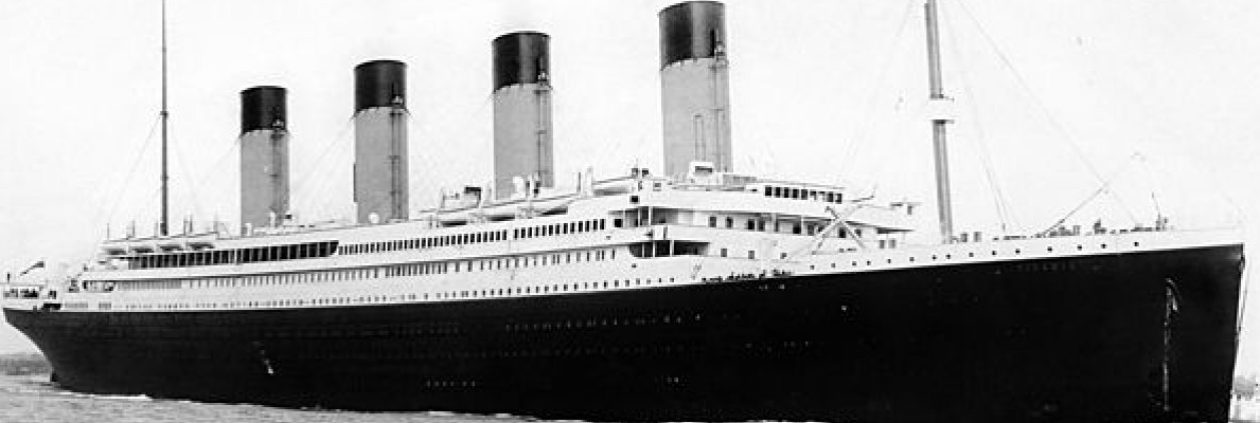
Titanic Chronology-Titanic Departs Southampton (10 April 1912)

The Day Has Finally Arrived: Titanic Sets Sail On Her Maiden Voyage To New York

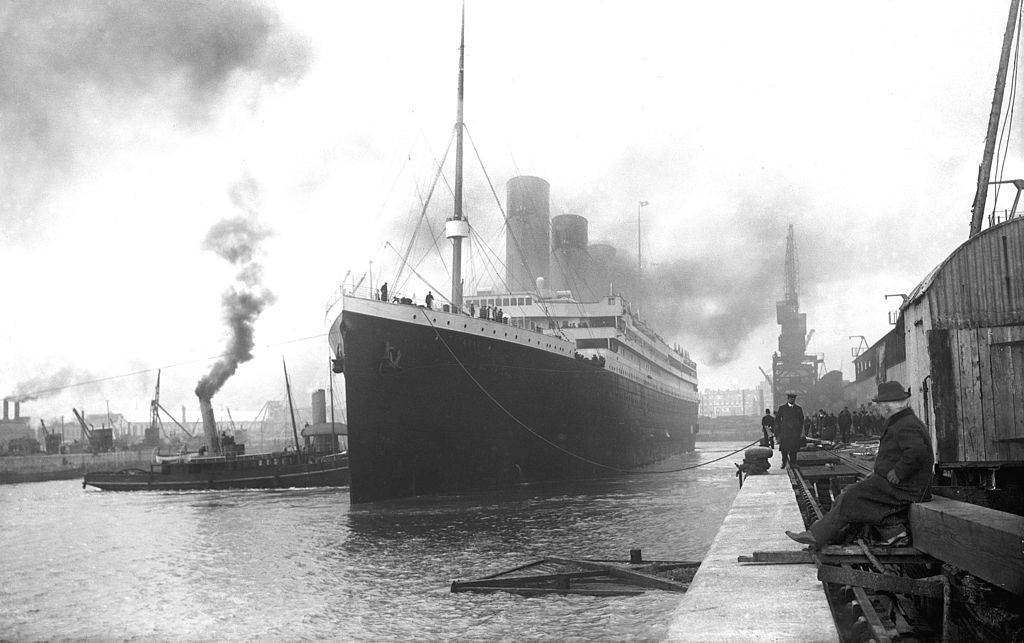
The day started off quiet as Titanic captain Edward J. Smith boards the ship at 7:30 am. Titanic has been docked in Southampton since 3 April and taken on crew and supplies for the voyage. The first train from London bearing passengers was at 9:30 am. The railway–London & South Western–had its station quayside to where Titanic was birthed making it a short trip to the ship. Many who were traveling Third Class or commonly called Steerage, had to undergo medical inspections before boarding. If American authorities denied them entry, White Star had to bring them back at their cost. First Class passengers were personally greeted by Captain Smith. Many knew him already having sailed with him on other ships. Back then a respected ship captain was a reason to choose the ship to sail on. After meeting the captain, they were escorted to their cabins. Second Class did not meet the captain but were escorted by stewards to their cabins.

Titanic at the docks of Southampton, 10 April 1912
Unknown Author
Public Domain via Wikimedia Commons

Titanic would pick up a total of 920 passengers in Southampton. The biggest number at 494 were the Third-Class passengers; First Class had 179 and Second Class 247. Additional passengers (and some departing from the ship) would occur at Cherbourg and Queenstown. There is a story that some Third-Class passengers would miss the sailing owing to staying at the pub too long. By the time they ran to the ship, the gangplank had been removed. They would claim later they were saved from the disaster, but most knew it was they stayed too long enjoying their pints of ale.

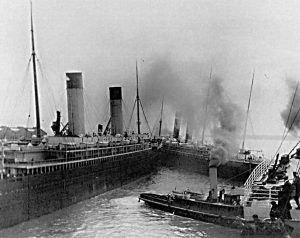
At noon, the ship’s whistle signaled its departure, and many came to see not only friends off, but the ship itself. Cameras did photograph the departure, but no movie footage appears to have survived. Due to her size, Titanic created huge displacement of water. And as she departed this displacement caused ships nearby to start moving upwards. One ship, the liner New York, had its mooring cables snap due to the strain. This caused the ship to swing out stern-first towards Titanic. Captain Smith ordered the engines full astern to get more speed so Titanic would avoid colliding with the New York. It was close at four feet, but it worked. A nearby tugboat came to assist bringing the drifting ship back safely to its berth. All ships were delayed for an hour while this occurred.

Titanic reversed her course, drifts back toward the mouth of White Star Dock, as New York is manouevered to a temporary mooring in the River Itchen (Daily Mirror)
Public Domain via Wikimedia Commons
SS Nomadic in Cherbourg harbour, where she served along with the SS Traffic as a tender for the Olympic-class liners and other White Star Line vessels too large for the shallow waters of the port.
1911, Author Unknown
Public Domain via Wikimedia Commons

Titanic would then make her way out of Southampton, and after dropping off the harbor pilot, headed into the English Channel heading for Cherbourg, France. The journey was 77 nautical miles (89 miles). An overcast sky with wind and cold would keep most passengers inside during this part of the journey. Arriving at 6:30 pm, Titanic would take on passengers by tender since there were no docking facilities for a ship of this size. Two tenders, the SS Traffic and SS Nomadic, would ferry passengers to and from Titanic. 24 passengers who only bought tickets for the journey from Southampton to Cherbourg would depart. 274 passengers would board at Cherbourg: 142 First Class, 30 Second Class, and 102 Third Class. Once the loading of all passengers and luggage was done by 8 pm, Titanic blew its whistle and began heading to Queenstown, Ireland for its last stop. The weather would remain cold and windy on that leg of the journey as well.

Sources

Books

Behe, George TITANIC: SAFETY, SPEED AND SACRIFICE, Transportation Trails, Polo, IL 1997

Behe, G. (2012). On board RMS Titanic: Memories of the Maiden Voyage. The History Press.

Cameron, Stephen. Titanic: Belfast’s Own. Colourpoint, 2011.

Eaton John P. & Haas Charles, TITANIC TRIUMPH AND TRAGEDY, SECOND EDITION, W.W. Norton & Company, New York, New York, 1995 First American Edition

 Lord, Walter

A NIGHT TO REMEMBER, Holt Rinehart and Winston, New York, New York, 1955. Multiple revisions and reprints, notably Illustrated editions (1976,1977,1978 etc.)

THE NIGHT LIVES ON, Willian Morrow and Company, New York, New York, 1986 (First Edition)

Lynch, Don & Marshall Ken, TITANIC AN ILLUSTRATED HISTORY, Madison Press Books, Toronto, Ontario Canada, 1992

Internet

“Encylopedia Titanica,” https://www.encyclopedia-titanica.org/.

“The Titanic: Sinking & Facts | HISTORY.” HISTORY. Last modified March 26, 2026. https://www.history.com/articles/titanic.

The History Press. “Titanic’s Maiden Departure From Southampton – the History Press.” The History Press. Last modified May 15, 2024. https://thehistorypress.co.uk/article/titanics-maiden-departure-from-southampton/.

Videos

Titanic: Honor & Glory, “Titanic’s Southampton Departure – April 10th, 1912,” Video, YouTube, April 10, 2025, https://www.youtube.com/watch?v=TPIcz5lYiNI.

Titanic News Channel is a participant in the Amazon Services LLC Associates Program, an affiliate advertising program designed to provide a means for sites to earn advertising fees by advertising and linking to Amazon.com.

Titanic Chronology-Titanic Adds Food (8-9 April 1912)

Titanic Lunch Menu 14 April 1912
Photo: AP


Fresh food was loaded in preparation for its departure on April 10. With a maximum capacity of 2,453 passengers and around 900 crew, the amount of food needed was enormous. First Class, Second Class, and Third Class were served three meals a day and was included in cost of the ticket. First Class passengers could opt to eat at the Al la Carte restaurant. This restaurant proved successful on Olympic and was replicated on Titanic and replicated eating at the famous Ritz. At 150 seats, it was bigger than Olympic and had sixty staff. None of the staff were White Star Line employees but employees of the restaurant. First Class passengers who opted to eat only at this restaurant were given a refund on that part of the First-Class ticket. Eating at this restaurant was very expensive and was open from 8 am -11 pm for only First-Class passengers.

Titanic was essentially a floating hotel, so daily consumption of food was considerable requiring the large stores of fresh food and supplies for the voyage across the Atlantic. Today it is much the same. Cruise ships today usually are required to have double the food needed in case the ship is delayed at sea due to storms or other emergencies. Here are some of the items that were stored for its maiden voyage to New York:

Meats

  • 5,000  lb. fresh meat.
  • 25,000  lb. poultry.
  • 11,000  lb. fresh fish.

Produce

  • 1,000 lb. grapes,
  •  36,000 apples.
  • 36,000  oranges.
  • 16,000 lemons.
  • 40  tons of potatoes.
  • 3,500  lb. onions,
  • 7,000  heads of lettuce.

Bread/Baking

  • 50  barrels of flour.
  • 1,000  loaves of bread.
  • 10,000  lb. cereal.
  • 10,000 lb. sugar.

Hot Beverages

  • 2,200 lb. coffee.
  • 800 lb. tea.

Eggs/Dairy

  • 40,000  fresh eggs.
  • 1,500  gallons of fresh milk.
  • 1,200  quarts of ice cream.
  • 6,000  lb. butter.

That is a lot of food and that is a short list. Some additional items include 15,000 bottles of ale, 1,000 bottles of wine, and 850 bottles of liquor. And of course, gentleman needed cigars so 8,000 of them were stowed aboard as well. Fresh drinking water was loaded as well for use during the voyage. To serve all the food required over 57,000 pieces of crockery which includes pots and pants. 29,000 glasses of various sizes, shapes, and uses were aboard as well. Cutlery of various sizes, shapes, and uses came to 44,000. Food was mostly prepared by hand though they had food mills, grinders, and other things they could use. For Jewish people who observed Kashrut (Kosher dietary laws), this was provided for as well. Separate silverware for meat and dairy use was also used as well.

Each class ate in its own serving areas. First and Second Class had the more expansive menus, but Third Class was not that bad either. Breakfast in Third Class included:

  • Oatmeal Porridge & Milk
  • Smoked Herrings, Jacket Potatoes
  • Ham & Eggs
  • Fresh Bread & Butter
  • Marmalade
  • Swedish Bread
  • Tea
  • Coffee

Lunch in Third Class was called Dinner (lunch in First and Second) since most workers ate their large meal of the day at that hour. Third Class had soup, biscuits, meat (such as roast beef with gravy), vegetables and potatoes, desert, fruit, and tea/coffee. Teatime later had cold meats, pickles, cheese, dried fruits, and of course tea! Supper, unlike dinner in First and Second class, was simple with just cheese, biscuits, or porridge (also called gruel). For many who came from impoverished backgrounds, the meals were a feast.

Max Miller over at YouTube has done wonderful videos as to what food was like on Titanic in the different classes and what the crew ate. Food eaten on the Titanic, especially in First and Second Class, was of high quality and a major social event. Dinner especially when you wore your finest clothes. Downton Abbey gets a lot of details right about how they appeared at such meals and the food they were served. The Edwardian era was short but the fashions and food made it memorable.

Sources

Books

[Please note as an Amazon affiliate I receive a small fee if you click on a link and purchase a book. Thank you if you do!] 

Archbold, Rick, and Dana McCauley. Last Dinner on the Titanic Menus and Recipes From the Great Liner. Hachette Books, 1997.

Behe, George TITANIC: SAFETY, SPEED AND SACRIFICE, Transportation Trails, Polo, IL 1997

Behe, G. (2012). On board RMS Titanic: Memories of the Maiden Voyage. The History Press.

Eaton John P. & Haas Charles, TITANIC TRIUMPH AND TRAGEDY, SECOND EDITION, W.W. Norton & Company, New York, New York, 1995 First American Edition

Lord, Walter

A NIGHT TO REMEMBER, Holt Rinehart and Winston, New York, New York, 1955. Multiple revisions and reprints, notably Illustrated editions (1976,1977,1978 etc.)

THE NIGHT LIVES ON, Willian Morrow and Company, New York, New York, 1986 (First Edition)

Lynch, Don & Marshall Ken, TITANIC AN ILLUSTRATED HISTORY, Madison Press Books, Toronto, Ontario Canada, 1992

Internet

 “Food on the Titanic • Titanic Facts.” Titanic Facts. Last modified July 13, 2020. Accessed April 8, 2026. https://titanicfacts.net/food-on-the-titanic/.

 Ticehurst, Brian. “Ritz Restaurant Staff on the Titanic.” Encyclopedia Titanica. Last modified 2005. Accessed April 8, 2026. https://www.encyclopedia-titanica.org/titanic-ritz-restaurant-staff.html.

Tastes Of History, “A Brief History of Food: Titanic Cuisine,” Tastes Of History, November 5, 2025, accessed April 8, 2026, https://www.tastesofhistory.co.uk/post/a-brief-history-of-food-titanic-cuisine.

Videos

Tasting History with Max Miller, “Dining First Class on the RMS Titanic,” Video, YouTube, April 12, 2022, https://www.youtube.com/watch?v=7hYBesohRK0.

Tasting History with Max Miller, “Titanic’s Second Class Experience,” Video, YouTube, March 29, 2022, https://www.youtube.com/watch?v=GanHDpGstZI.

Tasting History with Max Miller, “Dining Third Class on the RMS Titanic,” Video, YouTube, March 22, 2022, https://www.youtube.com/watch?v=JbmHZbTpoDY.

Titanic Chronology: Titanic Adds Crew (6 April 1912)

[This has been modified to correct inaccurate information about crew, add new details and information, and include newer sources]

The only picture of the Marconi radio room onboard the Titanic. Harold Bride is seated at his station. Photo was taken by Father Francis Browne, SJ, while aboard Titanic.
Public Domain/Wikimedia Commons

After journeying from Belfast to Southampton, the remaining crew needed for Titanic would be hired to approximately 908 crew and officers. Some members of the crew technically were not employees of White Star Line but accepted token payments to be under the command of Captain Smith. The two wireless operators, Harold Bride and Jack Phillips, were employees of Marconi. For ship organization purposes, they were made part of the Victualling Department as their service was not considered an essential to shop operation. The Titanic orchestra were employees of the Liverpool firm C.W. & F.N Black which provided musicians for many British liners. They were treated as second class passengers and thus had nicer accommodations on Titanic than on other ships.

A recent coal strike resulted in a severe shortage of coal. When the strike ended on 6 April, Titanic was in desperate need of coal to meet its sailing deadline on 10 April. Coal was transferred from other White Star ships forcing those ships to cancel their departures. Passengers on those ships were offered equivalent accommodations on Titanic. Some of the more notable persons effected was Titanic survivor Eva Hart. She and her parents were going to sail on the SS Philadelphia bound ultimately to Canada before the sailing was canceled. The Hart family was transferred to Titanic and traveled as Second Class passengers.

Many passengers planning to board Titanic in France were making their way to Cherbourg. John Jacob Astor and his wife Madeline had been celebrating their honeymoon in Egypt were now enroute along with famous artist Frank Millet. Sir Cosmo and Lady Duff Gordon, Molly Brown, and Benjamin Guggenheim were enroute as well.

Sources

Books

Behe, George TITANIC: SAFETY, SPEED AND SACRIFICE, Transportation Trails, Polo, IL 1997

Behe, G. (2012). On board RMS Titanic: Memories of the Maiden Voyage. The History Press.

Eaton John P. & Haas Charles, TITANIC TRIUMPH AND TRAGEDY, SECOND EDITION, W.W. Norton & Company, New York, New York, 1995 First American Edition

Lord, Walter

A NIGHT TO REMEMBER, Holt Rinehart and Winston, New York, New York, 1955. Multiple revisions and reprints, notably Illustrated editions (1976,1977,1978 etc.)

THE NIGHT LIVES ON, Willian Morrow and Company, New York, New York, 1986 (First Edition)

Lynch, Don & Marshall Ken, TITANIC AN ILLUSTRATED HISTORY, Madison Press Books, Toronto, Ontario Canada, 1992

Internet

———. “The Titanic: Sinking & Facts | HISTORY.” HISTORY. Last modified March 26, 2026. Accessed April 5, 2026. https://www.history.com/articles/titanic.

“RMS Titanic.” Encyclopedia Titanica. Accessed April 5, 2026. https://www.encyclopedia-titanica.org/titanic/.

Crump, Ian. “Nationwide Coal Strike Affected Southampton and RMS Titanic.” Daily Echo, August 3, 2025. https://www.dailyecho.co.uk/news/25333132.nationwide-coal-strike-affected-southampton-rms-titanic/.

Videos

Titanic: Honor & Glory, “Titanic’s Stay at Southampton – April 5th-9th, 1912,” Video, YouTube, April 9, 2025, https://www.youtube.com/watch?v=KifJCl3Phb0.

Titanic News Channel is a participant in the Amazon Services LLC Associates Program, an affiliate advertising program designed to provide a means for sites to earn advertising fees by advertising and linking to Amazon.com.

Titanic History: Titanic Departs Southampton on Maiden Voyage (10 April 1912)

Titanic at the docks of Southampton, 10 April 1912
Unknown Author
Public Domain via Wikimedia Commons

Titanic captain Edward J. Smith boards the ship at 7:30 am. Since it docked in Southampton on 3 April, the ship has taken on crew and supplies for the voyage. At 9:30 am, passengers would begin to arrive as the London and South Western Railway train from London would arrive. The railway station was on the quayside alongside where Titanic was berthed. There was a large number of Third-Class passengers (called Steerage back then) so they had to board first. First and Second-Class passengers would have stewards escort them to their cabins. First Class passengers were greeted by Captain Smith. Third Class passengers had to undergo inspection for ailments and other conditions that might deny them entry to the United States. If refused to enter the United States, White Star Line had to carry them back. 920 passengers boarded at Southampton: 179 First Class, 247 Second Class, and 494 Third Class. Additional passengers were to be picked up in Cherbourg and Queenstown.
Titanic reversed her course, drifts back toward the mouth of White Star Dock, as New York is manouevered to a temporary mooring in the River Itchen (Daily Mirror)
Public Domain via Wikimedia Commons

At 12 noon the ship’s horn blew and Titanic began its departure. Due her large size, Titanic generated a huge displacement causing smaller ships docked nearby to be momentarily lifted by the bulge of water. The liner New York’s mooring cables were unable to handle the strain and snapped, swinging the ship stern-first towards Titanic. A nearby tugboat came to assist and took New York under tow. On Titanic, Captain Smith ordered the engines be put full astern to give her enough speed to avoid colliding with New York.  Collision was avoided but it was close at 4 feet. Due to this incident, Titanic was delayed leaving Southampton for an hour while the drifting New York was brought under control making it safe for all ships to arrive and depart.

After navigating out of Southampton, and dropping off the Southampton pilot, Titanic headed out into the English Channel and her next destination of Cherbourg, France. The journey would take 77 nautical miles (89 miles). Weather to Cherbourg would be windy, cold, and overcast. Arriving at 6:30 pm the same day, Titanic would take on passengers by tender as Cherbourg lacked docking facilities for it. The two tenders, SS Traffic and SS Nomadic, were designed for ships like Titanic. 274 additional passengers would board in Cherbourg: 142 First Class, 30 Second Class, and 102 Third Class. 24 passengers departed at Cherbourg having only booked passage to France. The transfer of all passengers and their luggage was done by 8 pm. Titanic would depart for its final stop in Queenstown, Ireland before heading off to New York. The weather to Queenstown would remain cold and windy.

[To be continued on April 11]

Sources (Updated for 2025)

Books

Behe, George TITANIC: SAFETY, SPEED AND SACRIFICE, Transportation Trails, Polo, IL 1997

Behe, George (2012). On board RMS Titanic: Memories of the Maiden Voyage. The History Press.

Eaton John P. & Haas Charles, TITANIC TRIUMPH AND TRAGEDY, SECOND EDITION, W.W. Norton & Company, New York, New York, 1995 First American Edition

Lord, Walter, A NIGHT TO REMEMBER, Holt Rinehart and Winston, New York, New York, 1955. Multiple revisions and reprints, notably Illustrated editions (1976,1977,1978 etc.)

Lord, Walter, THE NIGHT LIVES ON, Willian Morrow and Company, New York, New York, 1986 (First Edition)

Lynch, Don & Marshall Ken, TITANIC AN ILLUSTRATED HISTORY, Madison Press Books, Toronto, Ontario Canada, 1992

Internet

Tikkanen and Amy, “Titanic | History, Sinking, Rescue, Survivors, Movies, & Facts,” Encyclopedia Britannica, last modified April 7, 2025, https://www.britannica.com/topic/Titanic.

Encyclopedia Titanica, last modified April 9, 2025, https://www.encyclopedia-titanica.org/.

History.com Editors, “The Titanic: Sinking & Facts | HISTORY,” HISTORY, last modified February 27, 2025, https://www.history.com/articles/titanic.

Titanic Historical Society, Inc., “Titanic Museum | Titanic Historical Society Collection,” Titanic Historical Society, Inc., last modified January 19, 2023, https://titanichistoricalsociety.org/titanic-museum/.

British Pathé, “Titanic: The Facts Told by Real Survivors | British Pathé,” Video, YouTube, August 1, 2011, https://www.youtube.com/watch?v=_xKDRmhp6lQ.

Wikipedia contributors, “Titanic,” Wikipedia, last modified April 6, 2025, https://en.wikipedia.org/wiki/Titanic#Collecting_passengers.

Titanic News Channel is a participant in the Amazon Services LLC Associates Program, an affiliate advertising program designed to provide a means for sites to earn advertising fees by advertising and linking to Amazon.com.

Titanic History: Titanic Adds Crew (6 April 1912)

The only picture of the Marconi radio room onboard the Titanic. Harold Bride is seated at his station. Photo was taken by Father Francis Browne, SJ, while aboard Titanic.
Public Domain/Wikimedia Commons

Titanic fills the remaining vacancies in ship’s crew. Coal and cargo also begin loading today

688 crew members would be aboard Titanic when it sailed. The wireless operators, Harold Bride and Jack Phillips, were actually employees of Marconi. For ship purposes, they were made part of the Victualling Department as they provided a service rather an essential operation. The ship’s orchestra were not employees of White Star but contracted from the Liverpool firm of C.W. & F.N. Black. This firm provided musicians for most British liners. They were treated as second class passengers.

Due to a miners’ strike that ended on 6 April, there was a shortage of coal. To make up for the shortage, coal from other White Star ships were transferred to Titanic so she could sail on 10 April. Passengers on those ships would be transferred as well to Titanic.  The ship would carry 5, 892 tons, which was more than sufficient for the voyage.

Sources:

Purchase Titanic Books on Amazon.

Books

Behe, George TITANIC: SAFETY, SPEED AND SACRIFICE, Transportation Trails, Polo, IL 1997

Eaton John P. & Haas Charles, TITANIC TRIUMPH AND TRAGEDY, SECOND EDITION, W.W. Norton & Company, New York, New York, 1995 First American Edition

Lord, Walter, A NIGHT TO REMEMBER, Holt Rinehart and Winston, New York, New York, 1955. Multiple revisions and reprints, notably Illustrated editions (1976,1977,1978 etc)

Lord, Walter, THE NIGHT LIVES ON, Willian Morrow and Company, New York, New York, 1986 (First Edition)

Lynch, Don & Marshall Ken, TITANIC AN ILLUSTRATED HISTORY, Madison Press Books, Toronto, Ontario Canada, 1992

Internet

Britannica.com
Encyclopedia Titanica
History.com

Titanic History: Titanic Arrives Southampton (3 April 1912)

After departing Belfast at 20:00 (8 pm), Titanic arrives in Southampton just after midnight. She would be towed to Berth 44. She traveled 577 nautical miles (664 miles) and her recorded maximum speed is 23 1/3 knots. That is approximately 26 miles per hour.

Titanic advertising from New York Times, 10 April 1912.
Public Domain (Wikimedia)

Sources:

Books

Behe, George TITANIC: SAFETY, SPEED AND SACRIFICE, Transportation Trails, Polo, IL 1997

Eaton John P. & Haas Charles, TITANIC TRIUMPH AND TRAGEDY, SECOND EDITION, W.W. Norton & Company, New York, New York, 1995 First American Edition

Lord, Walter, A NIGHT TO REMEMBER, Holt Rinehart and Winston, New York, New York, 1955. Multiple revisions and reprints, notably Illustrated editions (1976,1977,1978 etc)

Lord, Walter, THE NIGHT LIVES ON, Willian Morrow and Company, New York, New York, 1986 (First Edition)

Lynch, Don & Marshall Ken, TITANIC AN ILLUSTRATED HISTORY, Madison Press Books, Toronto, Ontario Canada, 1992

Internet

Britannica.com
Encyclopedia Titanica
History.com

Titanic Departs Southampton on Maiden Voyage (10 April 1912)

Titanic at the docks of Southampton, 10 April 1912
Unknown Author
Public Domain via Wikimedia Commons

Titanic captain Edward J. Smith boards the ship at 7:30 am. Since it docked in Southampton on 3 April, the ship has taken on crew and supplies for the voyage. At 9:30 am, passengers would begin to arrive as the London and South Western Railway train from London would arrive. The railway station was on the quayside alongside where Titanic was berthed. There was a large number of Third-Class passengers (called Steerage back then) so they had to board first. First and Second-Class passengers would have stewards escort them to their cabins. First Class passengers were greeted by Captain Smith. Third Class passengers had to undergo inspection for ailments and other conditions that might deny them entry to the United States. If refused to enter the United States, White Star Line had to carry them back. 920 passengers boarded at Southampton: 179 First Class, 247 Second Class, and 494 Third Class. Additional passengers were to be picked up in Cherbourg and Queenstown.

Titanic reversed her course, drifts back toward the mouth of White Star Dock, as New York is manouevered to a temporary mooring in the River Itchen (Daily Mirror)
Public Domain via Wikimedia Commons

At 12 noon the ship’s horn blew and Titanic began its departure. Due her large size, Titanic generated a huge displacement causing smaller ships docked nearby to be momentarily lifted by the bulge of water. The liner New York’s mooring cables were unable to handle the strain and snapped, swinging the ship stern-first towards Titanic. A nearby tugboat came to assist and took New York under tow. On Titanic, Captain Smith ordered the engines be put full astern to give her enough speed to avoid colliding with New York.  Collision was avoided but it was close at 4 feet. Due to this incident, Titanic was delayed leaving Southampton for an hour while the drifting New York was brought under control making it safe for all ships to arrive and depart.

After navigating out of Southampton, and dropping off the Southampton pilot, Titanic headed out into the English Channel and her next destination of Cherbourg, France. The journey would take 77 nautical miles (89 miles). Weather to Cherbourg would be windy, cold, and overcast. Arriving at 6:30 pm the same day, Titanic would take on passengers by tender as Cherbourg lacked docking facilities for it. The two tenders, SS Traffic and SS Nomadic, were designed for ships like Titanic. 274 additional passengers would board in Cherbourg: 142 First Class, 30 Second Class, and 102 Third Class. 24 passengers departed at Cherbourg having only booked passage to France. The transfer of all passengers and their luggage was done by 8 pm. Titanic would depart for its final stop in Queenstown, Ireland before heading off to New York. The weather to Queenstown would remain cold and windy.

[To be continued on April 11]

Sources

Books

Behe, George TITANIC: SAFETY, SPEED AND SACRIFICE, Transportation Trails, Polo, IL 1997

Eaton John P. & Haas Charles, TITANIC TRIUMPH AND TRAGEDY, SECOND EDITION, W.W. Norton & Company, New York, New York, 1995 First American Edition

Lord, Walter, A NIGHT TO REMEMBER, Holt Rinehart and Winston, New York, New York, 1955. Multiple revisions and reprints, notably Illustrated editions (1976,1977,1978 etc)

Lord, Walter, THE NIGHT LIVES ON, Willian Morrow and Company, New York, New York, 1986 (First Edition)

Lynch, Don & Marshall Ken, TITANIC AN ILLUSTRATED HISTORY, Madison Press Books, Toronto, Ontario Canada, 1992

Internet

 Encyclopedia Britannica, www.britannica.com/search?query=Titanic.

“Encyclopedia Titanica.” www.encyclopedia-titanica.org.

“The Titanic: Sinking and Facts | HISTORY.” HISTORY, 12 Mar. 2024, www.history.com/topics/early-20th-century-us/titanic.

Titanic Chronology: Titanic Adds Crew (6 April 1912)

The only picture of the Marconi radio room onboard the Titanic. Harold Bride is seated at his station. Photo was taken by Father Francis Browne, SJ, while aboard Titanic.
Public Domain/Wikimedia Commons

Titanic fills the remaining vacancies in ship’s crew. Coal and cargo also begin loading today

688 crew members would be aboard Titanic when it sailed. The wireless operators, Harold Bride and Jack Phillips, were actually employees of Marconi. For ship purposes, they were made part of the Victualling Department as they provided a service rather an essential operation. The ship’s orchestra were not employees of White Star but contracted from the Liverpool firm of C.W. & F.N. Black. This firm provided musicians for most British liners. They were treated as second class passengers.

Due to a miners’ strike that ended on 6 April, there was a shortage of coal. To make up for the shortage, coal from other White Star ships were transferred to Titanic so she could sail on 10 April. Passengers on those ships would be transferred as well to Titanic.  The ship would carry 5, 892 tons, which was more than sufficient for the voyage.

Sources:

Purchase Titanic Books on Amazon.

Books

Behe, George TITANIC: SAFETY, SPEED AND SACRIFICE, Transportation Trails, Polo, IL 1997

Eaton John P. & Haas Charles, TITANIC TRIUMPH AND TRAGEDY, SECOND EDITION, W.W. Norton & Company, New York, New York, 1995 First American Edition

Lord, Walter, A NIGHT TO REMEMBER, Holt Rinehart and Winston, New York, New York, 1955. Multiple revisions and reprints, notably Illustrated editions (1976,1977,1978 etc)

Lord, Walter, THE NIGHT LIVES ON, Willian Morrow and Company, New York, New York, 1986 (First Edition)

Lynch, Don & Marshall Ken, TITANIC AN ILLUSTRATED HISTORY, Madison Press Books, Toronto, Ontario Canada, 1992

Internet

Britannica.com
Encyclopedia Titanica
History.com

Titanic Chronology: Titanic Arrives Southampton (3 April 1912)

After departing Belfast at 20:00 (8 pm), Titanic arrives in Southampton just after midnight. She would be towed to Berth 44. She traveled 577 nautical miles (664 miles) and her recorded maximum speed is 23 1/3 knots. That is approximately 26 miles per hour.

Titanic advertising from New York Times, 10 April 1912.
Public Domain (Wikimedia)

Sources:

Books

Behe, George TITANIC: SAFETY, SPEED AND SACRIFICE, Transportation Trails, Polo, IL 1997

Eaton John P. & Haas Charles, TITANIC TRIUMPH AND TRAGEDY, SECOND EDITION, W.W. Norton & Company, New York, New York, 1995 First American Edition

Lord, Walter, A NIGHT TO REMEMBER, Holt Rinehart and Winston, New York, New York, 1955. Multiple revisions and reprints, notably Illustrated editions (1976,1977,1978 etc)

Lord, Walter, THE NIGHT LIVES ON, Willian Morrow and Company, New York, New York, 1986 (First Edition)

Lynch, Don & Marshall Ken, TITANIC AN ILLUSTRATED HISTORY, Madison Press Books, Toronto, Ontario Canada, 1992

Internet

Britannica.com
Encyclopedia Titanica
History.com

Titanic Chronology: Titanic Departs Southampton on Maiden Voyage (10 April 1912)

RMS Titanic departing Southampton on April 10, 1912.

Titanic captain Edward J. Smith boards ship at 7:30 am. At 12 noon, Titanic begins her maiden voyage. While departing, suction from propellers causes New York to break moorings. Collision is averted by tugs and extra speed from Titanic. She heads across the English Channel and arrives at Cherbourg, France at 5:30 pm.  274 passengers board including John Jacob Astor. 22 passengers disembark. She departs at 8:30 pm for Queenstown (now Cobh), Ireland.

Here is a video on YouTube that incorrectly says it is of Titanic leaving Southampton. In reality it is RMS Olympic but you get an idea of what it was like on that departure day in 1912.

Sources:

Books

Behe, George TITANIC: SAFETY, SPEED AND SACRIFICE, Transportation Trails, Polo, IL 1997

Eaton John P. & Haas Charles, TITANIC TRIUMPH AND TRAGEDY, SECOND EDITION, W.W. Norton & Company, New York, New York, 1995 First American Edition

Lord, Walter, A NIGHT TO REMEMBER, Holt Rinehart and Winston, New York, New York, 1955. Multiple revisions and reprints, notably Illustrated editions (1976,1977,1978 etc)

Lord, Walter, THE NIGHT LIVES ON, Willian Morrow and Company, New York, New York, 1986 (First Edition)

Lynch, Don & Marshall Ken, TITANIC AN ILLUSTRATED HISTORY, Madison Press Books, Toronto, Ontario Canada, 1992

Internet

Britannica.com
Encyclopedia Titanica
History.com

,,,