Category Archives: Titanic

Titanic Arrives Queenstown & First Days at Sea (11 – 13 April 1912)

Roches Point Lighthouse Cobb, Ireland (2017)
Photo: Larry Mills
Wikimedia Commons (Originally from Flickr)

At 11:30 am Titanic arrived at Cork Harbour on the south coast of Ireland. Cork Harbour is a both a natural harbour and river estuary of the River Lee. Considered one of the larger natural harbours in the world, it has been used as a working port for centuries. Roches Point Lighthouse would have been seen by Titanic. The lighthouse has been there since 1817 but was rebuilt in 1835 as it was too small. The lighthouse is operational to this day but was automated in 1995 and its surrounding buildings auctioned off.

The day was warm but with a brisk wind with some clouds in the sky. Queenstown (known today as Cobh) would be Titanic’s last European stop before heading across the Atlantic. Lacking facilities to dock a ship of its size, tenders brought passengers and their belongings to Titanic. 123 passengers would board at Queenstown: 3 First Class passengers, 7 Second Class passengers, and 113 Third Class. 7 people would disembark including Fr. Francis Browne, S.J. who as an avid photographer took photos of the ship while he was aboard. His photos, which became famous after the sinking, give us a glimpse of that unique world. Kate Odell, another cross-channel passenger who got off in Queenstown, also took some photos as well.

Titanic’s passengers on the A-Deck’s aft promenade: the six-year-old Robert Douglas Speden, throwing a spinning top, under the watchful eye of his father, Frederick.
11 April 1912
Taken by Father Browne, SJ
Public Domain via Wikimedia Commons

At 1:30 pm Titanic weighed anchor and departed Queenstown to complete her maiden voyage. A few rare photographs of her in port and departing have been found. Sadly, they would be the last photographs of RMS Titanic ever taken in 1912.

Titanic Leaving Queenstown 11 April 1912. Believed to be the last photograph of ship before it sank. Taken by Kate Odell as she disembarked off Queenstown (now Cobh), Ireland, April 11, 1912
Public Domain

Once Titanic pulled out to sea and enroute to New York, people aboard the ship settled into familiar patterns. Mealtimes were a time to meet your fellow travelers. While First and Second Class could mingle, Third Class was restricted to their area. Everyone was provided three meals a day though First-Class passengers had access to the A la Carte restaurant. Titanic and its sister ship Olympic provided ample food portions for the passengers. A dedicated crew of food professionals made sure each mealtime was an event. Many went on walks around the deck to work off their meals. Or they could make use of the exercising equipment aboard Titanic.

Titanic gym on 11 April 1912. Instructor McCawley demostrates the rowing machine. William Parr test another piece of the equipment.
11 April 1912
Photo: Father Francis Browne, SJ
Public Domain via Wikimedia Commons

The gymnasium was quite impressive with punching bags, cycle racing machines (stationary bikes), electric horse and camel, and a squash court. Many enjoyed the mechanical rowing machine and the Turkish bath. For those wanting to swim, there was a heated saltwater pool on Deck F but accessible only to First Class passengers. The pool was six feet deep and only thirty feet long and fourteen feet wide making it small by standards today. There was a small fee to pay to use the pool (which came with a bathing suit) but children were not allowed.

There was also an electric bath one could use, if you were brave enough. Today it would be more like a tanning bed. It was a wooden stand with a green sheet metal cabinet lid that had ultraviolet lights in it. An attendant would open the lid, the person would lie down, and the lid would be closed. A timer was set for thirty minutes and then you would get out; staying too long was considered hazardous. A similar one was also on Olympic. It certainly took courage to get inside essentially what was an iron lung.

Sources

Archbold, Rick, and Dana McCauley. Last Dinner on the Titanic Menus and Recipes From the Great Liner. Hachette Books, 1997.

Behe, George TITANIC: SAFETY, SPEED AND SACRIFICE, Transportation Trails, Polo, IL 1997

Behe, G. (2012). On board RMS Titanic: Memories of the Maiden Voyage. The History Press.

Brewster, H. (2013). Gilded Lives, Fatal Voyage: The Titanic’s First-Class Passengers and Their World. National Geographic Books.

Cameron, Stephen. Titanic: Belfast’s Own. Colourpoint, 2011.

Eaton John P. & Haas Charles, TITANIC TRIUMPH AND TRAGEDY, SECOND EDITION, W.W. Norton & Company, New York, New York, 1995 First American Edition

Fitch, Tad, J. Kent Layton, and Bill Wormstedt. On a Sea of Glass: The Life & Loss of the RMS Titanic. Reprint. Amberley Publishing, 2015.

Lord, Walter

A NIGHT TO REMEMBER, Holt Rinehart and Winston, New York, New York, 1955. Multiple revisions and reprints, notably Illustrated editions (1976,1977,1978 etc.)

THE NIGHT LIVES ON, Willian Morrow and Company, New York, New York, 1986 (First Edition)

Lynch, Don & Marshall Ken, TITANIC AN ILLUSTRATED HISTORY, Madison Press Books, Toronto, Ontario Canada, 1992

Internet

“The Titanic: Sinking & Facts | HISTORY.” HISTORY. Last modified March 26, 2026. https://www.history.com/articles/titanic.

“Encylopedia Titanica.” https://www.encyclopedia-titanica.org/.

“RMS Titanic – the Radio Officers Association.” https://radioofficers.com/archives/rms-titanic/.

“Titanic Facts • 1,000+ Fascinating Facts and Figures,” Titanic Facts, last modified October 7, 2023, https://titanicfacts.net/.

Titanic Departs Southampton (10 April 1912)

The Day Has Finally Arrived: Titanic Sets Sail On Her Maiden Voyage To New York

The day started off quiet as Titanic captain Edward J. Smith boards the ship at 7:30 am. Titanic has been docked in Southampton since 3 April and taken on crew and supplies for the voyage. The first train from London bearing passengers was at 9:30 am. The railway–London & South Western–had its station quayside to where Titanic was birthed making it a short trip to the ship. Many who were traveling Third Class or commonly called Steerage, had to undergo medical inspections before boarding. If American authorities denied them entry, White Star had to bring them back at their cost. First Class passengers were personally greeted by Captain Smith. Many knew him already having sailed with him on other ships. Back then a respected ship captain was a reason to choose the ship to sail on. After meeting the captain, they were escorted to their cabins. Second Class did not meet the captain but were escorted by stewards to their cabins.

Titanic at the docks of Southampton, 10 April 1912
Unknown Author
Public Domain via Wikimedia Commons

Titanic would pick up a total of 920 passengers in Southampton. The biggest number at 494 were the Third-Class passengers; First Class had 179 and Second Class 247. Additional passengers (and some departing from the ship) would occur at Cherbourg and Queenstown. There is a story that some Third-Class passengers would miss the sailing owing to staying at the pub too long. By the time they ran to the ship, the gangplank had been removed. They would claim later they were saved from the disaster, but most knew it was they stayed too long enjoying their pints of ale.

At noon, the ship’s whistle signaled its departure, and many came to see not only friends off, but the ship itself. Cameras did photograph the departure, but no movie footage appears to have survived. Due to her size, Titanic created huge displacement of water. And as she departed this displacement caused ships nearby to start moving upwards. One ship, the liner New York, had its mooring cables snap due to the strain. This caused the ship to swing out stern-first towards Titanic. Captain Smith ordered the engines full astern to get more speed so Titanic would avoid colliding with the New York. It was close at four feet, but it worked. A nearby tugboat came to assist bringing the drifting ship back safely to its berth. All ships were delayed for an hour while this occurred.

Titanic reversed her course, drifts back toward the mouth of White Star Dock, as New York is manouevered to a temporary mooring in the River Itchen (Daily Mirror)
Public Domain via Wikimedia Commons
SS Nomadic in Cherbourg harbour, where she served along with the SS Traffic as a tender for the Olympic-class liners and other White Star Line vessels too large for the shallow waters of the port.
1911, Author Unknown
Public Domain via Wikimedia Commons

Titanic would then make her way out of Southampton, and after dropping off the harbor pilot, headed into the English Channel heading for Cherbourg, France. The journey was 77 nautical miles (89 miles). An overcast sky with wind and cold would keep most passengers inside during this part of the journey. Arriving at 6:30 pm, Titanic would take on passengers by tender since there were no docking facilities for a ship of this size. Two tenders, the SS Traffic and SS Nomadic, would ferry passengers to and from Titanic. 24 passengers who only bought tickets for the journey from Southampton to Cherbourg would depart. 274 passengers would board at Cherbourg: 142 First Class, 30 Second Class, and 102 Third Class. Once the loading of all passengers and luggage was done by 8 pm, Titanic blew its whistle and began heading to Queenstown, Ireland for its last stop. The weather would remain cold and windy on that leg of the journey as well.

Sources

Books

Behe, George TITANIC: SAFETY, SPEED AND SACRIFICE, Transportation Trails, Polo, IL 1997

Behe, G. (2012). On board RMS Titanic: Memories of the Maiden Voyage. The History Press.

Cameron, Stephen. Titanic: Belfast’s Own. Colourpoint, 2011.

Eaton John P. & Haas Charles, TITANIC TRIUMPH AND TRAGEDY, SECOND EDITION, W.W. Norton & Company, New York, New York, 1995 First American Edition

 Lord, Walter

A NIGHT TO REMEMBER, Holt Rinehart and Winston, New York, New York, 1955. Multiple revisions and reprints, notably Illustrated editions (1976,1977,1978 etc.)

THE NIGHT LIVES ON, Willian Morrow and Company, New York, New York, 1986 (First Edition)

Lynch, Don & Marshall Ken, TITANIC AN ILLUSTRATED HISTORY, Madison Press Books, Toronto, Ontario Canada, 1992

Internet

“Encylopedia Titanica,” https://www.encyclopedia-titanica.org/.

“The Titanic: Sinking & Facts | HISTORY.” HISTORY. Last modified March 26, 2026. https://www.history.com/articles/titanic.

The History Press. “Titanic’s Maiden Departure From Southampton – the History Press.” The History Press. Last modified May 15, 2024. https://thehistorypress.co.uk/article/titanics-maiden-departure-from-southampton/.

Videos

Titanic: Honor & Glory, “Titanic’s Southampton Departure – April 10th, 1912,” Video, YouTube, April 10, 2025, https://www.youtube.com/watch?v=TPIcz5lYiNI.

Titanic News Channel is a participant in the Amazon Services LLC Associates Program, an affiliate advertising program designed to provide a means for sites to earn advertising fees by advertising and linking to Amazon.com.

Titanic Adds Food (8-9 April 1912)

Titanic Lunch Menu 14 April 1912
Photo: AP


Fresh food was loaded in preparation for its departure on April 10. With a maximum capacity of 2,453 passengers and around 900 crew, the amount of food needed was enormous. First Class, Second Class, and Third Class were served three meals a day and was included in cost of the ticket. First Class passengers could opt to eat at the Al la Carte restaurant. This restaurant proved successful on Olympic and was replicated on Titanic and replicated eating at the famous Ritz. At 150 seats, it was bigger than Olympic and had sixty staff. None of the staff were White Star Line employees but employees of the restaurant. First Class passengers who opted to eat only at this restaurant were given a refund on that part of the First-Class ticket. Eating at this restaurant was very expensive and was open from 8 am -11 pm for only First-Class passengers.

Titanic was essentially a floating hotel, so daily consumption of food was considerable requiring the large stores of fresh food and supplies for the voyage across the Atlantic. Today it is much the same. Cruise ships today usually are required to have double the food needed in case the ship is delayed at sea due to storms or other emergencies. Here are some of the items that were stored for its maiden voyage to New York:

Meats

  • 5,000  lb. fresh meat.
  • 25,000  lb. poultry.
  • 11,000  lb. fresh fish.

Produce

  • 1,000 lb. grapes,
  •  36,000 apples.
  • 36,000  oranges.
  • 16,000 lemons.
  • 40  tons of potatoes.
  • 3,500  lb. onions,
  • 7,000  heads of lettuce.

Bread/Baking

  • 50  barrels of flour.
  • 1,000  loaves of bread.
  • 10,000  lb. cereal.
  • 10,000 lb. sugar.

Hot Beverages

  • 2,200 lb. coffee.
  • 800 lb. tea.

Eggs/Dairy

  • 40,000  fresh eggs.
  • 1,500  gallons of fresh milk.
  • 1,200  quarts of ice cream.
  • 6,000  lb. butter.

That is a lot of food and that is a short list. Some additional items include 15,000 bottles of ale, 1,000 bottles of wine, and 850 bottles of liquor. And of course, gentleman needed cigars so 8,000 of them were stowed aboard as well. Fresh drinking water was loaded as well for use during the voyage. To serve all the food required over 57,000 pieces of crockery which includes pots and pants. 29,000 glasses of various sizes, shapes, and uses were aboard as well. Cutlery of various sizes, shapes, and uses came to 44,000. Food was mostly prepared by hand though they had food mills, grinders, and other things they could use. For Jewish people who observed Kashrut (Kosher dietary laws), this was provided for as well. Separate silverware for meat and dairy use was also used as well.

Each class ate in its own serving areas. First and Second Class had the more expansive menus, but Third Class was not that bad either. Breakfast in Third Class included:

  • Oatmeal Porridge & Milk
  • Smoked Herrings, Jacket Potatoes
  • Ham & Eggs
  • Fresh Bread & Butter
  • Marmalade
  • Swedish Bread
  • Tea
  • Coffee

Lunch in Third Class was called Dinner (lunch in First and Second) since most workers ate their large meal of the day at that hour. Third Class had soup, biscuits, meat (such as roast beef with gravy), vegetables and potatoes, desert, fruit, and tea/coffee. Teatime later had cold meats, pickles, cheese, dried fruits, and of course tea! Supper, unlike dinner in First and Second class, was simple with just cheese, biscuits, or porridge (also called gruel). For many who came from impoverished backgrounds, the meals were a feast.

Max Miller over at YouTube has done wonderful videos as to what food was like on Titanic in the different classes and what the crew ate. Food eaten on the Titanic, especially in First and Second Class, was of high quality and a major social event. Dinner especially when you wore your finest clothes. Downton Abbey gets a lot of details right about how they appeared at such meals and the food they were served. The Edwardian era was short but the fashions and food made it memorable.

Sources

Books

[Please note as an Amazon affiliate I receive a small fee if you click on a link and purchase a book. Thank you if you do!] 

Archbold, Rick, and Dana McCauley. Last Dinner on the Titanic Menus and Recipes From the Great Liner. Hachette Books, 1997.

Behe, George TITANIC: SAFETY, SPEED AND SACRIFICE, Transportation Trails, Polo, IL 1997

Behe, G. (2012). On board RMS Titanic: Memories of the Maiden Voyage. The History Press.

Eaton John P. & Haas Charles, TITANIC TRIUMPH AND TRAGEDY, SECOND EDITION, W.W. Norton & Company, New York, New York, 1995 First American Edition

Lord, Walter

A NIGHT TO REMEMBER, Holt Rinehart and Winston, New York, New York, 1955. Multiple revisions and reprints, notably Illustrated editions (1976,1977,1978 etc.)

THE NIGHT LIVES ON, Willian Morrow and Company, New York, New York, 1986 (First Edition)

Lynch, Don & Marshall Ken, TITANIC AN ILLUSTRATED HISTORY, Madison Press Books, Toronto, Ontario Canada, 1992

Internet

 “Food on the Titanic • Titanic Facts.” Titanic Facts. Last modified July 13, 2020. Accessed April 8, 2026. https://titanicfacts.net/food-on-the-titanic/.

 Ticehurst, Brian. “Ritz Restaurant Staff on the Titanic.” Encyclopedia Titanica. Last modified 2005. Accessed April 8, 2026. https://www.encyclopedia-titanica.org/titanic-ritz-restaurant-staff.html.

Tastes Of History, “A Brief History of Food: Titanic Cuisine,” Tastes Of History, November 5, 2025, accessed April 8, 2026, https://www.tastesofhistory.co.uk/post/a-brief-history-of-food-titanic-cuisine.

Videos

Tasting History with Max Miller, “Dining First Class on the RMS Titanic,” Video, YouTube, April 12, 2022, https://www.youtube.com/watch?v=7hYBesohRK0.

Tasting History with Max Miller, “Titanic’s Second Class Experience,” Video, YouTube, March 29, 2022, https://www.youtube.com/watch?v=GanHDpGstZI.

Tasting History with Max Miller, “Dining Third Class on the RMS Titanic,” Video, YouTube, March 22, 2022, https://www.youtube.com/watch?v=JbmHZbTpoDY.

Titanic Chronology: Titanic Adds Crew (6 April 1912)

[This has been modified to correct inaccurate information about crew, add new details and information, and include newer sources]

The only picture of the Marconi radio room onboard the Titanic. Harold Bride is seated at his station. Photo was taken by Father Francis Browne, SJ, while aboard Titanic.
Public Domain/Wikimedia Commons

After journeying from Belfast to Southampton, the remaining crew needed for Titanic would be hired to approximately 908 crew and officers. Some members of the crew technically were not employees of White Star Line but accepted token payments to be under the command of Captain Smith. The two wireless operators, Harold Bride and Jack Phillips, were employees of Marconi. For ship organization purposes, they were made part of the Victualling Department as their service was not considered an essential to shop operation. The Titanic orchestra were employees of the Liverpool firm C.W. & F.N Black which provided musicians for many British liners. They were treated as second class passengers and thus had nicer accommodations on Titanic than on other ships.

A recent coal strike resulted in a severe shortage of coal. When the strike ended on 6 April, Titanic was in desperate need of coal to meet its sailing deadline on 10 April. Coal was transferred from other White Star ships forcing those ships to cancel their departures. Passengers on those ships were offered equivalent accommodations on Titanic. Some of the more notable persons effected was Titanic survivor Eva Hart. She and her parents were going to sail on the SS Philadelphia bound ultimately to Canada before the sailing was canceled. The Hart family was transferred to Titanic and traveled as Second Class passengers.

Many passengers planning to board Titanic in France were making their way to Cherbourg. John Jacob Astor and his wife Madeline had been celebrating their honeymoon in Egypt were now enroute along with famous artist Frank Millet. Sir Cosmo and Lady Duff Gordon, Molly Brown, and Benjamin Guggenheim were enroute as well.

Sources

Books

Behe, George TITANIC: SAFETY, SPEED AND SACRIFICE, Transportation Trails, Polo, IL 1997

Behe, G. (2012). On board RMS Titanic: Memories of the Maiden Voyage. The History Press.

Eaton John P. & Haas Charles, TITANIC TRIUMPH AND TRAGEDY, SECOND EDITION, W.W. Norton & Company, New York, New York, 1995 First American Edition

Lord, Walter

A NIGHT TO REMEMBER, Holt Rinehart and Winston, New York, New York, 1955. Multiple revisions and reprints, notably Illustrated editions (1976,1977,1978 etc.)

THE NIGHT LIVES ON, Willian Morrow and Company, New York, New York, 1986 (First Edition)

Lynch, Don & Marshall Ken, TITANIC AN ILLUSTRATED HISTORY, Madison Press Books, Toronto, Ontario Canada, 1992

Internet

———. “The Titanic: Sinking & Facts | HISTORY.” HISTORY. Last modified March 26, 2026. Accessed April 5, 2026. https://www.history.com/articles/titanic.

“RMS Titanic.” Encyclopedia Titanica. Accessed April 5, 2026. https://www.encyclopedia-titanica.org/titanic/.

Crump, Ian. “Nationwide Coal Strike Affected Southampton and RMS Titanic.” Daily Echo, August 3, 2025. https://www.dailyecho.co.uk/news/25333132.nationwide-coal-strike-affected-southampton-rms-titanic/.

Videos

Titanic: Honor & Glory, “Titanic’s Stay at Southampton – April 5th-9th, 1912,” Video, YouTube, April 9, 2025, https://www.youtube.com/watch?v=KifJCl3Phb0.

Titanic News Channel is a participant in the Amazon Services LLC Associates Program, an affiliate advertising program designed to provide a means for sites to earn advertising fees by advertising and linking to Amazon.com.

Titanic Chronology-Titanic Sea Trials (2 April 1912)

Titanic leaving Belfast with two guiding tugs, 2 April 1912
Robert John Welch (1859-1936), official photographer for Harland & Wolff
Public Domain/Wikimedia Commons


Titanic’s sea trials, originally scheduled for 1 April at 10 am but cancelled due to adverse weather, took place at 0600 on 2 April 1912. While it reduced staying in Southhampton by one day, it provided an opportunity for the officers and crew to see how the new ship operated. 78 members of “black gang”–stokers, greasers and firemen– were aboard along with 41 other members of the crew. Both Harold Bride and Jack Phillips were aboard as well to make sure the radio equipment was working properly. Unfortunately, due to illness neither Bruce Ismay nor Lord Pirrie could attend. Among the representatives in attendance were:


  • Thomas Andrews and Edward Wilding of Harland and Wolff
  • Harold A. Sanderson of IMM
  • Francis Carruthers of the Board of Trade to certify the ship was working correctly and fit to carry passengers.

Crowds gathered at the banks of Belfast Lough to watch Titanic pass by. After the mooring lines were dropped, tugs assisted the ship down Belfast Lough until she reached the point where it was time to detach the tugs and move on her own power. Signals were sent from the bridge to the engine room, and the two massive engines came on to move the massive propellers. From that moment on, Titanic was moving under its own power for the very first time. Gradually the speed was worked up to 20 knots (23 mph) and the sea trials began in earnest.

Over 12 hours the ship was driven at different speeds and her turning ability was tested. Testing on how fast Titanic could stop quickly (called a “crash stop”) was done as well. This was achieved by reversing full ahead to full astern. Titanic came to a stop in 850 yards taking approximately 3 minutes and 15 seconds. Titanic covered a distance of about 80 nautical miles (92 land miles) with an average speed of 18 knots (21 mph). Titanic reached its maximum speed of slightly under 21 knots (24 mph).

Titanic went into the Irish Sea for two hours covering 40 miles then turned back home. Doing a few more maneuvers as she returned to Belfast at 7:00 p.m. The sea trials were not quite over though as Carruthers requested that both the port and starboard anchors be lowered. With that completed, he signed the certificate “Agreement and Account of Voyages and Crew” certifying the ship seaworthy for one year. It was also signed by Thomas Andrews and Harold Sanderson.

Titanic returned to Belfast at around 1900 (7 pm). Carruthers as surveyor for the Board of Trade signed the document (“Agreement and Account of Voyages and Crew”) certifying for 12 months the ship was seaworthy. Those not staying aboard Titanic for its 8:00 p.m. departure for Southampton were ferried to shore. Titanic would depart on time at 8:00 p.m.

It would take 28 hours to travel the 600 miles reach her destination on 4 April 1912 for the midnight tide. Time was of the essence due to one less day in Southampton to take on provisions and supplies for its departure on 10 April 1912. With five tugs assisting her, she  docked at Berth 44 to prepare for her maiden voyage.

Sources

Books

Cameron, Stephen. Titanic: Belfast’s Own. Colourpoint, 2011.

Lord, Walter

A NIGHT TO REMEMBER, Holt Rinehart and Winston, New York, New York, 1955. Multiple revisions and reprints, notably Illustrated editions (1976,1977,1978 etc.)

THE NIGHT LIVES ON, Willian Morrow and Company, New York, New York, 1986 (First Edition)

Internet Articles

Dane, Kane. “Titanic’S Sea Trials.” Titanic-Titanic.Com. Last modified July 3, 2019. Accessed April 1, 2026. https://www.titanic-titanic.com/titanics-sea-trials/.

Payne, Brad. “Titanic’s Voyage From Belfast to Southampton April 2, 1912: Sea Trials and Delivery to Southampton.” Encyclopedia Titanica. Last modified November 1, 2021. Accessed April 1, 2026. https://www.encyclopedia-titanica.org/titanic-voyage-belfast-southampton-april-2nd.html.

Titanic News Channel is a participant in the Amazon Services LLC Associates Program, an affiliate advertising program designed to provide a means for sites to earn advertising fees by advertising and linking to Amazon.com.

Titanic Chronology: Construction Begins on Titanic (31 Mar 1909)

RMS Titanic ready for launch(1911)
Public Domain (U.S. Library of Congress, digital id#cph.3a27541)


The immense size required to build the Olympic class vessels for the White Star Line by Harland & Wolff required demolishing three existing slipways on Queen’s Island in Belfast Harbor. Two new ones–the largest built at the time–would be used to construct both RMS Olympic and Titanic. Olympic had its keel laid on 16 December 1908 followed by Titanic on 31 March 1909. Since both ships were being built parallel to the other, Queen’s Island became known as “Titanic Quarter.” An enormous gantry was built to hold the crease needed during construction.

Each ship under an expedited schedule was expected to be completed in 26 months. Both ships had double bottoms of 5 feet 3 inches deep supporting 300 frames (24 and 36 inches apart and were 66 feet high) that went up to bridge deck (B deck). Steel plates provided the outer skin of both ships. Both ships were floating box girders with the keel as the backbone of the ship.

Sources

Behe, George TITANIC: SAFETY, SPEED AND SACRIFICE, Transportation Trails, Polo, IL 1997

Eaton John P. & Haas Charles, TITANIC TRIUMPH AND TRAGEDY, SECOND EDITION, W.W. Norton & Company, New York, New York, 1995 First American Edition

Lord, Walter, A NIGHT TO REMEMBER, Holt Rinehart and Winston, New York, New York, 1955. Multiple revisions and reprints, notably Illustrated editions (1976,1977,1978 etc.)

Lord, Walter, THE NIGHT LIVES ON, Willian Morrow and Company, New York, New York, 1986 (First Edition

Lynch, Don & Marshall Ken, TITANIC AN ILLUSTRATED HISTORY, Madison Press Books, Toronto, Ontario Canada, 1992

Titanic News Channel is a participant in the Amazon Services LLC Associates Program, an affiliate advertising program designed to provide a means for sites to earn advertising fees by advertising and linking to Amazon.com.


Tuesday Titanic News

Crump, Ian. “The Real-life Story of Lost Love on the Sinking Titanic.” Daily Echo, February 12, 2026. https://www.dailyecho.co.uk/news/25841515.real-life-story-lost-love-sinking-titanic/.

Photo of Kate Phillips with her Daughter Ellen Mary
Image Credit: Disasters and Shipwrecks, August 2, 2020.

One true story of lost love was of a local shopkeeper called Henry Morley and his young assistant, Kate Phillips. Henry was 40 and married, Kate just 19, and they were running away to America to set up home together, travelling under the assumed names of Mr and Mrs Marshall. Henry had given Kate a necklace of sapphires surrounded by diamonds on the morning of their voyage – widely considered to have been an inspiration for the “Heart of the Ocean” from the 1997 film. Their love affair ended in the pandemonium of the sinking when Henry put Kate into Lifeboat 11, whereupon he hugged her, holding on as the boat was lowered until he could hold on no more and was forced to step back.

=

Edwards, Daisy. “One of the Biggest Mysteries About the Titanic Revolves Around Luxury Car That Would Be Worth Millions Today.” Supercar Blondie, February 11, 2026. https://supercarblondie.com/one-of-biggest-mysteries-about-titanic-luxury-car/.

Renault Type CB Coupe de Ville
Image: Volo Museum

The Titanic was full of mysteries, but did you know that one of the biggest involves a missing car that, if found, could be worth a h ig sum of money? The ship carried a single automobile on its maiden voyage, a 1912 Renault Type CB Coupe de Ville owned by American first-class passenger William Carter. It sank with the liner in April 1912 and has never been confirmed as found in modern dives. More than a century later, the question is not just where it is, but what could possibly be left of it.

=

McClutchy, Sarah. “This Day in RI History: February 11, 1907 – New England’S Titanic.” What’s up Newp. Last modified February 11, 2026. https://whatsupnewp.com/2026/02/this-day-in-ri-history-february-11-1907-new-englands-titanic/.

On this day in 1907, the steamship Larchmont collided with the coal schooner Harry Knowlton in the worst maritime disaster in Rhode Island’s history. Between 150 and 200 lives were lost according to newspaper reports at the time. The exact number of deaths has been the subject of much speculation as the passenger list was lost with the ship. Only 17 survived, including the captain and other members of the crew.

The Morning Tribune. (Providence, RI) 14 Feb. 1907.
U.S. Library of Congress
Public Domain


In Other News

Preston, Cheryl. “The Titanic and the Titan Had Much in Common.” History. Last modified February 11, 2026. https://vocal.media/history/the-titanic-and-the-titan-had-much-in-common.

It’s regrettable that 5 lives were lost on the Titan submersible that now lies at the bottom of the ocean near the Titanic. Not only are these two vessels in the same ocean but they have other similarities. Stockton Rush the captain of the sub made a statement that was eerily identical to what . Edward John Smith said about the 1912 luxury liner. Smith has been quoted as saying “Not even God can sink the Titanic” and during a 2017 interview with Chris Reid of CBS Rush said his vessel was unstoppable.

=

Event Complex Aberdeen, “Rare Titanic Artefacts to Make Scottish Debut at Aberdeen Exhibition,” Press release, P&J Live, last modified February 10, 2026, https://www.pandjlive.com/news/rare-titanic-artefacts-to-make-scottish-debut-at-aberdeen-exhibition/.

This Spring, a major exhibition of original artefacts from the RMS Titanic will be presented in Aberdeen, as White Star Heritage brings its acclaimed collection to P&J Live from 26 March to 12 April 2026. The exhibition places rare and often deeply personal objects at the centre of the Titanic story, offering visitors a direct physical connection to the ship, its passengers, and its final voyage.

=

———. “Titanic Museum in Branson Unveils Iconic Movie Props in New Exhibit.” Yahoo Entertainment, February 4, 2026. https://www.yahoo.com/entertainment/movies/articles/titanic-museum-branson-unveils-iconic-192700903.html.

From props to original costume pieces, visitors can relive the most iconic moments from the film. The museum also has real artifacts from the wreckage and recreations of the ship’s interior. Ozarks First stopped by the grand opening of the gallery on Tuesday, Feb. 3, to see the pieces that people are most excited for. The main attraction of the exhibit is the iconic “door” that saved the character Rose in the film.

=

Ratliff, Laura. “An Immersive Titanic Exhibit Opens Near Miami: Tickets, Dates, Details and More.” Time Out Miami, February 4, 2026. https://www.timeout.com/miami/news/this-immersive-titanic-exhibit-just-opened-right-outside-of-miami-020326.

“Titanic: An Immersive Voyage” has opened in Boynton Beach (less than an hour from Miami), turning one of history’s most over-familiar tragedies into a walk-through experience that’s part museum, part time machine. The show focuses on the details that typically get lost between Hollywood romance and the headline everyone knows. You’ll revisit the ship’s glamour and the catastrophe, but the exhibit also widens the frame to include the bigger cast around the sinking: Titanic’s sister ships, Olympic and Britannic; the rescue ship Carpathia; and the Californian, the vessel that famously remained nearby as the crisis unfolded. It even gives the iceberg its own origin story, tracing its journey from its “birth” in the polar region to its dissolution in the Atlantic after the disaster.

=

Tripathi, Arin. “What Happened to the Olympic Ship? Titanic’s  Sister Fought Fate for Decades.” OtakuKart, January 31, 2026. https://otakukart.com/what-happened-to-the-olympic-ship-titanics-sister-fought-fate-for-decades/.

RMS Olympic Arrives In New York on Maiden Voyage, 21 June 1911
Source: U.S. Library of Commerce/Wikimedia Commons
Public Domain

Picture this: a massive ocean liner, built to wow the world with luxury crossings between Southampton and New York, somehow powers through world wars, collisions, and economic crashes. That’s the story of RMS Olympic, the first of the famous trio from White Star Line sisters to the infamous Titanic and the short-lived Britannic. Launched in 1910, she hit the waves in 1911 as the biggest ship afloat, packed with grand staircases, lavish dining rooms, and enough space for over 2,000 passengers chasing comfort over speed. Fans flocked to her maiden voyage, but early bumps set the tone for a bumpy ride ahead.

=

Harris, Margaret. “Saving the Titanic: The Science of Icebergs and Unsinkable Ships.” Physics World. Last modified January 30, 2026. https://physicsworld.com/a/saving-the-titanic-the-science-of-icebergs-and-unsinkable-ships/.

When the Titanic was built, her owners famously described her as “unsinkable”. A few days into her maiden voyage, an iceberg in the North Atlantic famously proved them wrong. But what if we could make ships that really are unsinkable? And what if we could predict exactly how long a hazardous iceberg will last before it melts? These are the premises of two separate papers published independently this week by Chunlei Guo and colleagues at the University of Rochester, and by Daisuke Noto and Hugo N Ulloa of the University of Pennsylvania, both in the US. The Rochester group’s paper, which appears in Advanced Functional Materials, describes how applying a superhydrophobic coating to an open-ended metallic tube can make it literally unsinkable – a claim supported by extensive tests in a water tank. Noto and Ulloa’s research, which they describe in Science Advances, likewise involved a water tank. Theirs, however, was equipped with cameras, lasers and thermochromic liquid crystals that enabled them to track a freely floating miniature iceberg as it melted.

=

Suggested Reading

Behe, G. (2012). On board RMS Titanic: Memories of the Maiden Voyage. The History Press.

Ballard, Robert D. Exploring the Titanic. Reprint. Madison Press Books, 2014.

Ballard, Robert D., and Rick Archbold. The Discovery of the Titanic. New York, N.Y.?: Warner Books, 1987.

Ballard, Robert D., Lost Liners: From the Titanic to the Andrea Doria the Ocean Floor Reveals Its Greatest Lost Ships(Hyperion, 1998).

Brewster, H. (2013). Gilded Lives, Fatal Voyage: The Titanic’s First-Class Passengers and Their World. National Geographic Books.


Wednesday Titanic News: Writer Reveals His Thoughts Diving To Titanic

Colorised photo of Ned Parfett, best known as the “Titanic paperboy”, holding a large newspaper about the sinking, standing outside the White Star Line offices at Oceanic House on Cockspur Street near Trafalgar Square in London SW1, April 16, 1912.
Public Domain via Wikimedia Commons

Mike Reiss, who has been involved with The Simpsons for years, recalls taking a submersible to the Titanic wreck in a Reader’s Digest article. Stockton Rush, who later perished on the infamous dive a year later that took his and others, was the pilot. Reiss describes the descent as boring, with nothing to see, and the craft buffeted by currents. They reached the wreck, had a few minutes to observe and take pictures, then returned to the surface. Reiss does not fully agree with the official inquiry blaming Rush for inattention to safety, arguing that it took time to reach the moon despite terrible disasters that did not stop the program.

Source:

Reiss, Mike. “The True Story Behind My (Reluctant) Trip to the Titanic.” Reader’s Digest, January 26, 2026. https://www.rd.com/article/titanic-trip-true-story/.

Titanic Suggested Reading

Rossignol, K. (2012). Titanic 1912: The Original News Reporting of the Sinking of the Titanic. Createspace Independent Publishing Platform.

Wilson, A. (2012). Shadow of the Titanic: The Extraordinary Stories of Those Who Survived. Simon and Schuster.

Titanic News Channel is a participant in the Amazon Services LLC Associates Program, an affiliate advertising program designed to provide a means for sites to earn advertising fees by advertising and linking to Amazon.com.

Titanic News: 3D Being Used to Recreate Titanic

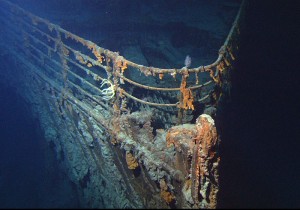
Titanic Wreck Bow
Image: Public Domain (NOAA:http://www.gc.noaa.gov/images/gcil/ATT00561.jpg)

A full 3D scan of Titanic will result in the ability to explore Titanic without visiting the wreck itself according to a report at Earth.com. The project by Magellan and Atlantic productions has collected 715,000 deep-sea images of the wreck in striking clarity.  The scan will allow researchers to really look at Titanic in a whole different way. Using all the data about Titanic from blueprints and other things, the 3D  replica can be used to watch exactly what happened as the ship collided with the iceberg and see in detail about its sinking.

Quite remarkable technology. It will allow people who attend exhibitions to experience Titanic in a whole new way.

Source

Joseph, Jordan. “Images From Underwater Robots Help Scientists Create a Full-sized 3D Replica of the Titanic.” Earth.Com, January 20, 2026. https://www.earth.com/news/images-from-underwater-robots-create-a-full-sized-3d-model-of-the-titanic/
=

In Other News

Kokkinidis, Tasos. “The “Greek Titanic”: The Worst Naval Disaster in Modern Greek History.” GreekReporter.Com. Last modified January 19, 2026. https://greekreporter.com/2026/01/19/greek-titanic-worst-naval-disaster/.

The sinking of the Greek passenger steamer Himara near South Evia on January 19, 1947, claimed at least 383 lives and has gone down in history as the “Greek Titanic.” Previously named Hertha, the vessel was handed over to Greece from Germany following WWII as part of war reparations.

=

McMullen, Justin. “Great Lakes Science Center to Open ‘TITANIC: The Artifact Exhibition’ in May.” Wkyc.Com, January 16, 2026. https://www.wkyc.com/article/news/local/cleveland/great-lakes-science-center-titanic-the-artifact-exhibition-cleveland-may-21-2026/95-1d98a75b-f875-4951-ba82-d18eea7b5a42.

Cleveland’s Great Lakes Science Center will offer a new way for guests to immerse themselves in one of history’s most iconic disasters with “TITANIC: The Artifact Exhibition.” The exhibition, opening May 21, features over 200 artifacts recovered from the site of the shipwreck, life-size reconstructions of rooms on the Ship of Dreams and a virtual reality experience billed as “the most detailed and complete VR tour of Titanic ever created, including areas of the Ship that weren’t previously visible to the public.”

For information about dates, pricing, and other things, go to https://greatscience.com/Titanic.

=

Barber, Imogen. “Major Titanic Exhibition Set for Liverpool in 2026.” The Mail, January 6, 2026. https://www.nwemail.co.uk/news/25741457.major-titanic-exhibition-set-liverpool-2026/.

A major Titanic exhibition is set to come to Liverpool in 2026. Titanic in Focus: White Star Line Hotel, will run from January 8 to March 10 and is set to be held in the former White Star Line headquarters, which is now the White Star Line Hotel. The White Star Line headquarters is the building where the liner was planned, managed, and intimately connected to the city’s maritime history.

 =

Sienra, Regina. “Titanic Museum Exhibit Invites Visitors to Feel How Cold the Water Was When the Ship Sank.” My Modern Met. Last modified January 1, 2026. https://mymodernmet.com/titanic-museum-water-cold-exhibit/.

On top of injuries from the wreck, the frigid temperature of the northern Atlantic Ocean resulted in many losing their lives to hypothermia. According to the Titanic Museum in Pigeon Forge, Tennessee, the water was 28°F—just below freezing, but kept liquid by the high concentrations of sea salt. To illustrate this fact, the Titanic Museum installed an exhibit that allows visitors to put their hands inside a container with 28ºF water. Multiple videos capture visitors trying their best, but giving up just a few seconds later. Those who held a little longer reported feeling a burning sensation on their hands.

 Suggested Titanic Reading

Behe, G. (2012). On board RMS Titanic: Memories of the Maiden Voyage. The History Press.

Brewster, H. (2013). Gilded Lives, Fatal Voyage: The Titanic’s First-Class Passengers and Their World. National Geographic Books.

Rossignol, K. (2012). Titanic 1912: The Original News Reporting of the Sinking of the Titanic. Createspace Independent Publishing Platform.

Titanic News Channel is a participant in the Amazon Services LLC Associates Program, an affiliate advertising program designed to provide a means for sites to earn advertising fees by advertising and linking to Amazon.com.


Titanic News: Story of Titanic Survivor Rescued By Lifeboat

Thomas Patrick Dillon is referred to as the “luckiest survivor” of the Titanic.

Thomas Patrick Dillon signed aboard the Titanic on April 6, 1912, as a trimmer, though rated as an able seaman. Trimmers ensured coal was evenly distributed in the ship’s bunkers to heat the massive boilers, a grueling task involving shovels and wheelbarrows in dark, hot conditions. Dillon was performing this duty when the Titanic struck the iceberg and was later ordered to the steerage deck to evacuate. By then, the lifeboats were gone, so he ended up in the water. Unexpectedly, a passing lifeboat plucked him out, and he survived. He later testified before the British Titanic Inquiry about what he witnessed that night. The Liverpool Echo recently reprinted his testimony, which is quite riveting. He continued serving on other ships, never married, and died in 1939, buried at Ford Cemetery, Sefton. His grave remained unmarked for 89 years until a descendant of his sister petitioned for a headstone.

Thomas Patrick Dillion was buried in an unmarked grave. A descendant of his sister petitioned to have a proper grave marker put up. British Titanic Society helped raise the funds for it.
Image: MSN

Source

Holmes, Wesley. “Titanic Crew Member’s Incredible First-hand Account of Survival.” Liverpool Echo, January 11, 2026. https://www.liverpoolecho.co.uk/news/liverpool-news/titanic-crew-members-incredible-first-33199556.

=

In other news

Rees, Hannah. “I Visited the New Titanic Exhibition in Liverpool and These Three Objects Blew Me Away.” Liverpool Echo, January 10, 2026. https://www.liverpoolecho.co.uk/whats-on/whats-on-news/visited-new-titanic-exhibition-liverpool-33201479.

The exhibition itself isn’t huge. I managed to get around it in about half an hour. Although there are not a museum’s-worth of artefacts on display, the things it has are pretty incredible. From a letter written onboard the ship to playing cards claimed to have been used by someone during the time the iceberg struck, it’s definitely a must visit for anyone with an interest in the Titanic story.

=

Molyneux, Jess, and Wesley Holmes. “Daughter of Titanic Survivor Spent ‘her Whole Life’ Searching for the Truth.” Liverpool Echo, January 6, 2026. https://www.liverpoolecho.co.uk/news/liverpool-news/daughter-titanic-survivor-spent-her-33176751.

A “love child of the Titanic” spent her “whole life” searching for the truth after her mum narrowly escaped the sinking cruise ship with her life. Ellen Mary Walker was born to Kate Florence Philips on January 13 1913, nine months after the doomed vessel went down in the in the North Atlantic Ocean. Her dad, Henry Samuel Morley, died in the disaster. Ellen tirelessly fought all of her adult life to be recognised as Henry’s daughter but died in 2005 without that proof. For more than 20 years, her granddaughter Beverley Lynn Roberts carried out vast research on their family history and links with the Titanic, finally getting the proof her grandmother always wanted. Ellen tirelessly fought all of her adult life to be recognised as Henry’s daughter but died in 2005 with her dream unfulfilled. Finally, in December 2020, Beverley and Duncan Morley, the grandson of Henry’s younger brother Louis Morley, took DNA tests which confirmed that Henry Samuel Morley was indeed Ellen’s father. Beverley said: “We’ve got a plaque up in Worcestershire where one of his shops was in his memory. It was really special for me to do for gran because over the years people kept saying he wasn’t the father and things like that – so I needed to prove that for her.

Suggested Reading

Behe, G. (2012). On board RMS Titanic: Memories of the Maiden Voyage. The History Press.

Brewster, H. (2013). Gilded Lives, Fatal Voyage: The Titanic’s First-Class Passengers and Their World. National Geographic Books.

Lord, Walter, A NIGHT TO REMEMBER, Holt Rinehart and Winston, New York, New York, 1955. Multiple revisions and reprints, notably Illustrated editions (1976,1977,1978 etc.)

Lord, Walter, THE NIGHT LIVES ON, Willian Morrow and Company, New York, New York, 1986 (First Edition)

Rossignol, K. (2012). Titanic 1912: The Original News Reporting of the Sinking of the Titanic. Createspace Independent Publishing Platform.

Titanic News Channel is a participant in the Amazon Services LLC Associates Program, an affiliate advertising program designed to provide a means for sites to earn advertising fees by advertising and linking to Amazon.com.