Tag Archives: Olympic

Titanic Chronology:Olympic Departure Delayed Over Lifeboats (24 April 1912)

[This has been rewritten from 2025 with updated sources, grammar and spelling corrections.]

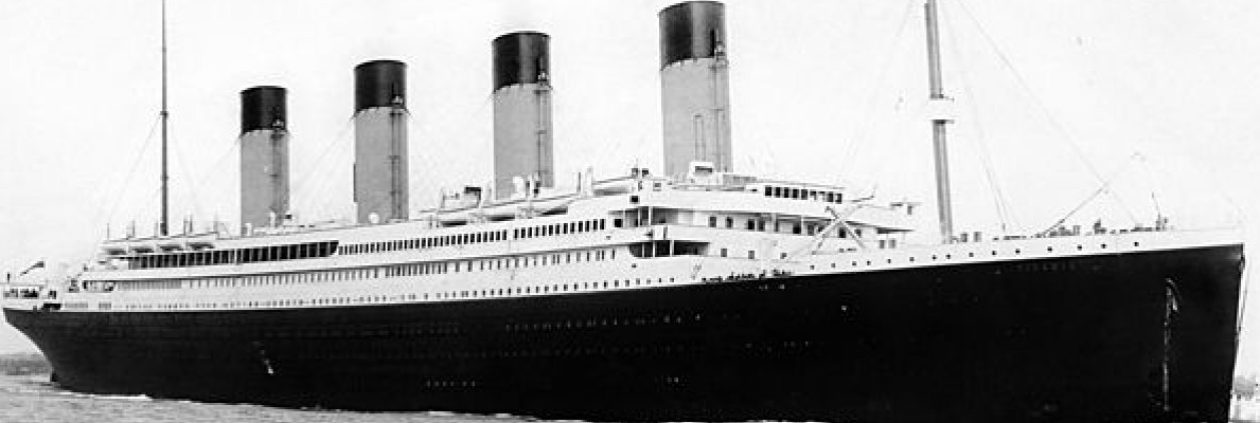
RMS Olympic Arrives In New York on Maiden Voyage, 21 June 1911
Source: U.S. Library of Commerce/Wikimedia Commons
Public Domain

The revelation that there were not enough lifeboats on Titanic led to an immediate change for the ocean liners. Up until the disaster, the general response was that putting more lifeboats aboard ships was impractical as it took away deck space. Almost immediately after Titanic sank they found room for them and proudly told passengers they could now travel in peace knowing of this.

RMS Olympic, Titanic’s sister ship, was scheduled to depart from Southampton on April 24, 1912. They had added 40 collapsible lifeboats they had gotten from troopships to have enough lifeboats for all passengers. However, some crew aboard Olympic were not convinced they were seaworthy. They requested they be replaced by wooden lifeboats, but this was denied. White Star said they were deemed seaworthy by a Board of Trade inspector. 284 firemen went on strike protesting the collapsible lifeboats as unsafe causing departure to be delayed. White Star hired non-union strikers to replace them.

New lifeboats being loaded on RMS Olympic, Titanic’s sister-ship
Circa 22 April 1912-25 April 1912
Author Unknown
Public Domain via Wikimedia Commons

On the following day, representatives of the strikers witnessed a test of four collapsible boats; one was found unseaworthy. The representatives said they would recommend the strikers return to work. However, a separate complaint was lodged about the non-union workers; White Star refused to fire them. 54 crew members left the ship in protest resulting in the ship’s departure being canceled. They would be all charged and convicted of mutiny, but no penalty was awarded due to the circumstances. White Star would hire them all back due to the support they had received from the public. The departure was rescheduled and Olympic would sail for New York on May 15, 1912.

Sources

“Encylopedia Titanica.” https://www.encyclopedia-titanica.org/.

“RMS Olympic | Atlantic Liners.” https://atlanticliners.com/white_star_home/olympic_home/.

Edwards, John. “The Olympic Mutiny – Ocean Liners Magazine.” Ocean Liners Magazine. Last modified May 3, 2020. Accessed April 23, 2026. https://oceanlinersmagazine.com/2020/05/03/olympic-mutiny-2/.

Documentaries & Videos

Oceanliner Designs, “What Happened to RMS Olympic After WW1?,” Video, YouTube, June 19, 2022, https://www.youtube.com/watch?v=cKi3hkqGP8s.

Nautical Study. “The Story of RMS Olympic: Titanic’s Forgotten Twin.” Video. YouTube, April 8, 2021. https://www.youtube.com/watch?v=tHcp1tYfeO0

Suggested Reading

[Disclosure: As an Amazon Associate, I earn from qualifying purchases. This may contain affiliate links, which means I may receive a small commission at no extra cost to you.]

Archbold, Rick, and Dana McCauley. Last Dinner on the Titanic Menus and Recipes From the Great Liner. Hachette Books, 1997.

Behe, George TITANIC: SAFETY, SPEED AND SACRIFICE, Transportation Trails, Polo, IL 1997

Behe, G. (2012). On board RMS Titanic: Memories of the Maiden Voyage. The History Press.

Behe, George. Voices From the Carpathia: Rescuing RMS Titanic, 2015.

Behe, George. The Triumvirate: Captain Edward J. Smith, Bruce Ismay, Thomas Andrews and the Sinking of Titanic.History Press, 2024.

Behe, George. Fate Deals a Hand: The Slippery Fortunes of Titanic’s Professional Gamblers. History Press, 2023.

Ballard, Robert D. Exploring the Titanic. Reprint. Madison Press Books, 2014.

Ballard, Robert D., Lost Liners: From the Titanic to the Andrea Doria the Ocean Floor Reveals Its Greatest Lost Ships(Hyperion, 1998).

Brewster, H. (2013). Gilded Lives, Fatal Voyage: The Titanic’s First-Class Passengers and Their World. National Geographic Books.

Cameron, Stephen. Titanic: Belfast’s Own. Colourpoint, 2011.

Eaton John P. & Haas Charles, TITANIC TRIUMPH AND TRAGEDY, SECOND EDITION, W.W. Norton & Company, New York, New York, 1995 First American Edition

Fitch, Tad, J. Kent Layton, and Bill Wormstedt. On a Sea of Glass: The Life & Loss of the RMS Titanic. Reprint. Amberley Publishing, 2015.

Lord, Walter, A NIGHT TO REMEMBER, Holt Rinehart and Winston, New York, New York, 1955. Multiple revisions and reprints, notably Illustrated editions (1976,1977,1978 etc.)

Lord, Walter, THE NIGHT LIVES ON, Willian Morrow and Company, New York, New York, 1986 (First Edition)

Lynch, Don & Marshall Ken, TITANIC AN ILLUSTRATED HISTORY, Madison Press Books, Toronto, Ontario Canada, 1992

Marshall, L. (2019). Sinking of the Titanic: The Greatest Disaster At Sea – Special Edition with Additional Photographs. Independently Published.

Rossignol, K. (2012). Titanic 1912: The Original News Reporting of the Sinking of the Titanic. Createspace Independent Publishing Platform.

Wade, Wyn Craig. The Titanic, End of a Dream, 1979.

Wilson, A. (2012). Shadow of the Titanic: The Extraordinary Stories of Those Who Survived.


Titanic Chronology: Construction Begins on Titanic (31 Mar 1909)

RMS Titanic ready for launch(1911)
Public Domain (U.S. Library of Congress, digital id#cph.3a27541)


The immense size required to build the Olympic class vessels for the White Star Line by Harland & Wolff required demolishing three existing slipways on Queen’s Island in Belfast Harbor. Two new ones–the largest built at the time–would be used to construct both RMS Olympic and Titanic. Olympic had its keel laid on 16 December 1908 followed by Titanic on 31 March 1909. Since both ships were being built parallel to the other, Queen’s Island became known as “Titanic Quarter.” An enormous gantry was built to hold the crease needed during construction.

Each ship under an expedited schedule was expected to be completed in 26 months. Both ships had double bottoms of 5 feet 3 inches deep supporting 300 frames (24 and 36 inches apart and were 66 feet high) that went up to bridge deck (B deck). Steel plates provided the outer skin of both ships. Both ships were floating box girders with the keel as the backbone of the ship.

Sources

Behe, George TITANIC: SAFETY, SPEED AND SACRIFICE, Transportation Trails, Polo, IL 1997

Eaton John P. & Haas Charles, TITANIC TRIUMPH AND TRAGEDY, SECOND EDITION, W.W. Norton & Company, New York, New York, 1995 First American Edition

Lord, Walter, A NIGHT TO REMEMBER, Holt Rinehart and Winston, New York, New York, 1955. Multiple revisions and reprints, notably Illustrated editions (1976,1977,1978 etc.)

Lord, Walter, THE NIGHT LIVES ON, Willian Morrow and Company, New York, New York, 1986 (First Edition

Lynch, Don & Marshall Ken, TITANIC AN ILLUSTRATED HISTORY, Madison Press Books, Toronto, Ontario Canada, 1992

Titanic News Channel is a participant in the Amazon Services LLC Associates Program, an affiliate advertising program designed to provide a means for sites to earn advertising fees by advertising and linking to Amazon.com.


Titanic History: Olympic Departure Delayed Over Lifeboats (24 April 1912)

RMS Olympic Arrives In New York on Maiden Voyage, 21 June 1911
Source: U.S. Library of Commerce/Wikimedia Commons
Public Domain

In the wake of the Titanic sinking, all passenger ships were equipped with lifeboats for everyone aboard. Olympic, like her sister ship, did not have enough lifeboats but they were quickly added for her upcoming departure from Southampton on 24 April 1912. 40 collapsible lifeboats (all second-hand) had come from troopships. However, there was concern amongst the crew that these lifeboats were not seaworthy.  A request sent by crewman that they should be replaced by wooden lifeboats was declined by White Star which said that it was impossible to do that and they had passed as seaworthy by the Board of Trade inspector.

New lifeboats being loaded on RMS Olympic, Titanic’s sister-ship
Circa 22 April 1912-30 April 1912
Author Unknown
Public Domain via Wikimedia Commons

Not convinced of this, 284 firemen went on strike delaying the departure. Non-union crew were hired from Southampton and from Liverpool to make up the difference. On 25 April 1912, representatives of the strikers witnessed a test of four of the collapsible boats. One was found unseaworthy. The representatives said they would recommend the strikers return to work as a result. A separate objection about the non-union workers who were hired came up as an issue. White Star refused to fire them. This resulted in 54 crewmembers leaving the ship in protest causing the cancellation of the sailing. Later they would be charged and convicted of mutiny, but no punishment was awarded due to the circumstances. White Star Line hired them back in end fearing a public backlash in support of the strikers. Olympic would sail for New York on 15 May 1912.

Sources

Books

Behe, George TITANIC: SAFETY, SPEED AND SACRIFICE, Transportation Trails, Polo, IL 1997

Behe, George (2012). On board RMS Titanic: Memories of the Maiden Voyage. The History Press.

Eaton John P. & Haas Charles, TITANIC TRIUMPH AND TRAGEDY, SECOND EDITION, W.W. Norton & Company, New York, New York, 1995 First American Edition

Lord, Walter, A NIGHT TO REMEMBER, Holt Rinehart and Winston, New York, New York, 1955. Multiple revisions and reprints, notably Illustrated editions (1976,1977,1978 etc.)

Lord, Walter, THE NIGHT LIVES ON, Willian Morrow and Company, New York, New York, 1986 (First Edition)

Lynch, Don & Marshall Ken, TITANIC AN ILLUSTRATED HISTORY, Madison Press Books, Toronto, Ontario Canada, 1992

Internet

Tikkanen and Amy, “Titanic | History, Sinking, Rescue, Survivors, Movies, & Facts,” Encyclopedia Britannica, last modified April 7, 2025, https://www.britannica.com/topic/Titanic.

Encyclopedia Titanica, last modified April 9, 2025, https://www.encyclopedia-titanica.org/.

History.com Editors, “The Titanic: Sinking & Facts | HISTORY,” HISTORY, last modified February 27, 2025, https://www.history.com/articles/titanic.

Titanic Historical Society, Inc., “Titanic Museum | Titanic Historical Society Collection,” Titanic Historical Society, Inc., last modified January 19, 2023, https://titanichistoricalsociety.org/titanic-museum/.

British Pathé, “Titanic: The Facts Told by Real Survivors | British Pathé,” Video, YouTube, August 1, 2011, https://www.youtube.com/watch?v=_xKDRmhp6lQ.

Wikipedia contributors, “Titanic,” Wikipedia, last modified April 6, 2025, https://en.wikipedia.org/wiki/Titanic#Collecting_passengers.

Titanic News Channel is a participant in the Amazon Services LLC Associates Program, an affiliate advertising program designed to provide a means for sites to earn advertising fees by advertising and linking to Amazon.com.


Titanic History: Construction Begins on Titanic (31 Mar 1909)

RMS Titanic ready for launch(1911)
Public Domain (U.S. Library of Congress, digital id#cph.3a27541)

Due to the immense size in constructing the Olympic class vessels for White Star Line, Harland & Wolff had to demolish three existing slipways on Queen’s Island in Belfast Harbor. The two new ones, the largest ever built at that time, would be where both Olympic and Titanic would be constructed. The keel for Olympic was laid on 16 December 1908 and Titanic on 31 March 1909. Both ships would be constructed parallel to each other. Queen’s Island became known as Titanic Quarter and an enormous gantry was built to hold the cranes needed during construction. Expedited completion for each ship was 26 months. The base of both ships had a double bottom of 5 feet 3 inches deep supporting 300 frames (each were 24 and 36 inches apart and measured up to 66 feet) which terminated at the bridge deck (B deck). These were covered with steel plates which provided the outer skin of both ships. Both ships were floating box girders with the keel as the backbone of the ship.

Sources:

Books

Purchase Titanic Books on Amazon.

Behe, George TITANIC: SAFETY, SPEED AND SACRIFICE, Transportation Trails, Polo, IL 1997

Eaton John P. & Haas Charles, TITANIC TRIUMPH AND TRAGEDY, SECOND EDITION, W.W. Norton & Company, New York, New York, 1995 First American Edition

Lord, Walter, A NIGHT TO REMEMBER, Holt Rinehart and Winston, New York, New York, 1955. Multiple revisions and reprints, notably Illustrated editions (1976,1977,1978 etc)

Lord, Walter, THE NIGHT LIVES ON, Willian Morrow and Company, New York, New York, 1986 (First Edition)

Lynch, Don & Marshall Ken, TITANIC AN ILLUSTRATED HISTORY, Madison Press Books, Toronto, Ontario Canada, 1992

Internet

Britannica.com
Encyclopedia Titanica
History.com

Olympic Departure Delayed Over Lifeboats (24 April 1912)

RMS Olympic Arrives In New York on Maiden Voyage, 21 June 1911
Source: U.S. Library of Commerce/Wikimedia Commons
Public Domain

In the wake of the Titanic sinking, all passenger ships were equipped with lifeboats for everyone aboard. Olympic, like her sister ship, did not have enough lifeboats but they were quickly added for her upcoming departure from Southampton on 24 April 1912. 40 collapsible lifeboats (all second-hand) had come from troopships. However, there was concern amongst the crew that these lifeboats were not seaworthy.  A request sent by crewman that they should be replaced by wooden lifeboats was declined by White Star which said that it was impossible to do that and they had passed as seaworthy by the Board of Trade inspector.

New lifeboats being loaded on RMS Olympic, Titanic’s sister-ship
Circa 22 April 1912-30 April 1912
Author Unknown
Public Domain via Wikimedia Commons

Not convinced of this, 284 firemen went on strike delaying the departure. Non-union crew were hired from Southampton and from Liverpool to make up the difference. On 25 April 1912, representatives of the strikers witnessed a test of four of the collapsible boats. One was found unseaworthy. The representatives said they would recommend the strikers return to work as a result. A separate objection about the non-union workers who were hired came up as an issue. White Star refused to fire them. This resulted in 54 crewmembers leaving the ship in protest causing the cancellation of the sailing. Later they would be charged and convicted of mutiny, but no punishment was awarded due to the circumstances. White Star Line hired them back in end fearing a public backlash in support of the strikers. Olympic would sail for New York on 15 May 1912.


Sources:

“April 1912: Olympic’s Canceled Sailing.” Encyclopedia Titanica Message Board, 25 Apr. 2002, www.encyclopedia-titanica.org/community/threads/april-1912-olympics-canceled-sailing.3699.

Edwards, John. “The Olympic Mutiny – Ocean Liners Magazine.” Ocean Liners Magazine, 3 May 2020, oceanlinersmagazine.com/2020/05/03/olympic-mutiny-2.

“RMS Olympic.” Wikipedia, 24 Apr. 2024, en.wikipedia.org/wiki/RMS_Olympic#cite_note-Brewster78-68.
 

Titanic Chronology: Construction Begins on Titanic (31 Mar 1909)

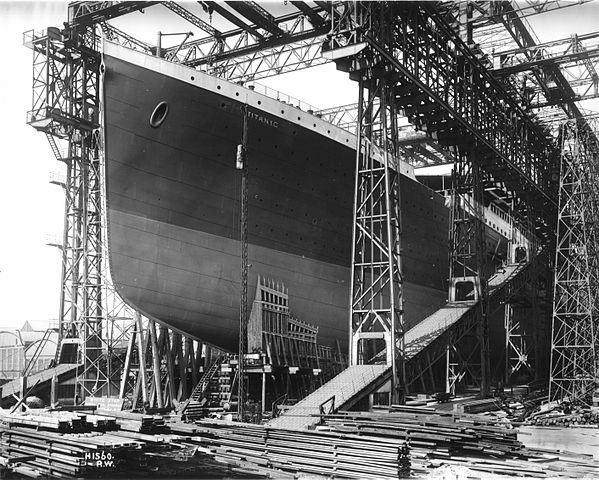
RMS Titanic ready for launch(1911)
Public Domain (U.S. Library of Congress, digital id#cph.3a27541)

Due to the immense size in constructing the Olympic class vessels for White Star Line, Harland & Wolff had to demolish three existing slipways on Queen’s Island in Belfast Harbor. The two new ones, the largest ever built at that time, would be where both Olympic and Titanic would be constructed. The keel for Olympic was laid on 16 December 1908 and Titanic on 31 March 1909. Both ships would be constructed parallel to each other. Queen’s Island became known as Titanic Quarter and an enormous gantry was built to hold the cranes needed during construction. Expedited completion for each ship was 26 months. The base of both ships had a double bottom of 5 feet 3 inches deep supporting 300 frames (each were 24 and 36 inches apart and measured up to 66 feet) which terminated at the bridge deck (B deck). These were covered with steel plates which provided the outer skin of both ships. Both ships were floating box girders with the keel as the backbone of the ship.

Sources:

Books

Purchase Titanic Books on Amazon.

Behe, George TITANIC: SAFETY, SPEED AND SACRIFICE, Transportation Trails, Polo, IL 1997

Eaton John P. & Haas Charles, TITANIC TRIUMPH AND TRAGEDY, SECOND EDITION, W.W. Norton & Company, New York, New York, 1995 First American Edition

Lord, Walter, A NIGHT TO REMEMBER, Holt Rinehart and Winston, New York, New York, 1955. Multiple revisions and reprints, notably Illustrated editions (1976,1977,1978 etc)

Lord, Walter, THE NIGHT LIVES ON, Willian Morrow and Company, New York, New York, 1986 (First Edition)

Lynch, Don & Marshall Ken, TITANIC AN ILLUSTRATED HISTORY, Madison Press Books, Toronto, Ontario Canada, 1992

Internet

Britannica.com
Encyclopedia Titanica
History.com

Olympic Departure Delayed Over Lifeboats (24 April 1912)

RMS Olympic Arrives In New York on Maiden Voyage, 21 June 1911
Source: U.S. Library of Commerce/Wikimedia Commons
Public Domain

In the wake of the Titanic sinking, all passenger ships were equipped with lifeboats for everyone aboard. Olympic, like her sister ship, did not have enough lifeboats but they were quickly added for her upcoming departure from Southampton on 24 April 1912. 40 collapsible lifeboats (all second-hand) had come from troopships. However, there was concern amongst the crew that these lifeboats were not seaworthy.  A request sent by crewman that they should be replaced by wooden lifeboats was declined by White Star which said that it was impossible to do that and they had passed as seaworthy by the Board of Trade inspector.

New lifeboats being loaded on RMS Olympic, Titanic’s sister-ship
Circa 22 April 1912-30 April 1912
Author Unknown
Public Domain via Wikimedia Commons

Not convinced of this, 284 firemen went on strike delaying the departure. Non-union crew were hired from Southampton and from Liverpool to make up the difference. On 25 April 1912, representatives of the strikers witnessed a test of four of the collapsible boats. One was found unseaworthy. The representatives said they would recommend the strikers return to work as a result. A separate objection about the non-union workers who were hired came up as an issue. White Star refused to fire them. This resulted in 54 crewmembers leaving the ship in protest causing the cancellation of the sailing. Later they would be charged and convicted of mutiny, but no punishment was awarded due to the circumstances. White Star Line hired them back in end fearing a public backlash in support of the strikers. Olympic would sail for New York on 15 May 1912.


Sources:

“April 1912: Olympic’s Canceled Sailing.” Encyclopedia Titanica Message Board, 25 Apr. 2002, www.encyclopedia-titanica.org/community/threads/april-1912-olympics-canceled-sailing.3699.

Edwards, John. “The Olympic Mutiny – Ocean Liners Magazine.” Ocean Liners Magazine, 3 May 2020, oceanlinersmagazine.com/2020/05/03/olympic-mutiny-2.

“RMS Olympic.” Wikipedia, 24 Apr. 2024, en.wikipedia.org/wiki/RMS_Olympic#cite_note-Brewster78-68.


Titanic Chronology: Titanic Fitted Out (31 March 1912)

RMS Titanic under construction. Photo taken between February-March 1912
Original source: Robert John Welch (1859-1936), official photographer for Harland & Wolff
Public Domain/Wikimedia Commons

Titanic is nearly completely filled out with just a few things left before her upcoming sea trials. The ship is nearly identical to Olympic, but some changes were made so it was exteriorly different. It had a steel screen with sliding windows on the forward half of the A Deck promenade. This was done at the personal request of Bruce Ismay to provide additional shelter for First Class passengers. B Deck saw changes as well. The promenade space was converted into additional First Class cabins, which included two parkour suites with their own promenade spaces. The À la Carte restaurant was made bigger and the Café Parisien was added as well (it was not on the Olympic). The additional fitting out delayed Titanic and was delayed further by additional work needed on Olympic from a 1911 collision.


Titanic Chronology: Olympic Departure Delayed Over Lifeboats (24 April 1912)

RMS Olympic Arrives In New York on Maiden Voyage, 21 June 1911
Source: U.S. Library of Commerce/Wikimedia Commons
Public Domain

In the wake of the Titanic sinking, all passenger ships were equipped with lifeboats for everyone aboard. Olympic, like her sister ship, did not have enough lifeboats but they were quickly added for her upcoming departure from Southampton on 24 April 1912. 40 collapsible lifeboats (all second-hand) had come from troopships. However, there was concern amongst the crew that these lifeboats were not seaworthy.  A request sent by crewman that they should be replaced by wooden lifeboats was declined by White Star which said that it was impossible to do that and they had passed as seaworthy by the Board of Trade inspector.

Not convinced of this, 284 firemen went on strike delaying the departure. Non-union crew were hired from Southampton and from Liverpool to make up the difference. On 25 April 1912, representatives of the strikers witnessed a test of four of the collapsible boats. One was found unseaworthy. The representatives said they would recommend the strikers return to work as a result. A separate objection about the non-union workers who were hired came up as an issue. White Star refused to fire them. This resulted in 54 crewmembers leaving the ship in protest causing the cancellation of the sailing. Later they would be charged and convicted of mutiny, but no punishment was awarded due to the circumstances. White Star Line hired them back in end fearing a public backlash in support of the strikers. Olympic would sail for New York on 15 May 1912.


Sources:

Encyclopedia Titanica
Ocean Liners Magazine
RMS Olympic (Wikipedia)


,,,

Titanic Chronology: Olympic Departure Delayed Over Lifeboats (24 April 1912)

RMS Olympic Arrives In New York on Maiden Voyage, 21 June 1911
Source: U.S. Library of Commerce/Wikimedia Commons
Public Domain

In the wake of the Titanic sinking, all passenger ships were equipped with lifeboats for everyone aboard. Olympic, like her sister ship, did not have enough lifeboats but they were quickly added for her upcoming departure from Southampton on 24 April 1912. 40 collapsible lifeboats (all second-hand) had come from troopships. However, there was concern amongst the crew that these lifeboats were not seaworthy.  A request sent by crewman that they should be replaced by wooden lifeboats was declined by White Star which said that it was impossible to do that and they had passed as seaworthy by the Board of Trade inspector.

Not convinced of this, 284 firemen went on strike delaying the departure. Non-union crew were hired from Southampton and from Liverpool to make up the difference. On 25 April 1912, representatives of the strikers witnessed a test of four of the collapsible boats. One was found unseaworthy. The representatives said they would recommend the strikers return to work as a result. A separate objection about the non-union workers who were hired came up as an issue. White Star refused to fire them. This resulted in 54 crewmembers leaving the ship in protest causing the cancellation of the sailing. Later they would be charged and convicted of mutiny, but no punishment was awarded due to the circumstances. White Star Line hired them back in end fearing a public backlash in support of the strikers. Olympic would sail for New York on 15 May 1912.


Sources:

Encyclopedia Titanica
Ocean Liners Magazine
RMS Olympic (Wikipedia)


,,,