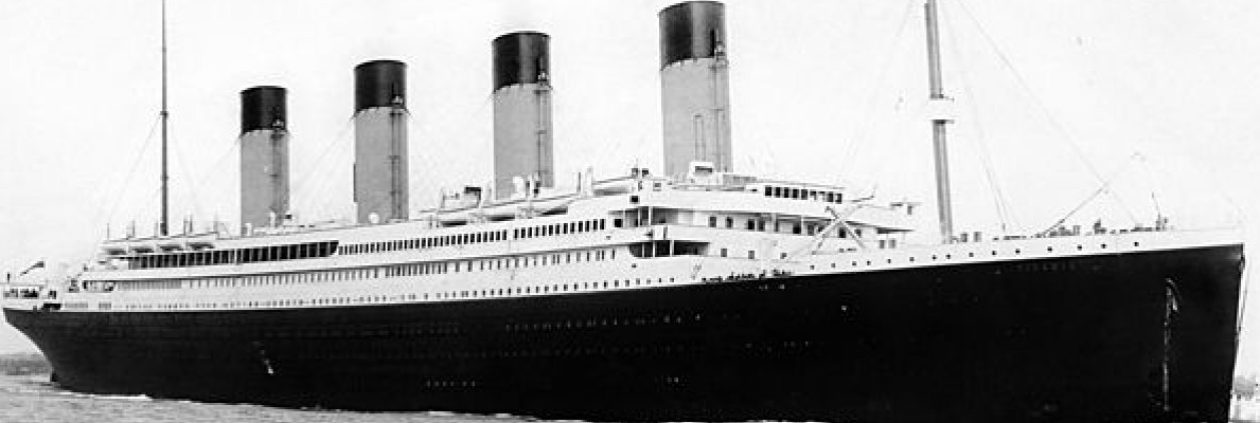
RMS Olympic Arrives In New York on Maiden Voyage, 21 June 1911 Source: U.S. Library of Commerce/Wikimedia Commons Public Domain
In the wake of the Titanic sinking, all passenger ships were equipped with lifeboats for everyone aboard. Olympic, like her sister ship, did not have enough lifeboats but they were quickly added for her upcoming departure from Southampton on 24 April 1912. 40 collapsible lifeboats (all second-hand) had come from troopships. However, there was concern amongst the crew that these lifeboats were not seaworthy. A request sent by crewman that they should be replaced by wooden lifeboats was declined by White Star which said that it was impossible to do that and they had passed as seaworthy by the Board of Trade inspector.
New lifeboats being loaded on RMS Olympic, Titanic’s sister-ship Circa 22 April 1912-30 April 1912 Author Unknown Public Domain via Wikimedia Commons
Not convinced of this, 284 firemen went on strike delaying the departure. Non-union crew were hired from Southampton and from Liverpool to make up the difference. On 25 April 1912, representatives of the strikers witnessed a test of four of the collapsible boats. One was found unseaworthy. The representatives said they would recommend the strikers return to work as a result. A separate objection about the non-union workers who were hired came up as an issue. White Star refused to fire them. This resulted in 54 crewmembers leaving the ship in protest causing the cancellation of the sailing. Later they would be charged and convicted of mutiny, but no punishment was awarded due to the circumstances. White Star Line hired them back in end fearing a public backlash in support of the strikers. Olympic would sail for New York on 15 May 1912.
Senator William Alden Smith of Michigan Unknown date (between 1905 and 1945) Public Domain
The shocking news of the Titanic sinking had people on both sides of the Atlantic wanting an inquiry into how it happened. The United States would be the first to do so, but not without criticism from the British. U.S. Senator William Alden Smith, a Republican from Michigan, believed that rapid action was needed. He was also concerned that many of the surviving witnesses aboard Carpathia would disperse and head home. This led to his proposal on 17 April 1912 that an official inquiry be held on the sinking. President Taft concurred having lost his good friend and military advisor Archibald Butt in the sinking. Taft ordered a U.S. naval escort for Carpathia as well.
Smith along with fellow subcommittee member Francis G. Newlands (and other officials) quickly traveled to New York by train in order to meet Carpathia when it docked on 18 April in the evening. Smith, Newlands, and the other officials boarded Carpathia and served subpoenas upon J. Bruce Ismay and all the surviving officers requiring them to stay in the U.S. for the hearings which started the next day in New York. Survivors and other witnesses who had knowledge would also testify as well. The hearings would begin at the Waldorf-Astoria Hotel in New York and later be moved to Washington D.C. at the Russell Senate Office Building. The hearings, with many recesses in-between, would run for 18 days till May 25, 1912.
Sketch of J. Bruce Ismay giving testimony before U.S. Senate Titanic inquiry. Public Domain (via Wikipedia)Witnesses who attended the United States Senate inquiry into the sinking of the RMS Titanic Author: Louis Grant, The Graphic, 11 May 1912 Public Domain via Wikimedia Commons
The subcommittee was composed of seven senators (three Republicans and three Democrats) with Smith as chair. The composition was carefully chosen to include the various wings of the two parties. Members of the committee asked questions, but Smith personally handled the questioning of the chief witnesses. This led to friction within the committee as some felt he was trying to seize the limelight. The result was some members would only infrequently attend the hearings as there was little for them to do. Harsher criticism came from the British press and also the British government as well. Smith was not portrayed well and was called an opportunist. The British government (and the press as well) said the U.S. had no jurisdiction since this was a British ship. This conveniently forgot that White Star Line was owned by an American, J.P. Morgan. The British would hold their own inquiry much later after the American one had concluded.
Sources
Books
Behe, George TITANIC: SAFETY, SPEED AND SACRIFICE, Transportation Trails, Polo, IL 1997
Eaton John P. & Haas Charles, TITANIC TRIUMPH AND TRAGEDY, SECOND EDITION, W.W. Norton & Company, New York, New York, 1995 First American Edition
Lord, Walter, A NIGHT TO REMEMBER, Holt Rinehart and Winston, New York, New York, 1955. Multiple revisions and reprints, notably Illustrated editions (1976,1977,1978 etc)
Lord, Walter, THE NIGHT LIVES ON, Willian Morrow and Company, New York, New York, 1986 (First Edition)
Lynch, Don & Marshall Ken, TITANIC AN ILLUSTRATED HISTORY, Madison Press Books, Toronto, Ontario Canada, 1992
Wade, Wyn Craig. THE TITANIC: END OF A DREAM. Penguin Mass Market, 1992.
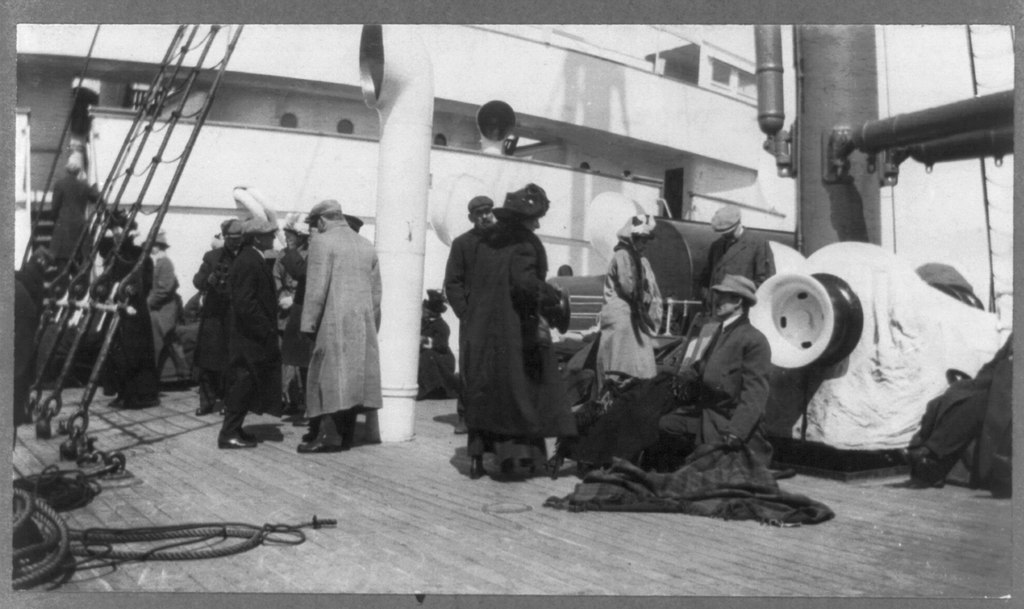
Titanic survivors aboard Carpathia. U.S. Library of Congress, digital id: cph 3b04287 Public Domain
Since the sinking of the Titanic, lingering questions as to who survived and who died were the subject of much speculation. Captain Arthur Rostron of the Carpathia had kept a media blackout refusing to answer any messages. J. Bruce Ismay was sequestered in a cabin and stayed there for the entire voyage back to New York. He sent a message to the New York office of the White Star Line informing of the sinking. Except for survivors sending their own messages out, no one really knew who had lived or died when Carpathia finally arrived on a rainy Thursday evening on 18 April 1912.
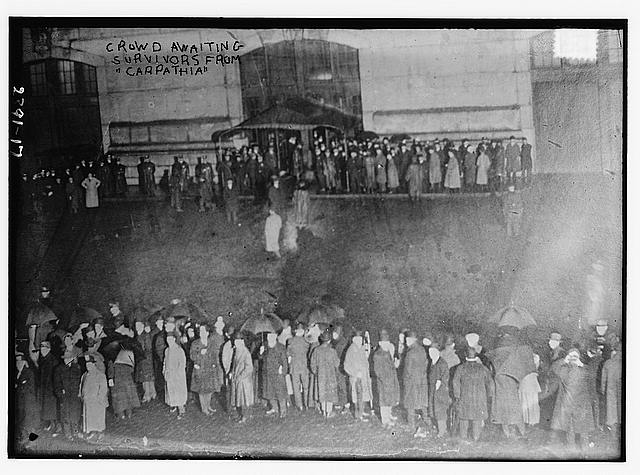
News reporters had gathered in boats with megaphones yelling to people aboard they would pay for their survivor accounts. One enterprising reporter did manage to get aboard and get some quick interviews. He tossed the notes inside a cigar box lined with champagne corks to a Hearst editor in a tugboat. It would be rushed back to the New York World for a special evening edition. Meanwhile in the pier sheds there were some 1,000 people-mainly friends and relatives-gathered there. J.P. Morgan Jr. was there along with members of the Widener and Thayer families who had been on the special trains that had been heading north to Halifax to greet the survivors there. There was some crying heard. As Carpathia slowly made her way down the battery, it was estimated close to 10,000 people were watching, mostly in silence, as she passed. Some numbers are higher at 40,000.
Crowd Awaiting Survivors of Titanic, 18 April 1912 U.S. Library of Congress,Bain Collection, Control #ggb2004010347 Public Domain
Carpathia would make a slight detour to the White Star dock to drop off her lifeboats. It was a stunning moment when you realize that those lifeboats, along with the flotsam and jetsam, were all that remained of the once proud RMS Titanic. Although arriving in New York at 8:30 pm, the delay to unload the lifeboats along with the rain and darkness meant Carpathia did not dock at Pier 54 until after 9 pm. The gangway went down at 9:25 pm. There were a large detachment of doctors, nurses, nuns, and priests ready to board along with stretchers. According to one report, three women did not want to wait for the gangway to come down and climbed down ladders from the ship. The Salvation Army was also there to render assistance as well.
Many men removed their hats in respect when the gangway went down. Many survivors had little clothing, just what they had on when they left Titanic, and wore a hodge-podge of whatever they could get on Carpathia. Two women were apparently hysterical (one report said violent and deranged). Those who had relatives waiting were greeted by them. Relief for those who had no one was done by the Women’s Relief Committee, the Travelers Aid Society of New York, the Council of Jewish women and many more. Transportation was provided to shelters provided by these groups. Those who had relatives in New York quickly left while those who had relatives within the U.S. stayed for a few days to arrange transportation. The Pennsylvania Railroad provided a special free train to take survivors to Philadelphia. The surviving crew members would be taken to the Red Star Line steamer SS Lapland and housed there temporarily in passenger cabins.
Meanwhile other interesting parties boarded the Carpathia that night. They were U.S. Senators William Alden Smith, Francis G. Newlands, and others armed with subpoenas to serve on J. Bruce Ismay, as well as the surviving officers and crew of Titanic. An inquiry was about to begin, and they wanted to make sure they would be all be there for it the following day at the Waldorf Astoria in New York.
Sources:
Books
Behe, George TITANIC: SAFETY, SPEED AND SACRIFICE, Transportation Trails, Polo, IL 1997
Eaton John P. & Haas Charles, TITANIC TRIUMPH AND TRAGEDY, SECOND EDITION, W.W. Norton & Company, New York, New York, 1995 First American Edition
Lord, Walter, A NIGHT TO REMEMBER, Holt Rinehart and Winston, New York, New York, 1955. Multiple revisions and reprints, notably Illustrated editions (1976,1977,1978 etc)
Lord, Walter, THE NIGHT LIVES ON, Willian Morrow and Company, New York, New York, 1986 (First Edition)
Lynch, Don & Marshall Ken, TITANIC AN ILLUSTRATED HISTORY, Madison Press Books, Toronto, Ontario Canada, 1992
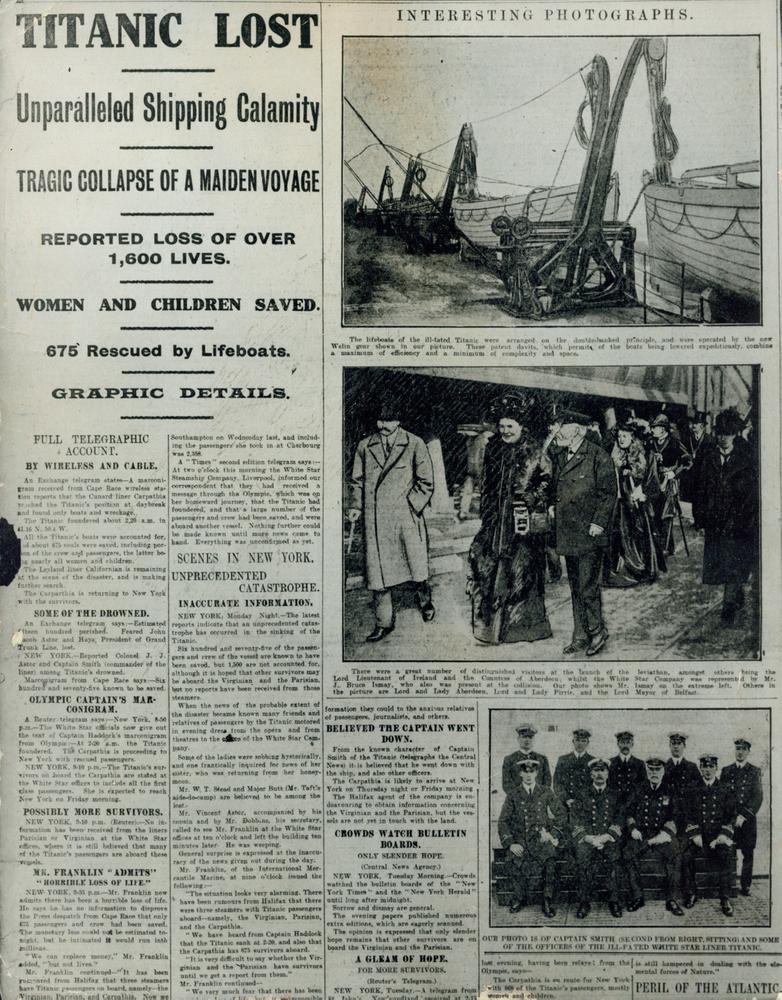
Titanic lost: Belfast Telegraph front page on 16 April 1912 Source: Belfast Telegraph
As the world awaits news of who survived Titanic, the White Star Line decides to hire ships to go out and retrieve bodies. Reports of bodies floating in the Atlantic had been reported and White Star wanted to retrieve them as quickly as possible for a number of practical reasons. Ocean currents would eventually move them out of the area, so getting them retrieved as soon as possible would allow families to lay them to rest. Another reason for speed was that sea creatures and birds would start consuming the bodies making identification difficult as well. The cable ship Mackay Bennett was the first ship hired by White Star. Three other ships would be hired as well: Minia (a cable ship), Montmagny (lighthouse supply ship), and the sealing vessel Algerine.
CS Mackay Bennett (circa 1884) Artist Unknown Public Domain/Wikimedia Commons
Each ship would carry the necessary supplies to retrieve and embalm the bodies. The Mackay Bennett emptied itself of its normal stores in Halifax, Nova Scotia and brought aboard supplies for its new mission:
Embalming supplies and coffins (100)
Chief embalmer of John Snow & Co., John R. Snow Jr.
100 tons of ice to store the bodies
Canon Kenneth Hind of All Saints Cathedral, Halifax
Mackay Bennett left Halifax at 12:28 pm on 17 April 1912. Due to heavy fog and rough seas, it would take four days to reach where Titanic sank. They began recovery at 0600 on 20 April. Bodies were manually recovered by skiffs and brought back to the ship. They recovered 51 bodies but realized they did not have enough embalming supplies on hand. Since the laws at the time required bodies to be embalmed before unloading from ships docking in a Canadian port, they followed a general procedure:
First class passengers were embalmed and placed in coffins.
Second class passengers embalmed but wrapped in canvas.
Third class, crew, and bodies that were too decomposed or disfigured were buried at sea.
Bodies that were brought back were either transported by relatives to their final resting place or interred in Halifax, Nova Scotia.
Back in Halifax John Henry Barnstead, the Registrar of Vital Statistics, developed a system of identifying the bodies and protect personal possessions of the deceased. Since Halifax had direct rail and steamship connections, this made it easier for families of victims to travel to Halifax and identify the bodies. A large temporary morgue was set up using a local curling rink and undertakers from all over the area were asked to assist. Many families did decide to transport the bodies back to their hometowns in the United States or in Europe. Unclaimed or unidentified bodies would be interred in Halifax. 150 bodies would eventually be interred in Halifax cemeteries. The largest number are in the Fairview Lawn Cemetery followed by the nearby Mount Olivet and Baron de Hirsch cemeteries.
Titanic Grave markers at Fairview Cemetery Halifax N.S William B. Grice (Wikimedia)
Bodies were still being reported in May. The Oceanic found three bodies in Titanic’s Collapsible A over two hundred miles from the sinking. When Carpathia had arrived, Fifth Officer Harold Lowe and other crewmembers removed the survivors but left three dead bodies aboard. Oceanic retrieved their bodies and then buried them at sea. On 22 May the Algerine found the body of steward James McGrady. His body was brought back to Halifax and buried in June at the Fairview Lawn Cemetery.
In the end only 333 bodies were recovered, a small number compared to the over 1,500 victims. Currents quickly moved bodies hundreds of miles making their recovery difficult. Life jackets will eventually disintegrate allowing bodies to sink or drift further away. Most who lost family, friends, and relatives had no body to bury since it was never recovered.
Sources
Books
Behe, George TITANIC: SAFETY, SPEED AND SACRIFICE, Transportation Trails, Polo, IL 1997
Eaton John P. & Haas Charles, TITANIC TRIUMPH AND TRAGEDY, SECOND EDITION, W.W. Norton & Company, New York, New York, 1995 First American Edition
Lord, Walter, A NIGHT TO REMEMBER, Holt Rinehart and Winston, New York, New York, 1955. Multiple revisions and reprints, notably Illustrated editions (1976,1977,1978 etc)
Lord, Walter, THE NIGHT LIVES ON, Willian Morrow and Company, New York, New York, 1986 (First Edition)
Lynch, Don & Marshall Ken, TITANIC AN ILLUSTRATED HISTORY, Madison Press Books, Toronto, Ontario Canada, 1992
Titanic lost: Belfast Telegraph front page on 16 April 1912 Source: Belfast Telegraph
The distress call from Titanic was greeted with disbelief and shock. News reached New York on Monday evening about the distress call. Philip Franklin, who was in charge of the White Star Line office in New York issued a statement around 10:30 pm that “There is no danger that Titanic will sink. The boat is unsinkable, and nothing but inconvenience will be suffered by the passengers.”
Messages from Titanic and other ships responding were being relayed to Cape Race and then re-transmitted on. It is during this process that things likely went amiss causing confusion. Pieces of messages got mixed up with others indicating Titanic and its passengers had been saved and was in tow to Halifax. This led to Franklin issuing another statement later that said (in part) “We hope that reports from the Virginian and the Parisian will prove to be true, and that they will turn up with some of the passengers…”Most newspapers were reporting that evening that all Titanic passengers had been saved and on various ships. Titanic was being towed to Halifax. Based on that, White Star chartered trains to take families to Halifax to meet their relatives there.
Over at the New York Times, its managing editor Carr van Anda, did not accept this. Messages from Titanic had stopped indicating it likely sank. On Monday morning, 15 April 1912, the headline of the Times had the following headline:
New Liner Titanic Hits Iceberg;
Sinking By Bow At Midnight;
Women Put Off In Lifeboats;
Last Wireless At 12:27 A.M Blurred
By midnight on the previous day, Franklin had begun to realize that something had gone terribly wrong, but it was still unconfirmed at that point. “I thought her unsinkable, and I based my opinion on the best expert advice. I do not understand it.” He would weep later when the truth would eventually be learned. As the trains sped north to Halifax, they would be stopped and turned back to New York with apologies to all aboard. The survivors were coming to New York instead. The message sent by J. Bruce Ismay from Carpathia to White Star reported Titanic had sunk. It would be learned all the survivors were aboard Carpathia bound for New York.
—
There were no such confusing reports in Ireland, Britain or elsewhere. In Belfast, those who had worked on the great ship awoke the next day to see two words on the news board the kids had to sell newspapers:
Titanic Sunk
Colorised photo of Ned Parfett, best known as the “Titanic paperboy”, holding a large newspaper about the sinking, standing outside the White Star Line offices at Oceanic House on Cockspur Street near Trafalgar Square in London SW1, April 16, 1912. Public Domain via Wikimedia Commons
They could not believe what they were reading. The ship they had helped build, craft, and launch was now lying on the bottom of the Atlantic. Many wept and others just stood in shock at the news. Ships back then were constructed by hand so many who had labored on the ship had a sense of pride at what they did. In Southampton, many went to the White Star Line offices to find out what had happened to their husbands, sons or daughters. White Star had lists but not great ones with just last names listed in many cases. Southampton would see many homes without fathers, mothers (or both) as a result of the Titanic. As news spread around the world, anxious families would also inquire but would not be able to learn anything.
Aboard Carpathia, Ismay isolated himself in a cabin. Wireless messages were being sent outbound by survivors aboard, but it would not respond to specific requests, even one from the President Taft of the United States inquiring about the fate of his friend and military aide Colonel Archibald Butt.
That would not be known for a few days. Carpathia was inbound to New York and only when it arrived on 18 April 1912, would they truly know who had survived and who had perished. And all that remained of that once great ship were the lifeboats that would be unloaded at the White Star Line pier.
Sources:
Books
Behe, George TITANIC: SAFETY, SPEED AND SACRIFICE, Transportation Trails, Polo, IL 1997
Eaton John P. & Haas Charles, TITANIC TRIUMPH AND TRAGEDY, SECOND EDITION, W.W. Norton & Company, New York, New York, 1995 First American Edition
Lord, Walter, A NIGHT TO REMEMBER, Holt Rinehart and Winston, New York, New York, 1955. Multiple revisions and reprints, notably Illustrated editions (1976,1977,1978 etc)
Lord, Walter, THE NIGHT LIVES ON, Willian Morrow and Company, New York, New York, 1986 (First Edition)
Lynch, Don & Marshall Ken, TITANIC AN ILLUSTRATED HISTORY, Madison Press Books, Toronto, Ontario Canada, 1992
Sunday, 14 April 1912 was what many survivors’ thought was the best day of the journey so far. Religious service was held in the First-Class dining room at 10:30 am. Many in first and second class had a very nice meal afterwards, followed by a stroll around the deck. Ice warnings had been received from other ships in the past two days, but no one had plotted them or gave them deep thought. Icebergs were common and no one thought they were that serious of an issue at the time. At noon the ship’s officers got together on the wing bridge to calculate the Titanic’s position.
About 1:42 pm, White Star Liner Baltic reported large quantities of field ice along with the coordinates. The message was delivered to Captain Edward J. Smith who passed it on to Joseph Bruce Ismay, chairman of White Star Line. The Amerika sighted a large iceberg at 1:45 pm and transmitted notice and its coordinates as well. As the afternoon progressed, air temperature began to drop and by 7:30 pm was at 33F. At 5:50 pm, Captain Smith orders the course to south and west of the usual course taken, possibly, due to the ice warnings.
The only picture of the Marconi radio room onboard the Titanic. Harold Bride is seated at his station. Photo was taken by Father Francis Browne, SJ, while aboard Titanic. Public Domain/Wikimedia Commons
At 7:30 pm, the Californian reported three large icebergs, which were reported to the bridge while Second Officer Charles Lightoller is on duty. Captain Smith was attending a dinner in the First-Class Dining Room. Contrary to what is shown in A Night to Remember, messages were not delivered by the wireless operators but by the Titanic crew. Lightoller would order the crew to watch the fresh water supply as the temperature was dropping to freezing. Smith would return to the bridge at 8:55 pm and discuss with Lightoller the weather and icebergs. Captain Smith would retire for the night at 9:20 pm telling Lightoller to wake him “if becomes at all doubtful’. At 9:30 pm, Lightoller would advise the lookouts to watch for icebergs.
The Mesaba sent a warning of heavy pack ice and icebergs at 9:40 pm. However, due to heavy wireless passenger traffic, Jack Phillips was too busy to have it sent to the bridge. At 10:00 pm, First Officer William Murdoch would relieve Second Officer Lightoller. Lightoller would tell Murdoch of current conditions. The lookouts were also relieved by the new watch. Lookouts Frederick Fleet and Reginald Lee are advised to watch for icebergs. Since it is a moonless night and the sea calm, they will need to be extra alert in looking for any ice fields or icebergs that might appear. Also, they have no binoculars as they have been misplaced. The temperature continues to drop and is recorded at 31F.
The Californian decides to stop at 10:55 pm due to large field ice in its way. Warnings were sent out to all shipping in the area. The wireless operator contacts Titanic with additional ice warning. Jack Phillips sends back a blunt response telling him to shut up as he was sending messages through Cape Race. At around 11:00 pm, most people are either in bed or heading back to their cabins. A few might still be enjoying a drink, a card game, or reading. By 11:30 pm, the Californian wireless operator, after listening to Titanic’s message traffic, shuts down and goes to bed.
Photograph of iceberg taken by chief steward of Prinz Adalbert on morning of 15 April 1912 near where Titanic sank. At the time he had not learned of the Titanic disaster. Smears of red paint along the base caught his attention. The photo and accompanying statement were sent to Titanic’s lawyers, which hung in their boardroom until the firm dissolved in 2002. Public Domain
Just before 11:40 pm, lookouts spot an iceberg 500 feet away. Lookout Frederick Fleet rings the bell three times and calls the bridge telling Murdoch ‘Iceberg, right ahead.’ Titanic was doing around 21 knots (or slightly less) at the time. Murdoch gives the order “hard a starboard,” orders the engines stopped then full astern, and seals the watertight doors. Due to the size, ships of this size have a larger turning radius then most. At first it looked like Titanic would hit the iceberg dead on but then slowly veered to port to pass by on the starboard. Some speculate the iceberg may have been inverted making it larger underwater than on top. The iceberg makes contact with the ship causing large and small punctures in the process as it scraped the ship.
Thomas Andrews, 1911 Public Domain/Wikimedia Commons
Captain Smith would come to the bridge to determine what happened and was informed they struck an iceberg. Reports started coming in of water in the mail room and other areas of the ship. Titanic designer Thomas Andrews assesses the damage along with Captain Smith. With water coming in the mail room and in the first five compartments of the ship, Andrews informs Smith that Titanic will stay afloat for 1 ½ to 2 hours. The ship could survive one compartment being damaged but all not all five with water coming pulling it down at the bow. Captain Smith was in a state of shock at this news and had to be prodded to order lifeboats be lowered, muster the crew, and evacuate the passengers. Since lifeboats were based on tonnage (per British Board of Trade regulations) and not capacity, 1,178 of 2,227 passengers could be put into them if filled to capacity.
RMS Carpathia (date unknown) Image: public domain
At 12:15 am, Captain Smith orders wireless operators Jack Phillips and Harold Bride to send out distress messages. While SOS is the new distress signal, they also send out the older one CQD (come quick distress). Many ships will hear the distress but many like the Frankfurt are too far away to respond. On Carpathia, approximately 58 miles away, its wireless operator heard the message at 12.20 am, “Come at once. We have struck a berg. It’s a CQD, old man.” Once informed of this, Captain Arthur Rostron immediately orders his ship make to the coordinates provided by Titanic. As the ship speeds to the scene at top speed, he issues a flurry of orders to make ready the ship for receiving survivors. It would take three hours for Carpathia to arrive.
Since Titanic lacked a central alarm system to notify passengers to evacuate the ship, it fell to stewards and others to knock on passenger’s doors to rouse them. At first many did not believe the ship was in any danger but that would become apparent as time went on. Since the crew had not had any training or drills in lowering the lifeboats, they were unsure if the davits were strong enough or the capacity of the lifeboats. And the system of who could board lifeboats varied from port or starboard side. Lightoller was strict about women and children first. At 12:45 am, lifeboat number 7 on the starboard side was lowered but only had 27 people instead of full capacity of 65.
Titanic fired distress rockets as well to get the attention of any nearby ships. They were seen by the Californian, but they did not know the source and did not investigate. A ship appeared to be ten miles away but did not respond to rockets or the Morse lamp. Later some thought this was a Norwegian fishing vessel illegally hunting seals, but evidence did not confirm it. Whether this ship was a mirage caused by conditions on the sea or atmospherics, or the real thing, has never been confirmed. By 12:55 am, lifeboats 5 and 6 are lowered. Number 6 had passenger Molly Brown and lookout Frederick Fleet. Quartermaster Robert Hitchens, who was at the helm when Titanic struck the iceberg, would be criticized later for refusing to look for survivors.
By 1:00 am, lifeboat 3 is lowered and only carries 39 people, 12 from the crew. Lifeboat 1 is lowered with only 12 people. It is one of the emergency cutters designed for quick lowering and raising in cases of a person overboard. It can hold up to 40. Both Sir Cosmo Edmund-Duff Gordon and his wife, Lucy Duff-Gordon, are aboard this lifeboat. They would be accused, but denied it, of bribing the crew by giving them £5 each to keep others from using the boat. Sir Cosmo would say the money was offered to them for them to replace lost clothing and gear.
At 1:10 am, the first lifeboat on the port side is lowered. Number 8 only had 28 people on it and included the Countess of Rothes, Lucy Noel Martha. Ida and Isidor Strauss were offered seats on this lifeboat but declined. Isidor believed women and children should go first and Ida did not want to leave her husband. “Where you go, I go,” she said. Both would remain aboard Titanic and perish when it sank. Lifeboat 10 is launched at 1:20 am and had the nine-week-old Milvina Dean on it. She would become later one of the survivors often interviewed about Titanic and lived a long life till dying in 2009 at the age of 97. Lifeboat 9 is launched and is near capacity at 56 people aboard. Benjamin Guggenheim’s mistress was aboard, but he remained with his valet aboard the ship dressed in formal attire.
On Olympic, there was some confusion about the distress call they received. It is possible that with all the signals going out that night, that some got jumbled up (this proved true later when apparently confusing messages were received in New York). About 1:25 am, they radioed Titanic asking if they were steaming to meet them. The response was simple: that they were putting women off in the boats. Later Olympic would be informed by Carpathia of the sinking. Panic was starting to set in aboard the ship as it became very obvious by this time she was sinking and filling up with water. A panic near lifeboat 14 caused Fifth Officer Boxhall to discharge his weapon. He took command of the lifeboat and would later transfer people into other lifeboats so they could look for survivors. The lowering of lifeboat 13 is quickly followed by 15. However, it drifts underneath the lowering lifeboat but quick action by crewman in 13 saves it by cutting the ropes and rowing away.
Between 1:35-1:40 am lifeboat 16 and collapsible C is lowered. On C is White Star chairman J. Bruce Ismay. Later he would be criticized for boarding before women and children. He would claim that neither were around when he boarded the lifeboat. True or not, it would stick with him for the rest of his life with some calling him a coward. By 1:45 am, Emergency Cutter 2 is launched with Boxhall with 20 people. Lifeboats 11 and 4 would be launched as well. Madeline Astor, five months pregnant, is aboard number 4. Her husband, John Jacob Astor, would ask to join her but Lightoller, who followed the order of women and children first, declined. Astor’s body would later be recovered.
Titanic Captain Edward J Smith, 1911 Author unknown. Published after sinking in 1912 Public Domain/Wikipedia Commons
By 2 am only the collapsible boats remain. Titanic had sunk low enough that the stern propellers were now visible. Collapsible lifeboat D is launched from the roof of the officer’s quarters and would have 20 people in it. Collapsible A is washed off the deck and partly filled with water. Fifth Officer Harold Lowe in lifeboat 14 finds only 12 of the 20 that got into it are alive. Collapsible B falls and is swept off before it can be righted. The now overturned lifeboats are used by 30 people including Lightoller and wireless operator Bride. At this point, Captain Smith releases the crew saying, “it’s every man for himself.” Smith was last seen on the bridge and his body was never recovered. Wireless operator Phillips sends the final distress signal at 2:17 am. He made it to collapsible lifeboat B but died from exposure. His body would not be recovered.
Titanic is plunged into darkness as its power generators fail. The bow continues its inexorable pull downward as the stern rises higher out of the water. Around 2:18 am, the tremendous strain on the midsection of the ship causes it to break in two between the third and fourth funnels. The bow would disappear beneath the waves while the stern settled back in the water. At this moment, those on the stern can literally swim away before it starts rising. Water would fill into the stern causing it to rise and becoming vertical. At 2:20 am, it would begin the final plunge and disappear. The Titanic was gone.
Collapsible lifeboat D photographed by passenger on Carpathia on the morning of 15 April 1912. Public Domain(Wikipedia)
Carpathia would arrive in the area firing rockets to get attention at around 3:30 am. Lifeboat 2 was the first to reach the rescue ship. It would take several hours to pick up all the survivors. Ismay would send a message to the White Star Line office informing Titanic sank. He then would isolate himself in a cabin for the remainder of the voyage to New York. The Californian arrived on scene at 8:30 am. They learned of the sinking around 5:30 am. They find no survivors.
At 8:50 am, Carpathia sounded her whistle and began heading to New York with the 705 survivors aboard. Due to garbled and mixed-up messages, the American press believed at first disaster had been averted and she was in tow. People were gathering outside of the White Star Liner offices in New York, London, and other offices for information. The White Star Line office in New York believed Titanic was okay and conveyed that to the public that morning. However, that changed by the afternoon when Ismay’s message from Californian was received, and other information also confirmed it as well. Titanic, the pride of the White Star Line, had sunk on her maiden voyage taking 1,500 lives with only 705 survivors.
Sources:
Books
Behe, George TITANIC: SAFETY, SPEED AND SACRIFICE, Transportation Trails, Polo, IL 1997
Eaton John P. & Haas Charles, TITANIC TRIUMPH AND TRAGEDY, SECOND EDITION, W.W. Norton & Company, New York, New York, 1995 First American Edition
Lord, Walter, A NIGHT TO REMEMBER, Holt Rinehart and Winston, New York, New York, 1955. Multiple revisions and reprints, notably Illustrated editions (1976,1977,1978 etc)
The Grand Staircase of the RMS Olympic Photo:Public Domain (Wikipedia)
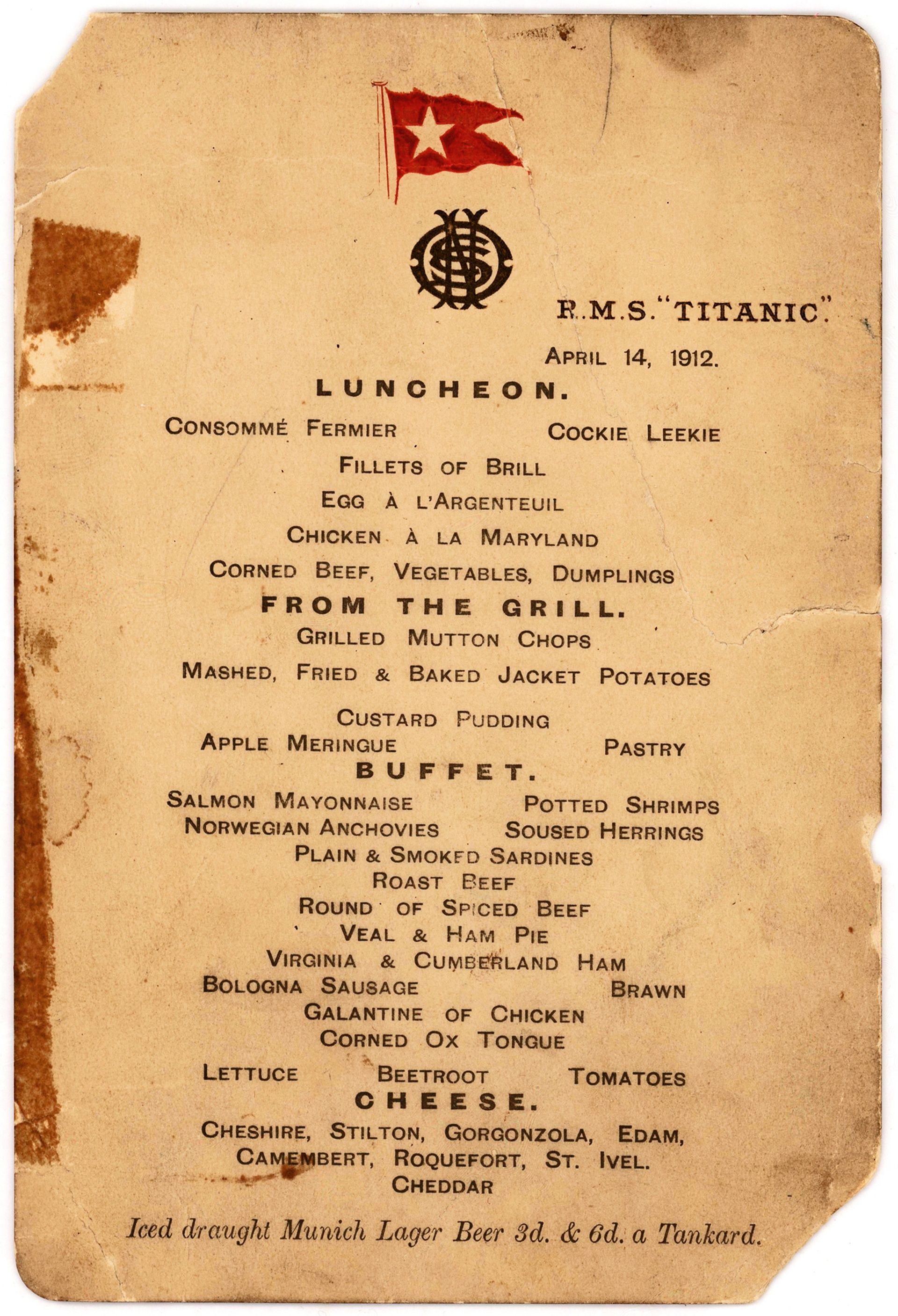
Titanic is en route to New York and people settle into their familiar patterns. Mealtimes are very popular to meet with your fellow travelers and all classes have a place to gather and eat. The ticket price covers all three meals though first class has its own a la carte restaurant where you can buy dishes sold separately. Food portions were plentiful, unlike earlier passenger liners, so you got a lot of food for the ticket. In many ways, Titanic and other ships that followed this pattern became adept in creating expert meals at any time of the day with a dedicated crew of food professionals with access to quality foods stored aboard the ship.
The first class gymnasium on Titanic. Photo: Robert Welch (1859–1936) Public Domain via Wikimedia Commons
Working off all that food was not difficult either. You could take laps walking around the deck or use one of the many exercising equipment aboard. The gymnasium was quite impressive with punching bags, stationary bikes (called cycle racing machines), electric horse and camel, and a squash court (men and women played at different times). The mechanical rowing machine was apparently very popular. Of course, you could work up a sweat in the Turkish bath or treat yourself to a nice massage. There was an electric bath which today would be like a tanning bed. It was more of a curiosity than anything else. One had to exhibit a certain amount of bravery to get into something that looked like an iron lung.
RMS Olympic First Class Lounge (1912) Photo: Robert John Welch (1859-1936), official photographer for Harland & Wolff Public Domain/Wikimedia Commons
You might decide to relax in the library or send a telegram off to family using the Marconi wireless. April 13 was actually a nice day to be outside on the Titanic. Spring-like temperatures were in the upper 50’s, so one could enjoy walking the deck. Or you could be indoors in one of the smoke rooms playing cards. And there were professional gamblers aboard who made a living plying the ocean liners. They were known to White Star and other liners of the day, but the liners simply warned passengers that they were not responsible for such private games.
These gamblers were keen on trying to get as much money from those who could afford to lose. And they readily took advantage of the naïve and inexperienced. They did face steely competition though from men who, like the professional gambler, spent time in their gentleman’s clubs (not to be confused with its modern day nearly porn image with strippers) playing cards with other members. They usually were just as skilled as the professional gambler and knew what to watch out for.
Dinners were when everyone in first and second class had to appear in the right way. Men and women wore formal evening clothes. It was important to be seen properly attired for the meal especially the higher in status you were. To be seen in anything but such attire was unthinkable. A gentleman or lady who showed up in casual clothes for first- or second-class meals would not only get impolite stares but a discreet word that they must dress up to be seated. Breakfast was the only time you could be casual but even then, you did not show up looking sloppy or in gym clothes..
The main dining saloon was open to First- and Second-class passengers (Third Class ate in a separate area) and was open set hours for each meal. However, First Class passengers had exclusive access to the Al la Carte Restaurant, which served food from 8 am – 11 pm. Passengers who selected to eat only at this restaurant at the time of booking received a rebate of 3-5£ since they were paying for their own meals at this restaurant.
Promotional illustration in color by White Star Line to show how luxurious the facilities were for First Class Passengers. This was used in a postcard to depict the Al la Carte Restaurant on Titanic. Circa 1911 Public domain via Wikimedia Commons
The restaurant was not run by White Star, but a concession run by Luigi Gatti and staffed by its own workers. Modeled on the famous Ritz restaurant, it served French haute cuisine. This was certainly one of the most luxurious rooms on the ship decorated in the Louis XVI style, carved wooden paneling, fluted columns carved with gilded ribbons, and plaster ceilings decorated with flower and ribbon motifs. Mirrors were used to imitate windows and installed in the paneling. A large buffet with a peach-colored marble top graced the forward wall with a raised bandstand for the orchestra. It also had its own custom China service in gilt and cobalt blue, a beautiful carpet covered the floors, and the plush chairs were upholstered in a pink-rose tapestry. Even the lamps were made to look like crystal stems with colored light shades for each table. Seating was made to be intimate as half the tables were for two people (the main dining saloon only had a few of these tables). Calling it the Ritz was something passengers frequently commented on noting its food was superb, its décor exceptional, and the music pleasant to dine to.
The only picture of the Marconi radio room onboard the Titanic. Harold Bride is seated at his station. Photo was taken by Father Francis Browne, SJ, while aboard Titanic. Public Domain/Wikimedia Commons
As Titanic traveled on, by 13 April it had gone about 519 miles. During this time, she received many warnings of ice. At 10:30 PM, she got a warning of heavy pack ice from the Rappahannock. The weather was starting to change. The nice spring weather was going to be replaced by a cold front that by noon the next day would have people wearing heavy clothing and scarves if they wanted to walk outside.
Sources
Books
Behe, George TITANIC: SAFETY, SPEED AND SACRIFICE, Transportation Trails, Polo, IL 1997
Eaton John P. & Haas Charles, TITANIC TRIUMPH AND TRAGEDY, SECOND EDITION, W.W. Norton & Company, New York, New York, 1995 First American Edition
Lord, Walter, A NIGHT TO REMEMBER, Holt Rinehart and Winston, New York, New York, 1955. Multiple revisions and reprints, notably Illustrated editions (1976,1977,1978 etc)
Lord, Walter, THE NIGHT LIVES ON, Willian Morrow and Company, New York, New York, 1986 (First Edition)
Lynch, Don & Marshall Ken, TITANIC AN ILLUSTRATED HISTORY, Madison Press Books, Toronto, Ontario Canada, 1992
RMS Titanic pictured in Queenstown, Ireland 11 April 1912 Source:Cobh Heritage Centre, Cobh Ireland/Wikimedia Commons
RMS Titanic arrived at 11:30 am at Cork Harbour, which is on the south coast of Ireland. Cork Harbour is a natural harbour and a river estuary at the mouth of the River Lee in County Cork. It is considered one of the larger natural harbours in the world and has been used as a working port for centuries. Near the entrance is Roches Point, where its lighthouse has been guiding ships since 1817 (the original was replaced in 1835 and fully automated in 1995). Queenstown, like Cherbourg, did not have the dock facilities to handle a ship of Titanic’s size.
It was a relatively warm day with a brisk wind (and some clouds in the sky) as Titanic made its last European stop. The tenders America and Ireland were used to bring the 123 passengers aboard: 3 First Class passengers, 7 Second Class passengers, and 113 Third Class. There were seven people who disembarked at Queenstown who had booked passage from Southampton to Queenstown. Among those who disembarked was Francis Brown (later Father Francis Brown, S.J.) who was an avid photographer. His pictures taken aboard Titanic would be the last known photographs taken aboard ship. Kate Odell, another cross-channel passenger who got off in Queenstown, also took some photos as well.
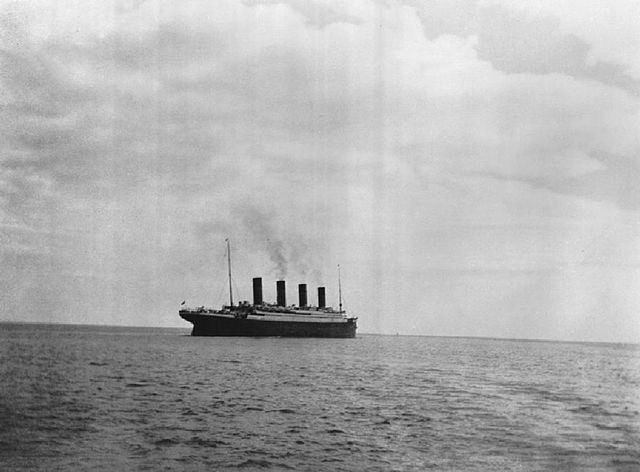
Titanic would weigh anchor at 1:30 pm and begin her journey to New York. A picture of her leaving Queenstown would be the very last ever taken while she was afloat. She would not be photographed again until September 1985 when her wreck was discovered on the bottom of the Atlantic Ocean. Titanic was scheduled to arrive in New York on April 17.
Titanic Leaving Queenstown 11 April 1912. Believed to be the last photograph of ship before it sank. Public Domain
[To be continued with next posting]
Sources
Books
Behe, George TITANIC: SAFETY, SPEED AND SACRIFICE, Transportation Trails, Polo, IL 1997
Eaton John P. & Haas Charles, TITANIC TRIUMPH AND TRAGEDY, SECOND EDITION, W.W. Norton & Company, New York, New York, 1995 First American Edition
Lord, Walter, A NIGHT TO REMEMBER, Holt Rinehart and Winston, New York, New York, 1955. Multiple revisions and reprints, notably Illustrated editions (1976,1977,1978 etc)
Lord, Walter, THE NIGHT LIVES ON, Willian Morrow and Company, New York, New York, 1986 (First Edition)
Lynch, Don & Marshall Ken, TITANIC AN ILLUSTRATED HISTORY, Madison Press Books, Toronto, Ontario Canada, 1992
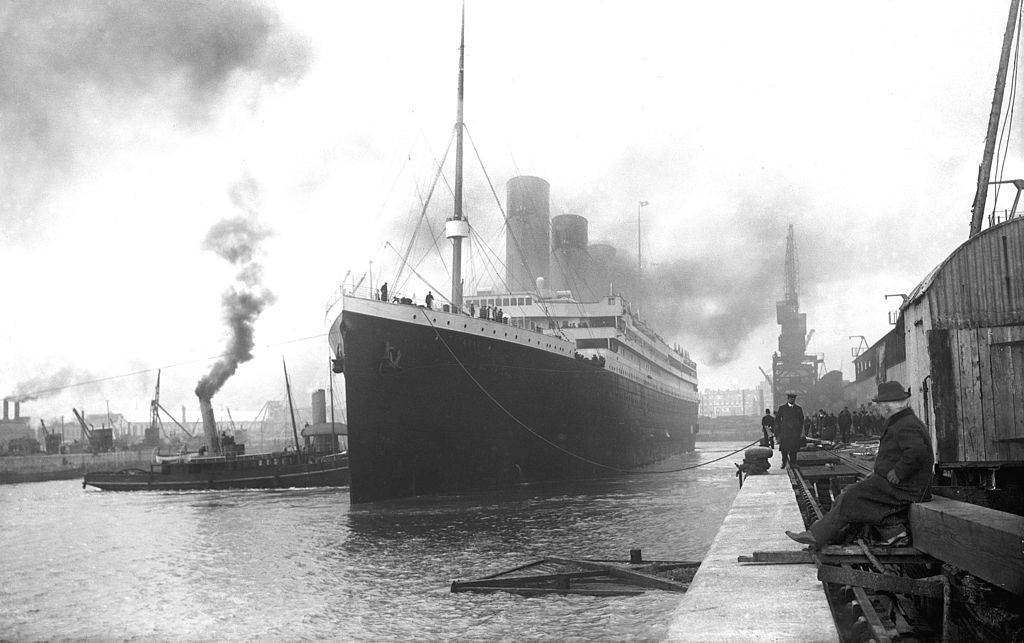
Titanic at the docks of Southampton, 10 April 1912 Unknown Author Public Domain via Wikimedia Commons
Titanic captain Edward J. Smith boards the ship at 7:30 am. Since it docked in Southampton on 3 April, the ship has taken on crew and supplies for the voyage. At 9:30 am, passengers would begin to arrive as the London and South Western Railway train from London would arrive. The railway station was on the quayside alongside where Titanic was berthed. There was a large number of Third-Class passengers (called Steerage back then) so they had to board first. First and Second-Class passengers would have stewards escort them to their cabins. First Class passengers were greeted by Captain Smith. Third Class passengers had to undergo inspection for ailments and other conditions that might deny them entry to the United States. If refused to enter the United States, White Star Line had to carry them back. 920 passengers boarded at Southampton: 179 First Class, 247 Second Class, and 494 Third Class. Additional passengers were to be picked up in Cherbourg and Queenstown.
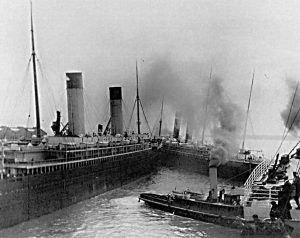
Titanic reversed her course, drifts back toward the mouth of White Star Dock, as New York is manouevered to a temporary mooring in the River Itchen (Daily Mirror) Public Domain via Wikimedia Commons
At 12 noon the ship’s horn blew and Titanic began its departure. Due her large size, Titanic generated a huge displacement causing smaller ships docked nearby to be momentarily lifted by the bulge of water. The liner New York’s mooring cables were unable to handle the strain and snapped, swinging the ship stern-first towards Titanic. A nearby tugboat came to assist and took New York under tow. On Titanic, Captain Smith ordered the engines be put full astern to give her enough speed to avoid colliding with New York. Collision was avoided but it was close at 4 feet. Due to this incident, Titanic was delayed leaving Southampton for an hour while the drifting New York was brought under control making it safe for all ships to arrive and depart.
After navigating out of Southampton, and dropping off the Southampton pilot, Titanic headed out into the English Channel and her next destination of Cherbourg, France. The journey would take 77 nautical miles (89 miles). Weather to Cherbourg would be windy, cold, and overcast. Arriving at 6:30 pm the same day, Titanic would take on passengers by tender as Cherbourg lacked docking facilities for it. The two tenders, SS Traffic and SS Nomadic, were designed for ships like Titanic. 274 additional passengers would board in Cherbourg: 142 First Class, 30 Second Class, and 102 Third Class. 24 passengers departed at Cherbourg having only booked passage to France. The transfer of all passengers and their luggage was done by 8 pm. Titanic would depart for its final stop in Queenstown, Ireland before heading off to New York. The weather to Queenstown would remain cold and windy.
[To be continued on April 11]
Sources
Books
Behe, George TITANIC: SAFETY, SPEED AND SACRIFICE, Transportation Trails, Polo, IL 1997
Eaton John P. & Haas Charles, TITANIC TRIUMPH AND TRAGEDY, SECOND EDITION, W.W. Norton & Company, New York, New York, 1995 First American Edition
Lord, Walter, A NIGHT TO REMEMBER, Holt Rinehart and Winston, New York, New York, 1955. Multiple revisions and reprints, notably Illustrated editions (1976,1977,1978 etc)
Lord, Walter, THE NIGHT LIVES ON, Willian Morrow and Company, New York, New York, 1986 (First Edition)
Lynch, Don & Marshall Ken, TITANIC AN ILLUSTRATED HISTORY, Madison Press Books, Toronto, Ontario Canada, 1992
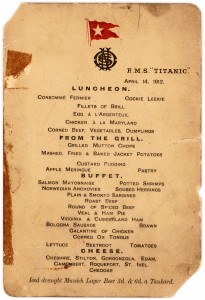
Fresh food was loaded today on Titanic in preparation for its departure. Feeding passengers and crew was no small thing back then. At maximum capacity, it would carry 2,453 passengers and around 900 crew. That meant having large quantities of just about everything- meats, dairy, vegetables, fruits, flour, bread, and cereals. Since the ship served alcohol, it also carried ale, wine, and liquor as well. And, of course, a gentleman back then would have a cigar with his brandy, so they had cigars as well. Drinking water had to be stored as well for the voyage along with crockery, glassware, and cutlery for food to be prepared, served and eaten on. You can view a list of food at Titanic Facts.
Sources:
Books
Behe, George TITANIC: SAFETY, SPEED AND SACRIFICE, Transportation Trails, Polo, IL 1997
Eaton John P. & Haas Charles, TITANIC TRIUMPH AND TRAGEDY, SECOND EDITION, W.W. Norton & Company, New York, New York, 1995 First American Edition
Lord, Walter, A NIGHT TO REMEMBER, Holt Rinehart and Winston, New York, New York, 1955. Multiple revisions and reprints, notably Illustrated editions (1976,1977,1978 etc)
Lord, Walter, THE NIGHT LIVES ON, Willian Morrow and Company, New York, New York, 1986 (First Edition)
Lynch, Don & Marshall Ken, TITANIC AN ILLUSTRATED HISTORY, Madison Press Books, Toronto, Ontario Canada, 1992