Tag Archives: Captain Edward J. Smith

Titanic Chronology-Titanic Final Day and Sinking (14-15 1912)

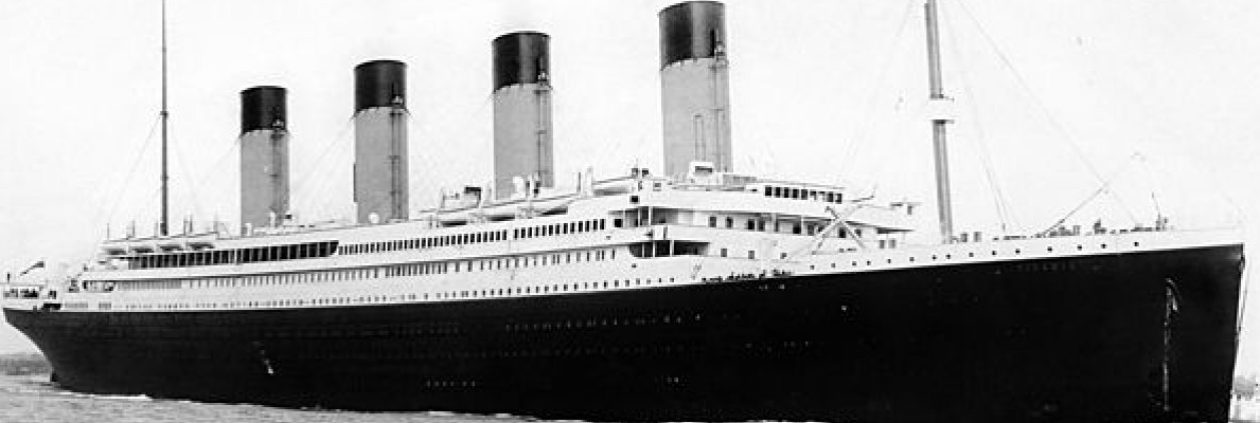
RMS Titanic pictured in Queenstown, Ireland 11 April 1912
Source:Cobh Heritage Centre, Cobh Ireland/Wikimedia Commons


Helen Candee awoke early on Sunday and went out on the deck to view the sunrise. She was not disappointed. This was to be the final day of the maiden voyage for tomorrow the ship would dock in New York. Little did anyone know that it would be the last sunrise Titanic would ever see.

At 10:30 am, a religious service was held in the First-Class dining room with a nice meal that followed for both First and Second class. On the bridge, ice warnings from other ships had been received but since such sightings were common, they were not of serious concern. No one had thought it serious enough to plot them. At noon the ship’s officers got together on the wing bridge to calculate Titanic’s position.

White Star liner Baltic reported at 1:42 pm of large quantities of ice providing coordinates. The message was delivered to Captain Smith who also showed the message to J. Bruce Ismay, chairman of the White Star Line. The SS Amerika spotted an iceberg at 1:45 and provided its coordinates. By afternoon, the temperature was falling fast and by 7:30 pm was 33F (1 C). Captain Smith ordered a course change to south and west around 5:50 pm possibly due to ice warnings.

RMS Olympic’s A la Carte Restaurant, located in B-Deck level. Circa May 1911
Robert John Welch (1859-1936), official photographer for Harland & Wolff
Public Domain/Wikimedia Commons

Meanwhile passengers enjoyed their last night on Titanic. Many survivors believe this was the best night of the trip. The food was exemplary and everyone was dressed in their finest clothes.  There was joyful celebration of their last night together on Titanic. On the bridge, Second Officer Charles Lightoller was going over a report from the California that reported three large icebergs that came in at 7:30 pm. Noting the drop in temperature to near freezing, he ordered the crew to watch the fresh water. Captain Smith returned to the bridge after dinner around 8:55 pm and conferred with Lightoller about the weather and icebergs. He then retired for the night advising Lightoller to awaken him “if becomes at all doubtful’. Lightoller at 9:30 pm advised the lookouts to watch for icebergs.

The only picture of the Marconi radio room onboard the Titanic. Harold Bride is seated at his station. Photo was taken by Father Francis Browne, SJ, while aboard Titanic.
Public Domain/Wikimedia Commons

Down in the Marconi telegraph office, Jack Phillips was busy handling heavy passenger traffic when a message for Mesaba came in warning about heavy pack ice and icebergs at 9:40 pm. The message never made it to the bridge, so they were unaware of it. First Officer William Murdoch relieved Lightoller at 10 pm. New lookouts took over as well, Frederick Fleet and Reginald Lee, who were advised to watch for icebergs. It was a moonless night with unusually calm seas, so they had to be especially alert for ice fields and icebergs. Unfortunately, the binoculars they should have had had been misplaced. By this time, the temperature had dropped to 31 F.

Public Domain

The captain of the SS Californian, Stanley Lord, decides to stop his ship for the night due to a large ice field in the way. The telegraph operator, Cyril Evans, sent out warnings to all ships in the area but Jack Phillips on Titanic sent back a blunt response: shut up. He was busy sending messages through Cape Race. Evans shut off his equipment and went to bed leaving the Californian with no wireless communications till morning. On Titanic, most were either asleep or heading to their cabins at 11 pm. Only a few were lingering over drinks, a card game, or reading. By 11:30 pm, around the time Cyril Evans went to bed, Titanic had settled in for the night.

Photograph of iceberg taken by chief steward of Prinz Adalbert on morning of 15 April 1912 near where Titanic sank. At the time he had not learned of the Titanic disaster. Smears of red paint along the base caught his attention. The photo and accompanying statement were sent to Titanic’s lawyers, which hung in their boardroom until the firm dissolved in 2002. Public Domain

Then just before 11:40 pm, the lookouts spotted an iceberg 500 feet away. Frederic Fleet rang the bell three times and calls the bridge telling Murdoch ‘Iceberg, right ahead.’ Titanic was going 21 knots (or slightly less) at the time. Murdoch ordered hard a starboard,” orders the engines stopped then full astern, and seals the watertight doors. Due to its size, Titanic had a larger turning radius, and this made it look like it would hit the iceberg dead on. Then it slowly veered to port making it appear the ship would pass the iceberg on the starboard side. Some speculate that it may have been a rare blue berg meaning it flipped over and was much larger underwater. The iceberg impacted on the starboard ship resulting in large and small punctures as it scraped the ship. Captain Smith came to the bridge to determine what happened learning they had struck an icebox. At first the damage reports seemed okay then it turned ominous with reports of water in the mailroom and other areas of the ship. Thomas Andrews assesses the damage himself and reports to Captain Smith that the ship is doomed. He tells Smith that the forward five compartments had been compromised and water is coming in. With water pulling the ship down at the bow, there was no way to prevent sinking. Titanic could stay afloat with one or two taking water but not all five at the same time.

Titanic Captain Edward J Smith, 1911
Author unknown. Published after sinking in 1912
Public Domain/Wikipedia Commons

For Captain Edward J. Smith, who had an illustrious career and set to retire after this voyage, this was a major shock. Unlike what has been dramatized, he had to be prodded by his officers to order lifeboats be lowered, muster the crew, and evacuate the passengers. Worse, despite having more than the required lifeboats per British Board of Trade regulations, it was still woefully short since the regulations were based on tonnage and not capacity. Of the 2,227 passengers and crew, only 1,178 would fit into them providing that they were filled completely to capacity. Wireless operators Jack Phillips and Harold Bride were ordered by Smith to send a distress call at 12:15 am. They first used the older one, CQD, and later switched to the newer one SOS. While many ships received the distress message, most were too far away to help. The SS Carpathia, about 58 miles away, received the distress call at 12:20 am. Harold Cottam quickly responded back to confirm the distress call and got the reply:

“Come at once. We have struck a berg. It’s a CQD, old man.”


Capt. Arthur H. Rostron, R.D., R.N.R, while serving as master of the Cunard liner RMS Carpathia in 1912
Public Domain via Wikimedia Commons

Cottam awakened Captain Arthur Rostron to inform him of the news. Rostron immediately gave out numerous orders to prepare the ship to take on survivors. And Carpathia quickly moved at high speed through the dangerous ice field in the hopes of getting there fast; they would arrive in three hours. However back on Titanic Andrews had told Smith that Titanic that the ship would sink in about 1 ½ hours to 2 hours making getting there before the ship sank impossible. Aboard Titanic, there was no central way to notify passengers, so stewards and others knocked on doors to rouse and inform them they had to put on life jackets and go topside. Many doubted they were in serious trouble and many of the staff did not know how dire the situation was. Up on deck, the crew had not any training–nor any drills–on how to operate the lifeboats. They required manual operation to be lowered into the water, and some were not sure if the davits were strong enough. And no one had told them that the lifeboats could carry 65 people, which is why some lifeboats that left could have taken on a lot more. Lightoller was strict in implementing the “women and children first “rule but seemed to interpret it meant no men could go aboard lifeboats (except for crew to steer it). However, on the other side of the ship, that rule was not carried out and many men boarded lifeboats there.

To try and get other ships in the area to respond, Titanic fired rockets. The crew on the Californian saw them but did not know its source nor did they investigate or awaken the wireless operator. They did think there was a ship that was ten miles away that appeared to be moving away, so it obviously was not in distress. Titanic tried using its Morse lamp as well but to no avail. Some believe it was a mirage while others wonder if it was an illegal Norwegian sealer, but that has never been confirmed. By 12:55 am lifeboats 5 and 6 were being lowered. Molly Brown was aboard Lifeboat 6 along with lookout Frederic Fleet and Quartermaster Robert Hitchens. Hitchens had been at the helm when Titanic hit the iceberg, and his testimony would prove valuable at the inquiries. However, his refusal to look for survivors would bring harsh criticism later.

Lifeboats 1 and 3 would be lowered around 1:00 am. Lifeboat 1, Emergency Cutter 1 has only 12 people (and can carry 40 people) while Lifeboat 3 has 39. Aboard Lifeboat 1 is Sir Cosmo Edmund-Duff Gordon and his wife, Lucy Duff-Gordon. She was a well-known British fashion designer known for innovative designs. Sir Cosmo handed out £5 notes to each of the crew aboard the lifeboat. Some argued later it was to keep others off the lifeboat. He strenuously denied the allegation and pointed out it was to help them replace lost clothing and gear. At 1:10 am Lifeboat 8 was lowered containing only 28 people that had aboard Noel, the Countess of Rothes. Both Isidor and Ida Straus were offered seats on the lifeboat but declined. Isidor, who had helped found Macy’s department store, believed only women and children should go first but Id did not want to leave her husband. She said famously: “Where you go, I go.” They would both perish when Titanic sank.

Lifeboat 9 launched at 1:20 am only had 30 people on it and was loaded by Purser Hugh McElroy and First Officer William Murdoch.  It had 30 people on it with 17 crew members, possibly stewards and cooks according to one survivor. Another account puts it between 35-40 with 12 ladies, 6-7 men passengers, and 18 male crew members. The mistress to Benjamin Guggenheim, Léontine Aubart, was on this lifeboat. He and his valet choose to dress properly and go down with the ship as gentleman. Lifeboat 10 is launched at 1:47 am had 57 people when it was launched but some transfers to other lifeboats brought it down to 50. Nine-week-old Milvina Deam was on this lifeboat. She along with her mother and brother would survive while her father died on Titanic. She became known later to many in the Titanic community living a long life dying at the age of 97 in 2009.

RMS Olympic Arrives In New York on Maiden Voyage, 21 June 1911
Source: U.S. Library of Commerce/Wikimedia Commons
Public Domain

Olympic received Titanic’s distress call but there was confusion because of many mixed signals and messages bouncing around; they did not know the severity of the disaster. They thought at one point Titanic was sailing towards them but got a quick message back they were putting women off in the lifeboats. They would learn of Titanic’s sinking later from Carpathia. Meanwhile on Titanic panic was setting in as it was obvious Titanic was sinking. Near Lifeboat 14 Fourth Officer Joseph Boxhall was forced to discharge his gun to calm things down, He would take command of Lifeboat 14 later transferring people to other boats so they could look for survivors. Lifeboats 13 and 15 are lowered but 15 starts drifting underneath the other lowering lifeboat. Quick action in 13 by crew averts disaster.

Sometime between 1:35 -1:40 am Lifeboat 16 and Collapsible C is lowered. White Star chairman J. Bruce Ismay is aboard C. Criticism that he boarded before women and children would haunt him after the sinking. He claimed that neither were around when he boarded C, so he boarded. Emergency Cutter 2 is lowered and not long afterwards Lifeboats 11 and 4. A pregnant Madeline Astor is aboard Lifeboat 4. John Jacob Astor did ask if he could join her, but Lightoller denied the request. By 2 am only the collapsible boats remain but Titanic was slowly rising in the stern with its propellers visible. Collapsible D was the only one successfully launched and would carry 20 in it. A is washed off the deck and fills partly with water while B falls and is swept off before it is righted. Before this Captain Smith has released the crew saying it is now “every man for himself.” Wireless operator Phillips sends the final distress signal at 2:17 am. He would get to Collapsible B but would die later from exposure and his body would never be recovered.

By 2 am only the collapsible boats remain. Titanic had sunk low enough that the stern propellers were visible. Collapsible lifeboat D is launched from the roof of the officer’s quarters and would have 20 people in it. Collapsible A is washed off the deck and partly filled with water. Fifth Officer Harold Lowe in lifeboat 14 finds only 12 of the 20 that got into it are alive. Collapsible B falls and is swept off before it can be righted. The now overturned lifeboats are used by 30 people including Lightoller and wireless operator Bride. At this point, Captain Smith releases the crew saying, “it’s every man for himself.” Smith was last seen on the bridge and his body was never recovered. Wireless operator Phillips sends the final distress signal at 2:17 am. He made it to collapsible lifeboat B but died from exposure. His body would not be recovered.

Meanwhile the ship was plunged into darkness as the power went off. People frantically ran to the stern. Some would jump into the water while others hoped that by some miracle they would be spared. It is around 2:18 am when Titanic, suffering tremendous strain midsection would break in two between the third and fourth funnels. The bow sank into the water and for a time the stern seemed to float on its own but slowly sank. Those remaining on the stern would just swim away since there was no suction. Then it too slowly began to rise becoming vertical and sink beneath the waves. By 2:20 am, Titanic was gone. J. Bruce Ismay turned away before this; he did not want to see Titanic sink. The cries of those in the water was a sound no one in the boats would ever forget. And would haunt many for the rest of their lives.

RMS Carpathia (date unknown)
Image: public domain

Carpathia would arrive in the area firing rockets to get attention at around 3:30 am. Lifeboat 2 was the first to reach the rescue ship. It would take several hours to pick up all the survivors. Ismay would send a message to the White Star Line office informing Titanic sank. He then would isolate himself in a cabin for the remainder of the voyage to New York. The Californian arrived on scene at around 8 am. Carpathia asked her to look for any bodies, but they would find none and depart. Meanwhile aboard Carpathia, they held a service for the four bodies they had recovered. They would see one more as they steamed around the area but did not pick it up. Before 9 am, Carpathia sounded its whistle and began steaming towards New York

Meanwhile the Carpathia’s purser compiled a list of the Titanic survivors, which Rostron ordered Cottam to transmit the list to Cape Race but due to the limited range of their transmitter, this could not be achieved. They could get signals from Cape Race but not send them back. Cottam was besieged with messages wanting information and Titanic survivors wanting to send messages as well. Harold Bride, the surviving Titanic wireless operator, assisted him so he could get sleep. Rostron allowed no communications with the press. Eventually they were able to use Olympic, which had a more powerful transmitter, to transmit the names of those who were aboard Carpathia.

Outside the White Star Line Office after Titanic Disaster, New York, April 1912.
Bain News Service, U.S. Library of Congress, digital id#ggbain 10352

In New York, bedlam had reigned. Due to mixed up messages, there were many false reports about Titanic. Some reports indicated all was well and people picked up by Olympic. People gathered outside the White Star Line offices in New York for information. Initially White Star was hopeful and believed Titanic was safe. But the New York Times realized communication from Titanic had stopped after 2:20 am and ran the story she had sunk. The message from Ismay from Carpathia ended all doubt; people wept. Titanic, the pride of the White Star Line, had sunk taking with her over 1,500 plus lives and only 705 survivors. Now they awaited the arrival of Carpathia.

Sources

Behe, George TITANIC: SAFETY, SPEED AND SACRIFICE, Transportation Trails, Polo, IL 1997

Behe, G. (2012). On board RMS Titanic: Memories of the Maiden Voyage. The History Press.

Ballard, Robert D. Exploring the Titanic. Reprint. Madison Press Books, 2014.

Ballard, Robert D., and Rick Archbold. The Discovery of the Titanic. New York, N.Y.?: Warner Books, 1987.

Ballard, Robert D., Lost Liners: From the Titanic to the Andrea Doria the Ocean Floor Reveals Its Greatest Lost Ships(Hyperion, 1998).

Brewster, H. (2013). Gilded Lives, Fatal Voyage: The Titanic’s First-Class Passengers and Their World. National Geographic Books.

Cameron, Stephen. Titanic: Belfast’s Own. Colourpoint, 2011.

Eaton John P. & Haas Charles, TITANIC TRIUMPH AND TRAGEDY, SECOND EDITION, W.W. Norton & Company, New York, New York, 1995 First American Edition

Fitch, Tad, J. Kent Layton, and Bill Wormstedt. On a Sea of Glass: The Life & Loss of the RMS Titanic. Reprint. Amberley Publishing, 2015.

Lord, Walter

A NIGHT TO REMEMBER, Holt Rinehart and Winston, New York, New York, 1955. Multiple revisions and reprints, notably Illustrated editions (1976,1977,1978 etc.)

THE NIGHT LIVES ON, Willian Morrow and Company, New York, New York, 1986 (First Edition)

Lynch, Don & Marshall Ken, TITANIC AN ILLUSTRATED HISTORY, Madison Press Books, Toronto, Ontario Canada, 1992

Titanic News Channel is a participant in the Amazon Services LLC Associates Program, an affiliate advertising program designed to provide a means for sites to earn advertising fees by advertising and linking to Amazon.com.

Recent Titanic News

[This is a curated list of news stories. If you see a news story we should cover here, send email to editor@titanicnewschannel.com]

“The Titanic’s Other Casualties | Holy Cow! History.” Lompoc Record, 20 Apr. 2024, lompocrecord.com/opinion/columnists/the-titanic-s-other-casualties-holy-cow-history/article_139171a2-904a-5670-9d43-73dfbf00d555.html.

Let’s start with what we know for sure. At least three dogs escaped in lifeboats: two Pomeranians and one Pekingese show champion, Sun Yat Sen. Their escape was a big deal because, with so many passengers and so little space in the lifeboats, crew members refused to let animals go with their owners. It’s believed all three owners spared their beloved pooches by smuggling them inside their cabins because they were so small, later hiding them inside thick winter coats as they fled the ship.

=

“‘Rare’ Footage of Titanic Shipwreck Released for First Time: See Into Chief Officer’s Cabin and More.” Yahoo.com, People, 16 Apr. 2024, ca.news.yahoo.com/rare-footage-titanic-shipwreck-released-184318760.html.

The Woods Hole Oceanographic Institution (WHOI) has just released never-before-seen video of the wreck on YouTube to celebrate the 25th anniversary of James Cameron’s 1997 film Titanic. The “rare, uncut footage” includes nearly 90 minutes of images from the July 1986 voyage that, according to Today, helped inspire the award-winning movie.

=

Grover, Jamie. “Remembering the Somerset Passengers on Board the Titanic.” Somerset County Gazette, 21 Apr. 2024, www.somersetcountygazette.co.uk/news/24258613.remembering-somerset-passengers-board-titanic.

Among those on board was 26-year-old Marion Wright, from Yeovil, who survived the disaster. She eventually arrived in New York and was reunited with her fiancé.  Marion said: “I don’t think I shall ever want to cross the ocean again just yet. It has been sad losing all I had, wedding presents and everything I had worked so hard at, but they’re nothing in comparison to all the lives lost.” The couple married and successfully ran a farm in Oregon.

=

D’Arcy, Sharon Dolan, and Sharon Dolan D’Arcy. “West Clare Connection to Famous Titanic Bugler.” The Clare Champion, 18 Apr. 2024, clarechampion.ie/west-clare-connection-to-famous-titanic-bugler.

The young 25-year-old man tragically died when the ocean liner struck an iceberg and sank on its maiden voyage from Southampton to New York in 1912. A mere three months previously, he had married a Kilrush woman called Mary Meaney at St Gregory’s Catholic Church in Wandsworth. Local historian and county Tyrone native, Geoff Simmons had put out an appeal in March via local Clare media and social media for descendants of Mary Meaney’s to attend the unveiling of an historic blue plaque in Percy’s honour at his former home at 26, Lessingham Avenue on April 14, the eve of the anniversary of the ship’s sinking. Mr Simmons had hoped The Cliffs of Doneen would be sung on the day in recognition of Mary and the Clare connection.

=

Alam, Zoheb. “Titanic Survivor Revealed He Continued to Have Nightmares About the Tragedy for Over 65 Years.” https://www.good.is, 20 Apr. 2024, www.good.is/titanic-survivor-revealed-he-continued-to-have-nightmares-about-the-tragedy-for-over-65-years.

One of the survivors, Frank Prentice, shared his experience and recalled how he survived the sinking ship but continued to have nightmares about it. His interview was recorded by BBC in 1979 for their documentary series “The Great Liners” and has been shared on YouTube. Since the tragedy, he had held on to a keepsake that was a vivid reminder of the tragedy. It was the watch he wore that night that remained frozen in time and had stopped at exactly 02:20 AM after lasting for a couple of minutes in the freezing water. During the BBC interview, he was asked whether talking about the Titanic bothered him and he replied, “I shall probably dream about it tonight; have another nightmare.”

You can view his BBC interview on YouTube by clicking here.

=

“The Titanic Disaster Was Predicted in an 1898 Novel With ‘eerie’ Foretelling.” Irish Star, 19 Apr. 2024, www.irishstar.com/news/us-news/titanic-disaster-predicted-1898-novel-32628706.

A novel released in 1898 eerily foretold the sinking of the Titanic, with multiple parallels between a fictitious sinking in the book and the infamous Titanic disaster. “The Wreck of the Titan Or, Futility” was authored by the American writer, Morgan Robertson. In his book, the Titan sank off Newfoundland Banks, around 1,000 miles off the coast of New York. Coincidentally, it had hit an iceberg and, in a similar fashion to the Titanic, and the accident occurred in mid-April on an otherwise calm night at sea.

Editor’s note: As the article notes, there are some striking similarities to the actual tragedy of 1912. There are some crucial differences though. Unlike what happened to Titanic, the fictional Titan was not in calm seas. In fact, according to the story, it was a hard choppy sea and fog as well that made it hard to sea. Like Titanic, the lookouts could not see the iceberg until too late. However, it hits the berg directly and this is what Robertson wrote of the collision:

“But in five seconds the bow of Titan began to lift, and ahead, and on either hand, could be seen, a field of ice which arose in an incline to a hundred feet high in her track. But a low beach, possibly formed by the recent overturning of the berg, received the Titan, and with her keel cutting the ice like steel runner of an iceboat, and great weight resting on the starboard bilge, she rose out of the sea, higher and higher-until the propellers in the stern were half exposed-then meeting an easy spiral rise in the ice under her port bow, she heeled, overbalanced, and crashed down on her side to starboard.”

That is quite a scene if you picture it in your head! Robertson, like many authors, latched on to a great kernel of a story when he speculated on huge ships like his fictional Titan hitting an iceberg. Other great authors have done the same as well. It should be noted another Robertson story foretold of a Japanese attack on the United States as well. There was a greater loss of life in his story as they only had 24 lifeboats (the bare minimum) lashed to the upper deck (and hard to use since the ship was inclined) but to minimize other safety costs put cork jackets in passenger and crew cabin.

=

Cummings, Denis. “A Look at the Titanic Second Class Survivors.” www.findingdulcinea.com, 19 Apr. 2024, www.findingdulcinea.com/titanic-second-class-survivors.

As a fervent admirer of history with a penchant for uncovering forgotten tales, the stories of resilience and survival especially captivate me. Among such narratives, the epic tale of the Titanic stands out not just for its unfortunate demise but for the human spirits that persevered.  In this article, I’m thrilled to shine a light on those extraordinary individuals – the Titanic second class passengers who managed to survive this monumental tragedy.

=

Felton, James. “Iceberg That Sank the Titanic May Be Shown in Unearthed Photo From 1912.” IFLScience, 18 Apr. 2024, www.iflscience.com/iceberg-that-sank-the-titanic-may-be-shown-in-unearthed-photo-from-1912-73865.

A rediscovered photo captured two days after the Titanic sank is going on auction this month. The photo, taken by undertaker John Snow Jr, may show the iceberg that sank the ship on its maiden voyage 112 years ago on April 14. When the Titanic sank 640 kilometers (400 miles) off Newfoundland, Canada, over 1,500 of the passengers, of which there were over 2,200, died – many by drowning or immersion hypothermia. John Snow Jr was chief embalmer of funeral directors John Snow & Co and was summoned to the wreck of the Titanic to help collect some, but not all, of the bodies for burial.

=

 “Titanic Secrets Revealed: Number of Lifeboats Reduced to Give First Class Passengers a Better View.” Sarajevo Times, 17 Apr. 2024, sarajevotimes.com/titanic-secrets-revealed-number-of-lifeboats-reduced-to-give-first-class-passengers-a-better-view.

His video showcases all 10 of Titanic’s decks, including the boat deck at the very top. Part of the reason for the lack of lifeboats was also because designers didn’t want to overcrowd the ship’s deck and obstruct the view of the Atlantic for first-class passengers. Another interesting fact is that Titanic actually had two grand staircases, both restricted to first-class passengers only. The far larger and grander one was the front grand staircase, adorned with a wall panel of carved oak with a clock in the center, also the setting where Jack and Rose meet in James Cameron’s 1997 film hit.

=

 “How Many First Class Passengers Died on the Titanic?” www.findingdulcinea.com, 18 Apr. 2024, www.findingdulcinea.com/first-class-passengers-died-on-the-titanic.

Are you curious about the tragic fate of the Titanic’s elite? My passion for history has always drawn me towards unraveling stories from the past, and today, I’m here to share with you a piece of history that still captures our imagination over a century later.We often hear about the Titanic’s ill-fated voyage, but who exactly were those first-class passengers who lost their lives in one of history’s most infamous maritime disasters? Let’s explore together and uncover how many first class passengers died on the Titanic.

=

Mawson, Brandon. “A Look at Two Cumbrians Who Lost Their Lives on the Titanic.” News and Star, 18 Apr. 2024, www.newsandstar.co.uk/features/24257172.look-two-cumbrians-lost-lives-titanic.

Two men in particular, Jonathon Shepherd and his mentor Joseph Bell, were some of the Cumbrians who lost their lives on the ship. Jonathon was born in Whitehaven in 1880 and Joseph was originally from Farlam, near Brampton. 

 =

Fraga, Kaleena. “Edward John Smith, the Captain of the RMS Titanic.” All That’s Interesting, 18 Apr. 2024, allthatsinteresting.com/titanic-captain-edward-smith.

On the Olympic, Smith was involved in the worst catastrophe of his career (until he became captain of the Titanic). In September 1911, the Olympic collided with the HMS Hawke off the Isle of Wight. Though Smith was reportedly not directing the ship at the time, the Royal Navy protested that the Olympic had caused the collision by taking an abrupt turn. White Star Line vehemently disagreed but ended up having to pay high legal fees.

=

Jonathan. “Titanic: Fact Vs. Fiction – Debunking Common Myths About the Disaster.” Anglotopia, 17 Apr. 2024, anglotopia.net/british-history/titanic/titanic-fact-vs-fiction-debunking-common-myths-about-the-disaster.

The sinking of the RMS Titanic has captured the imagination of people worldwide for over a century, spawning countless myths and misconceptions about the events that transpired on that fateful night in April 1912. While the Titanic disaster remains one of the most well-documented maritime tragedies in history, numerous myths and inaccuracies have persisted over the years. Here, we debunk ten common myths surrounding the Titanic and separate fact from fiction.

=

O’Rourke, Connor. “Extraordinary Story of Titanic’s Second Officer Charles Herbert Lightroller.” IrishCentral.com, 17 Apr. 2024, www.irishcentral.com/roots/history/titanic-charles-herbert-lightoller.

In the following years, he joined the Royal Navy and helped with the naval efforts during WWI and eventually became a full commander at the end of 1918. Remarkably, even in his old age, he had commanded one of many civilian ships in 1940 that helped rescue over 338,000 men from the beaches of Dunkirk during the Second World War.

=

Ratliff, Melissa. “WATCH: How Was the Sinking of the RMS Titanic Reported Locally?” https://www.mysuncoast.com, 16 Apr. 2024, www.mysuncoast.com/2024/04/16/watch-how-was-sinking-rms-titanic-reported-locally.

It took days for information to be distributed to sources and some of the information that got out was completely incorrect. By the time the news began trickling down to major newspapers in Florida, there were different accounts of everything. On April 15, 1912, the evening edition of the Tampa Daily Times reported that the ship was afloat and all passengers had been rescued. This was eventually retracted and corrected in subsequent editions.

=

Knudsen, Cory. “So Minnesota: Deephaven Couple Were Passengers on Titanic.” KSTP.com 5 Eyewitness News, 16 Apr. 2024, kstp.com/kstp-news/top-news/so-minnesota-deephaven-couple-were-passengers-on-titanic.

Monday marks the 112th anniversary of the sinking of the Titanic on April 15, 1912. Walter Douglas and his wife Mahala from Minnesota were passengers on the ship. The Douglas family’s wealth came from starting the Quaker Oats Company and Douglas Starch Company. “His peers dubbed him a captain of industry,” said Liz Vandam with the Lake Minnetonka Historical Society. “They considered him to be a man of great integrity.” By the beginning of 1912, Walter Douglas retired and construction of the family’s palatial mansion in Deephaven overlooking Lake Minnetonka was complete.

=

Burgess, Madison, and Jonathan Chadwick. “Inside the Remaining Mysteries Surrounding the Titanic – From What Happened to the Passengers To…” Mail Online, 15 Apr. 2024, www.dailymail.co.uk/news/article-13309119/remaining-mysteries-titanic-happened-passengers-iceberg-caused-tragedy.html.

One theory suggests that a freak weather event created the phenomenon, which possibly both obscured the iceberg until it was too late and hindered communication with a nearby ship. Historian and broadcaster Tim Maltin claims the Titanic’s crew fell victim to a thermal inversion, which is caused by a band of cold air forcing itself underneath a band of warmer air, the Times reports. He believes that the cold current in the North Atlantic Ocean called Labrador pushed this cold air beneath the warm Gulf Stream, creating a mirage.

 =

Chadwick, Jonathan. “See Inside the Titanic Like NEVER Before: Incredible Video Reveals a Cross Section of the Doomed…” Mail Online, 14 Apr. 2024, www.dailymail.co.uk/sciencetech/article-13288299/Titanic-Incredible-video-cross-section-doomed-liner.html.

But the scale and the glory of RMS Titanic can be admired once more, thanks to a detailed digital cross section of the stunning luxury liner.  Posted to YouTube by US animator Jared Owen, it shows Titanic from every angle, exactly as it appeared just before it set sail from Southampton 112 years ago.  The video may prove helpful to Australian billionaire Clive Palmer, who has promised to recreate the famous ship at an estimated cost of £1 billion.  ‘Titanic II’, to be ready by 2027, will closely mimic the original ship’s specifications, while including modern 21st navigation and safety systems.

You can view the video on YouTube by clicking here.

=

Winston, Alex. “The Lives of Jews Who Boarded the Titanic.” The Jerusalem Post | JPost.com, 14 Apr. 2024, www.jpost.com/diaspora/article-796496.

Some 69 of the passengers on board the Titanic were known to be Jewish, and their stories and experiences are some of the most interesting and heart-wrenching of the whole saga.

=

Watch “‘Titanic: The Official Cookbook’ Author Demonstrates ‘Blue Moon’ Cocktail.” ABC7 Chicago, 11 Apr. 2024, abc7chicago.com/titanic-the-official-cookbook-veronica-hinke-recipes-recipe/14646456.

There were several events happening around the Chicagoland area to commemorate that day. Author Veronica Hinke, author of “Titanic: The Official Cookbook” stopped by ABC 7 Eyewitness news to talk about her book and demonstrate one of the 40 timeless recipes for every occasion.

=

Jones, Alec. “Five Ways ‘Titanic: The Artefact Exhibition’ Makes You Feel Like You’re Actually on the Ship.” Concrete Playground, 11 Apr. 2024, concreteplayground.com/melbourne/arts-entertainment/five-ways-the-titanic-the-artefact-exhibition-makes-you-feel-like-on-the-ship.

A more engaging way to learn this tragic story is to Titanic: The Artefact Exhibition, an incredibly detailed exhibition that studies the vessel, its crew, the passengers and takes visitors through a memorable journey through the events of that fateful night. But how does it do that and why is it worth your time? Let’s set sail to find out.

=

Bromovsky, Lettice. “Is This the Iceberg That Sank the Titanic? Newly-unearthed Photo Provides Fascinating Clue to 1912…” Mail Online, 10 Apr. 2024, www.dailymail.co.uk/news/article-13293371/Titanic-photo-fascinating-clue-1912-tragedy-killed.html.

A newly unearthed photo of the iceberg that may have sunk the Titanic has come to light 112 years after the disaster. The black and white image was captured by an undertaker working on the body recovery ship that arrived on the wreck site in the aftermath of the sinking. It is now coming up for sale at Henry Aldridge & Son Auctioneers of Devizes, Wiltshire, for an estimated price of £4,000 to £7,000.  It shows a large glacier oddly shaped like an elephant above the surface of the north Atlantic.It was taken two days after the luxury liner struck an iceberg on her maiden voyage and sank killing 1,522 people.

The auction will take place on 27 April 2024 at 9:00 am UK time. Information about how to bid can be found here.

=

Small, Alonzo. “Titanic: The Exhibition at Old Orchard Extended Due to Popular Demand.” WGN9, 10 Apr. 2024, wgntv.com/news/trending/titanic-the-exhibition-at-old-orchard-extended-due-to-popular-demand.

On the 112th anniversary of the ship’s departure, Exhibition producer Imagine Exhibitions announced that, due to popular demand, they would extend the immersive experience through July 7. A Titanic-inspired afternoon tea experience has also been added, which “promises to transport visitors back in time, blending culinary delights with the rich tapestry of Titanic’s story.” Titanic Afternoon Tea begins on April 28. A new combination ticket will also be available, which grants access to both Titanic: The Exhibition and Downton Abbey: The Exhibition.

 Information on dates, times, and prices can be found here.

=

Hickey, Kate. “Titanic Hero Irishman Thomas Andrews Epitomized Bravery as Ship Went Down.” IrishCentral.com, 10 Apr. 2024, www.irishcentral.com/roots/history/thomas-andrews-titanic-hero.

Andrews had been overruled on two key issues when the ship was being designed. He wanted to double the number of lifeboats to 64 and wanted a double hull built extending up to the B deck which would certainly have prevented the disaster. After he died on 15th April 1912, his father received a telegram from his mother’s cousin, who had spoken with survivors in New York, seeing news of Andrews. The telegram was read aloud by Andrews Sr. to the staff of their home in Comber: “Interview Titanic’s officers. All unanimous that Andrews heroic unto death, thinking only safety others. Extend heartfelt sympathy to all.”

=

“How New York City Grieved the Titanic – Ephemeral New York.” Ephemeral New York, ephemeralnewyork.wordpress.com/tag/how-new-york-city-grieved-the-titanic. (8 April 2024)

For the next 55 years, as ship traffic decreased in New York Harbor and South Street’s fortunes turned, the Titanic memorial with its time ball stayed in service on the roof. In 1968, the Seaman’s Institute moved to a new headquarters on State Street. The top of the Titanic Memorial was given to the South Street Seaport Museum. But it wasn’t until 1976 when the memorial lighthouse went up on a triangular corner at Pearl and Fulton Streets (now known as Titanic Memorial Park), held in place by a concrete podium. The time ball is also gone; it’s been replaced by an ornamental sphere.

 =

Molony, Senan. “Faces of the Titanic: William Burke, Irish Hero Who Saved a Woman’sLife.” IrishCentral.com, 8 Apr. 2024, www.irishcentral.com/roots/history/titanic-william-burke-irish-hero.amp.

This is an extract from the book “The Irish Aboard the Titanic” by Senan Molony which tells the tales of the people who were on board the night the ship went down. This book gives those people a voice. In it are stories of agony, luck, self-sacrifice, dramatic escapes, and heroes left behind.

=

Barnes, Freya. “Leather Case for Violin Used on the Titanic to Reassure Passengers as the Ship Sank Is Set to Sell…” Mail Online, 5 Apr. 2024, www.dailymail.co.uk/news/article-13277023/leather-case-violin-titanic-sale-auction.html.

A leather case that protected the violin played by the bandmaster on the Titanic as the ship sank is tipped to sell for £120,000 at auction. Wallace Hartley and his orchestral band famously played on to reassure the passengers as the 1912 disaster unfolded around them. Wallace went down with the ship but not before he put his wooden violin back in its valise bag which he strapped to himself – possibly for buoyancy – using the long handles.

The auction will take place on 27 April 2024 at 9:00 am UK time. Information about how to bid can be found here.

=

“112-Year-Old Elaborate Menu of Titanic Is Viral, Internet Reacts.” NDTV.com, www.ndtv.com/offbeat/112-year-old-elaborate-menu-of-titanic-is-viral-internet-reacts-5374994. (4 April 2024)

A popular page on X named Fascinating has released the elaborate menu served onboard the Titanic. The page posted two slides that included pictures of the original menu cards for the first and third-class passengers of the Titanic. The original menu card exudes an enchanting aura, offering various dining options from luncheon and buffet to breakfast, catering to first and third-class passengers. The post soon went viral on X.  “Third class’s menu looked good to me,” a user commented.

=

Knoxville News Sentinel. “Pigeon Forge’s Titanic Museum Attraction Buys Panel at Center of ‘Titanic’ Controversy.” Knoxville News Sentinel, 2 Apr. 2024, www.knoxnews.com/story/news/local/2024/04/02/pigeon-forge-museum-buys-panel-at-heart-of-titanic-controversy/73177923007.

Speculation will likely continue forever on whether Jack would, in fact, have fit on the “door” with Rose and survived the sinking of the Titanic. But any possible conspiracy theories over who, exactly, shelled out more than half a million dollars during a March auction for the iconic wood panel from the eponymous film can now be laid to rest. The “door” that featured prominently in the Oscar-winning blockbuster “Titanic” was purchased by Titanic Museum Attraction, which has locations in Pigeon Forge and Branson, Mo. According to the museum, it will become part of one of the largest permanent collections of Titanic artifacts anywhere.

=


FRIDAY TITANIC NEWS

Titanic Bombshell: Discovery Of Letter Shedding Fresh Light On ‘Trouble’ Before Sinking (Daily Express, 1 Oct 2020)

Titanic at Cobh Harbor, 11 April 1912
Public Domain (Cobh Heritage Centre, Cobh, Ireland)

Writing to his wife, Richard Geddes penned: “My dearest Sal, We got away yesterday after a lot of trouble. “As we were passing the New York and Oceanic, the New York broke her ropes and very nearly ran into us, but we just happened to avoid a collision. “I could see visions of Belfast, it must have been a trying time for the Captain.” Reports suggest that some saw the incident as a bad omen and a sign of trouble ahead, but a collision may have also prevented the ill-fated liner’s transatlantic journey to New York. Continuing in his letter, Mr Geddes added: “I hope you are feeling good and not worrying. “I am feeling pretty good. With fondest love and kisses to my dear wife and kiddies. Your affectionate husband, Dick x.”

The Aurora May Have Played A Role In The Titanic Disaster, According To A Surprising New Theory: Solar Particles Could Have Blocked The SOS Signal (Business Insider, 27 Sep 2020)

Aurora Borealis by Frederic Edwin Church (1826–1900)
Public Domain (Wikipedia Commons)

The bottom line is that the timing is wrong to consider space weather as a cause of the collision with the iceberg. The space weather event occurred after the collision,” Hapgood told Business Insider. But one facet of Zinkova’s theory may be true: Geomagnetic activity could have interfered with radio communications after the shipwreck. There, Hapgood said, space weather may have had “some small effects.” That could explain why the nearby vessel La Provence never received the Titanic’s SOS signal, and why the Titanic couldn’t receive the Mount Temple’s response to its cries for help.”

Titanic Chronology: April 14, 1912

Photograph of iceberg taken by chief steward of Prinz Adalbert on morning of 15 April 1912 near where Titanic sank. At the time he had not learned of the Titanic disaster. Smears of red paint along the base caught his attention. The photo and accompanying statement were sent to Titanic’s lawyers, which hung in their boardroom until the firm dissolved in 2002. Public Domain

Titanic struck the iceberg at 11:40 pm ship time on 14 April 1912. The night was moonless and the sea calm with temperatures at or below freezing. Titanic was moving quickly but did not see the iceberg until it was nearly upon them. An attempt to steer around it resulted in a collision on Titanic’s starboard side. The iceberg would puncture Titanic enough so that the first five compartments would flood. Since the compartments were not totally sealed all the way up, water would go from one compartment to the other making her sink at the bow.

Titanic News Before The Big Feast

Sorry folks for being down but all is fixed. There has not been a lot of news since the sale was announced. I expect there will be some legal action to try and get it changed but till then we have to wait. So here is your pre-Thanksgiving Titanic news.

Titanic Captain Edward J Smith, 1911
Photo: Public Domain

1. “Titanic historian” Who Resembles Captain Smith Gets Role Playing Him
The BBC relays a news story from Irish News about an Australian man named Michael Booth. He grew up listening to Titanic stories about the ship and, quite naturally, became a Titanic enthusiast. Owing to his resemblance to Captain Smith, he was asked to play the role in a Titanic show.
Source: Titanic’s new captain and spa scrapped (BBC News,13 Nov 18)
https://www.bbc.com/news/uk-northern-ireland-46191449

2. Titanic Marriage Proposal
If you have not heard about it, a chap decided to pop the question to his girlfriend on the Titanic replica staircase at Titanic Pigeon Forge. Really, just watch it. Enough said.

https://www.youtube.com/watch?v=8Tx6HQVrWj8

3. A purported haunted mirror where Titanic captain Edward J Smith appears is up for auction in the UK for £10,000 (about $12,775). According to the story, a servant who worked for the captain took the mirror from his home after his death. And then the ghost of Captain Smith supposedly appeared in the mirror scaring the person who took it and then others as well. Not quite sure why Captain Smith would hang around in a mirror but that is the story. For 10,000 British pounds, it can be yours. The ghost is free.
Source: Haunted mirror ‘possessed by the GHOST of the Titanic captain’ up for sale (The Sun,18 Nov 2018)
https://www.thesun.co.uk/news/7771542/mirror-possessed-ghost-titanic-captain-for-sale/

Titanic Sunk

Front Page, New York Herald, 15 April 1912 Public Domain (U.S. Library of Congress,www.loc.gov)
Front Page, New York Herald, 15 April 1912
Public Domain (U.S. Library of Congress,www.loc.gov)

23:40 (11:40 p.m.) Lookouts Fleet and Lee sight iceberg. Bell rung and call to bridge. Murdoch orders helm hard a-starboard and engines reversed. Starboard side scraped by iceberg for 300 feet puncturing hull in various places. Water fills forward compartments.

1200 (12:00 a.m.) Thomas Andrews tells Captain Smith ship is sinking estimating ship can stay afloat estimating no more than 2 hours. Lifeboats are lowered by hand, evacuation of passengers begins. Wireless is used to alert nearby ships. RMS Carpathia responds and begins moving towards Titanic.

02:20 (2:20 a.m.) Titanic sinks at 2:20 a.m.with over 1,500 lives lost.

0400 (4:00 a.m.) RMS Carpathia arrives and rescues approximately 710 from lifeboats. Captain Rostron of Carpathia said the area was an ice field with at least 20 large bergs measuring up to 200 feet in height and numerous smaller bergs.

18 April 1912 0930 (9:30 a.m.) RMS Carpathia docks at New York Pier 54. Prior to that it offloaded the only remaining piece of Titanic afloat, the lifeboats. Due to confusing communications, the initial reports were more promising about the the severity of the tragedy. The confusion was caused by mixed up bits of wireless communication resulting in erroneous reports of Titanic being towed to New York and less lives lost. By the time Carpathia arrived in New York, everyone knew that over 1,500 had died in the tragedy.


My Favorite Titanic Movie

Titanic
(Photo courtesy George Behe)

Many Titanic enthusiasts were first drawn to Titanic by the 1958 movie A Night To Remember. The movie was based on Walter Lord’s historical book of the same name. Another movie, Titanic (1953), starring Clifton Webb and Barbara Stanwyck, was also around as well. The 1953 movie was fiction but placed the characters on the doomed ship. Of the two though, A Night To Remember is a more faithful retelling of the tragic story of what happened in 1912.

Cinema rarely presents history the way it happened. Writers, directors, producers like to embellish or change things that look good on screen. Cornelius Ryan’s The Longest Day recounts the events prior to and on 6 June 1944. The movie version does alter a few things, namely the landing on Omaha Beach. Anyone who has read the accounts, watched documentaries, or seen Saving Private Ryan realizes how bloody awful it was. From the moment the landing craft got near, they came under withering German fire. Many were killed in the landing craft, some drowned in the water due the heavy weight of their gear, many junior officers were dead moments upon arrival leaving it up to the sergeants and corporals to lead their decimated units. So it is no surprise that even a near faithful treatment of Titanic would take some dramatic license.

A Night To Remember opens up with a christening, something Harland & Wolff never did. They did have a ceremony where guests where invited to see the new ship slide into the water. The early scene with Lightoller and his wife on the train likely did not happen either. Lightoller is chastised by an older couple when reading aloud a soap advertisement (an actual one for Vinola) and making fun of it. They assumed he was critical of the ship but are forgiving when he is revealed as an officer aboard the ship and making fun of the advertising. We see different types of people from the very rich to the poor setting out on their journey to Titanic. We get a sense right away of the very stark differences in class that existed in that time. The poorest go with what they had and could carry while the rich came with servants and lots of baggage. Most of the characters used in the movie are based on real people and there are some composites as well.

We also see the stark differences between two other ships and captains-Captain Stanley Lord of Californian and Captain Arthur Rostron of Carpathia. Both of these ships play a critical role in the Titanic story. When Rostron is informed of the emergency message from Titanic, he quickly springs into action. Lord, since the radio operator is off-duty has no idea what is happening to Titanic and does not investigate when rockets are sighted. We also see the various characters react to the sinking and the acts of sacrifice that take place. Titanic captain Edward J. Smith appears decisive unlike what was learned later at the hearings. In fact, he had to be asked what to do by many of the officers instead of barking out orders as the movie depicts. Most likely the fact that many were going to die was something that weighed heavily on his mind.

Keen observers will notice some actors that became well known later. Honor Blackman, who was the first female accomplice on The Avengers and Pussy Galore on Goldfinger is in the movie as Mrs. Lucas. Those who remember Man From Uncle or like the character of Donald “Ducky” Mallard on NCIS will notice David McCallum as assistant wireless officer Harold Bride. Bernard Fox, whose Colonel Crittendon made live miserable for Colonel Hogan on Hogan’s Heroes, plays lookout Frederick Fleet (he was also in Cameron’s Titanic playing Colonel Archibald Gracie). Sean Connery plays a Titanic deck hand. Kenneth More, a well known British actor in the 1950’s, plays the role of Charles Lightoller. There are many others who will look familiar if you watched movies or television from this period.

The movie was done in black and white, but there may be copies out there in color. The Criterion Collection of this movie is the one to purchase or rent. Also this version has been digitally restored and some of the older copies are not that good. There are extras well worth considering if you plan to purchase. First the audio commentary by Titanic authors Don Lynch and Ken Marschall fills in a lot of detail as you watch the movie, often correcting what the movie does not depict correctly or adding lots of interesting details. A 60 minute documentary about the making of the movie and, perhaps even better, an archival interview with Titanic survivor Eva Hart.

I would encourage, if you can, to read the book by Walter Lord. The book is extremely well written and Lord had a knack for telling a good historical story. He wrote a sequel after Titanic was discovered in 1985 called The Night Lives On that deals with what was learned afterwards. He actually wrote a lot of history books. His one on Pearl Harbor attack (Day of Infamy) is still considered on the best in that area. His The Miracle of Dunkirk really nails what it was like to be trapped with Germans advancing on you with the only hope rescue from the sea. It also includes, for those who did not know, how Charles Lightoller (the same one from Titanic) became a hero rescuing soldiers and bringing them home to Britain. His book on the Battle of Midway (Incredible Victory)details how the battle came about. Some of his books may be available digitally.

So as you decide what to watch for the anniversary of Titanic’s sinking, consider the 1958 A Night To Remember. I think you will like it it. It will not have all the lush colors of Cameron’s Titanic, but it tells a story that will be worth the watch.


Titanic Captain’s Turn: His Letter To Daughter To Be Auctioned Off

Photo Wikipedia
Photo Wikipedia

Wallace Hartley wrote a letter to his mother but Captain Edward J. Smith wrote one to his daughter, Helen, in 1909. The letter was written when he was captain of the SS. Celtic. The letter reveals a softer side of a man known for his tough discipline. One line in particular is touching:

My dear Daughter, I could not catch a little bunny to send you in my letter so send you a card by this little bird. I hope Mother and you and Gladys are well. I shall soon be home. Your loving Daddy.’

The letter will be auctioned of on 20 April by Henry Aldridge & Son. The letter is expected to fetch £10,000 ($15,000).

Source: Titanic Captain’s Loving Note To Eight-Year-Old Daughter Set To Go Up For Auction(9 April 2013, Daily Mail)

Shop Amazon – Cinco De Mayo Event – Books, Music, Party Supplies


Captain Smith’s Telescope Auction-No Sale

The BBC News headline Titanic Captain’s Telescope Auctioned In Liverpool implies it was sold, but the slug just above the story is Titanic Captain’s Telescope Fails To Sell At Auction. Perhaps the editor thought no one would read the article otherwise. Saying it was auctioned would draw the curious to read the article.

The item, a telescope once owned by Captain Smith, was put up for auction recently and expected to fetch £20,000. It is not clear from the article how many bids were submitted or what the highest bid was. Clearly it was not high enough as the telescope did not sell. The BBC reports that auctioneer John Crane was disappointed and noted:

“It might be Titanic but at the end of the day it is still a little bit of metal and if you put a very high reserve you’re not going to sell it.”

Or to quote that famous wizard Gilderoy Lockhart in Harry Potter and the Chamber of Secrets:

Fame’s a fickle friend, Harry. Celebrity is as celebrity does, remember that.

About sums it up but of course Lockhart turned out a phony. He stole memories from those who did heroic deeds, claimed them as his own, and used memory charms to make them forget.

Source: BBC News, Titanic Captain’s Telescope Auctioned In Liverpool, 28 Jul 2011