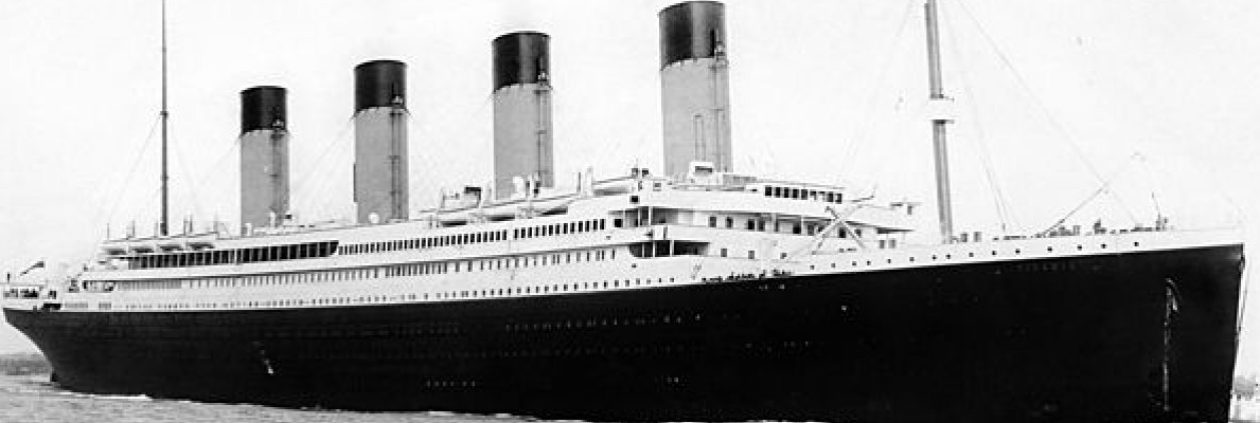
Little-known facts about the Titanic that may surprise you
MSN.com, 3 Oct 2023
https://www.msn.com/en-gb/news/world/little-known-facts-about-the-titanic-that-may-surprise-you/ss-AA1hzKaJ
This is a gallery of interesting tidbits you may find worthwhile.
=
Neil deGrasse Tyson Said James Cameron Got the Sky All Wrong in the ‘Titanic’ Sinking Scene
Insider, 3 Oct. 2023
www.insider.com/neil-degrasse-tyson-said-james-cameron-titanic-sky-wrong-2023-10
There have been many criticisms, some fair or not, about Cameron’s Titanic. So apparently the night sky was not accurate. Fair enough, coming from someone who would seem to know. I assume he set up the appropriate simulation (which can be done these days) and with all the data we have input it and then voila! You get the night sky as it should have been back in 1912. I bet James Cameron will not lose any sleep missing this important detail. Out of audience of how many-millions-and no one except the eminent Neil deGrasse Tyson, eager to sell a new book tells the world the night sky in that movie was all wrong. Well, it got some attention, which I suppose is what he wanted. I am all for being accurate and routinely disappointed when historical movies get characters and even dates wrong. Great movies like Quo Vadis, a great sword and sandal movie, is very wrong about many things (although Peter Ustinov nails Nero) but is a great movie none the less. So, I am not going to worry that the night sky in that movie was not shown as it was in 1912. Nor should anyone for that matter since the movie is historical fiction based on real events. So, pop the popcorn and enjoy the movie.
=
Interesting History: The First Train Robbery in U.S. History (6 Oct 1866)
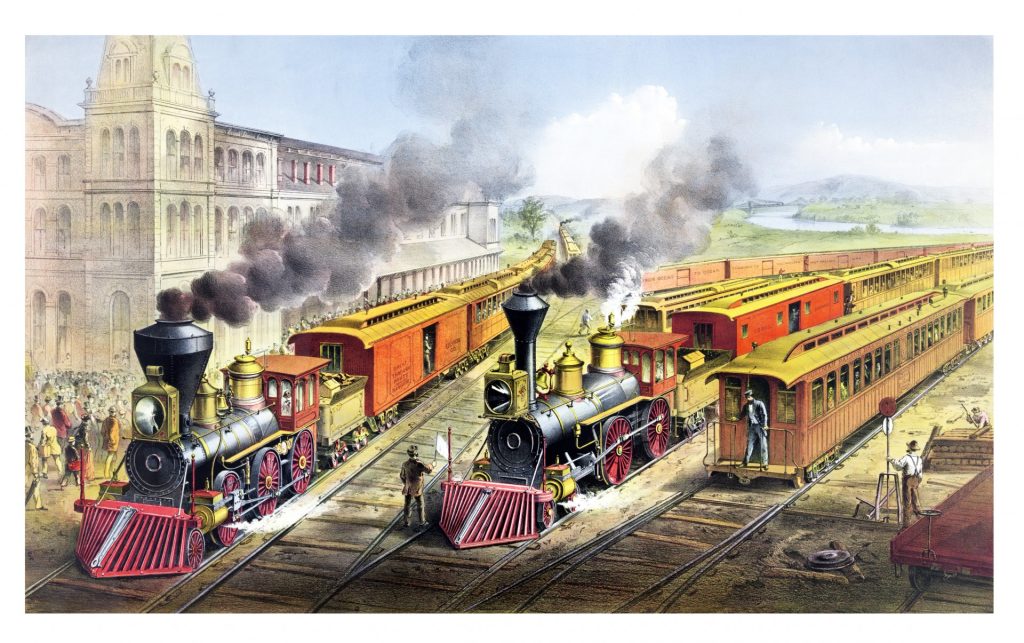
Karen Arnold, publicdomainpibtures.net
In the early days of this country, traveling was hazardous. Roads were poor, especially in winter. Near cities it was not too bad but the further out you were, it was more treacherous. Roads, such as they were, were poorly kept. And of course, thieves (tagged highway robbers, blackguards, and other notable names) loved to prey on travelers. Stealing from a train though seemed implausible to many since trains moved pretty swiftly, at least most of the time.
Now train robberies had occurred before this date but these were mainly done in freight yards or when the train was stationary sitting in a depot. So, it was a bit of a shock when the Reno Gang stopped a train in Jackson County, Indiana and made off with $13,000. They boarded the Ohio & Mississippi train at the Seymour depot and once the train was underway made their way wearing masks until entering a car owned by the Adams Express Company. The company delivered bank drafts, documents, and packages for clients. He was ordered to open the safes, but he only could access one. He opened it and they took gold coins totaling $10,000 and bank notes worth about $3,000. There was another safe they tried to open but couldn’t and tossed it off the train. They never got it open.
They signaled for the train to stop, hopped off, and disappeared into the night. The Reno Brothers were well known gang before and after the Civil War and caused lots of headaches. The gang frequently robbed post offices, homes, and murdered those who might talk about them. Their audacious robbery of a train would soon be imitated by other gangs and would become part of the lore of the old west. Trains carrying gold, cash, and other precious metal would become targets and became frequent in the 1870’s-1880’s. And they would become more deadly over time. Railroads were anxious to stop this banditry as it caused lots of bad press, angry passengers, and impacted shipping. So, they began adding armed guards to their trains along with horses in some cases so they could give chase. Bounties were made and the famous Pinkerton Agency was used to help track them down as well.
To make it more difficult to offload safes, they were made extra heavy all but making it impossible to toss them off the trains. And the people on the train may not have access to those safes for security reasons either making it useless to try and hold up the train (except to rob the passengers). While in the early days targeting trains was easy, deadly shootouts between the armed guards and gangs made it not worth trying as time went on. The Reno Brothers, an already notorious gang before and after the Civil War, added this to their roster of crimes that included robbing post offices, banks, homes, and murder. It did not end well for them. In 1868 after another successful train robbery that netted them $96,000, they were captured and held in jail pending trial. They had badly beaten an armed guard in the robbery and when he died while they were in jail, a vigilante mob was formed. They broke into the jail and took the Reno Brothers (Frank, William, and Sim) out and hung them from a tree.
Like most gangs, they had their supporters who threatened retaliation. The vigilantes-officially called the Jackson County Vigilance Committee-made it known that any retaliation would be met fiercely, which seems to have worked. While many in law enforcement wanted to bring them to trial and were not happy with this action, none of the vigilantes were identified or brought to trial for their actions. This ended one of the darker periods in southern Indiana history. The Reno Brothers Gang though would fade in memory while other gangs (such as the James Gang) would become more well known.
Sources
“The Reno Brothers Carry Out the First Train Robbery in U.S. History.”
HISTORY, 24 Nov. 2009
www.history.com/this-day-in-history/first-u-s-train-robbery
Daley, Jason. “How the Reno Gang Launched the Era of American Train Robberies.” Smithsonian Magazine, 6 Oct. 2016
www.smithsonianmag.com/smart-news/reno-gang-launched-era-american-train-robberies-180960702
HistoryNet. “Reno Gangs Reign of Terror.”
HistoryNet, 9 Aug. 2016
www.historynet.com/reno-gangs-reign-of-terror
“Reno Gang and the 1st Big Train Robbery”
Legends of America, June 2021
www.legendsofamerica.com/we-renogang
Accessed 6 Oct. 2023.