[This has been rewritten from 2025 and includes more source citations.]
News of the Titanic sinking and the large number that died shocked people all over the world. There were demands on both sides of the Atlantic for an investigation as to how this tragedy had occurred. Cartoonists depicted the number of dead to the lifeboats available with a large question mark as to why lifeboats for all were not there. Scathing commentary too that Ismay had survived while so many died were made as well. U.S. Senator William Alden Smith from Michigan was appalled by the tragedy and called, along with others, for a Senate inquiry into what happened. The formal proposal was made on April 17, 1912.The British were outraged believing they had sole jurisdiction since the ship was a British flagged steamer. Smith and others countered that since the ship was owned by an American corporation, that the U.S. had also the right to hold an inquiry. Attempts to stop it went right to the top where President Taft was asked to oppose it. He declined since his friend and military aide, Archibald Butt, died in the sinking.

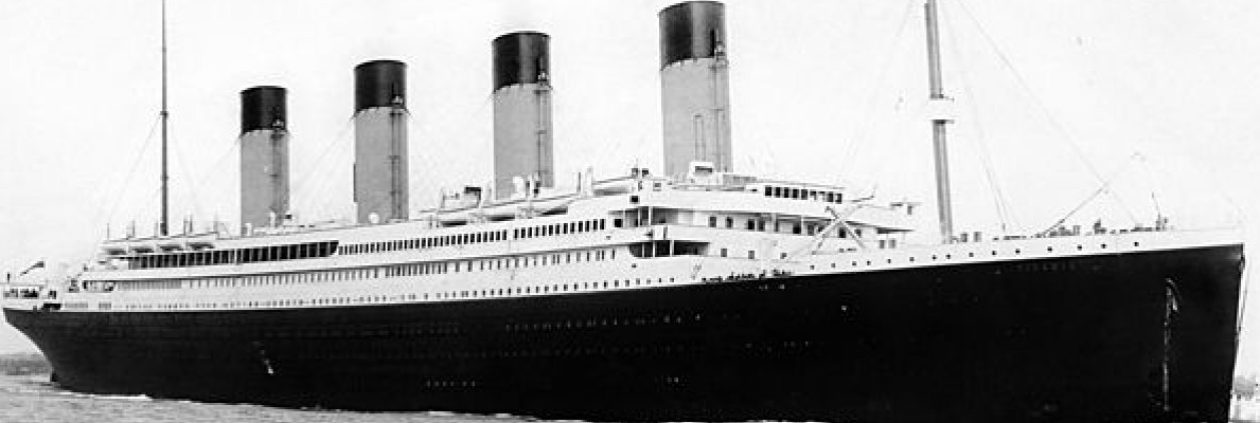
Unknown date (between 1905 and 1945)
Public Domain
Smith, a lifelong Republican, was more progressive than some of his party and wanted to determine if White Star had liability for what happened. He and Senator Francis Newlands along with others quickly traveled by train to New York to be there when Carpathia docked on 18 April. They boarded the ship after it was docked and had subpoenas handed out to Ismay, all the surviving Titanic officers, and Captain Rostron. Other parties-crew, survivors, and Captain Stanley Lord and crew of Californian-would be asked to testify as well. The hearings would begin at the Waldorf-Astoria Hotel in New York and later be moved to Washington D.C. at the Russell Senate Office Building. The hearings, with many recesses in-between, would run for 18 days till May 25, 1912.
The subcommittee doing the inquiry was composed of seven senators (three Republicans and three Democrats) with Smith as chair. While members could ask questions of witnesses, Smith reserved the right to question the chief witnesses. This led to some friction as some members thought he was trying to seize the limelight resulting in some members not showing up for scheduled hearings. The British press and government harshly condemned the inquiry and Smith personally. Smith was portrayed poorly as an out-of-control ego centered senator wanting to use the tragedy to gain prominence. The inquiry was condemned for having no jurisdiction in the press and by the government. President Taft was not immune either from criticism for allowing this to happen. The row carried out in front page headlines daily and the British government made very clear it was against the inquiry.

Public Domain (via Wikipedia)
The inquiry heard testimony from the Titanic surviving officers, crew, and survivors in particular Charles Lightoller, Frederick Fleet, Harold Bride, and First-Class passenger Archibald Gracie. Captain Arthur Rostron of Carpathia, Captain Stanley Lord of California, and Captain Herbert Haddock of RMS Olympic testified. The inquiry heard expert testimony about the Marconi radio telegraph, icebergs and about the news coverage. Of particular interest was how the messages got so mixed up as to render confusing reports of the situation. Phillip Franklin, the vice-president of International Mercantile Marine, testified as well. Smith also visited the RMS Olympic when it was in port in New York on May 25, 1912 to inspect the ship and interview some of the crew.
The official report was delivered to the United States Senate on May 28, 1912. The report, nineteen pages long and with 44 exhibits, summarized over 1,145 pages of testimony and sworn affidavits. Its findings and recommendations, echoed by the British Inquiry that would come later, would make changes to safety practices on ships at sea. The key findings are:
- The ship was unprepared for the emergency due, that no general alarm was given, there was no orderly routine for the evacuations nor an organized system of safety.
- There was no testing of the safety and life-saving equipment.
- Captain Edward Smith showed indifference to the danger and contributed to the tragedy.
- The lack of lifeboats aboard was due to British Board of Trade lax regulation on lifeboats needed. The report also criticized the speed of the sea trials as hasty.
- The SS Californian was nearer to Titanic than what its captain claimed it was and requested the British government act against him.
- That the presence of White Star Line president, J. Bruce Ismay, may have contributed to Captain Smith’s decision to increase speed.
- Third-Class passengers, while not prevented from getting to the lifeboats, did not realize until far too late that Titanic was sinking.
The report criticized the seafaring practices that had led to complacency and how each component-from the builders, owners and crew–all contributed to its demise.There was no finding of negligence by the subcommittee and while the actions that led up to the disaster were a problem, the disaster itself was considered an “act of God.”
Smith had hoped to prove negligence as that would have helped those who lost relatives and cargo get damages. However, due to laws limiting liability unless you could prove negligence, most would never get much compensation from White Star. They did settle legal claims brought against them, but the amount paid was far less than it could have been. Those who were employed by outside vendors, such as Wallace Hartley and his band, had no legal recourse against White Star. The firm that employed them tried to bill their relatives for the lost items (lyre lapel insignia or White Star logo) required to be worn. One of them sent the bill to the Amalgamated Musicians’ Union which reprinted it in the monthly newsletter. The controversy it generated showed how much had changed. Musicians were paid modest fees for their services and the fact that their employer demanded payment for lost pins or buttons that were lost when they died at sea was considered outrageous. There is no record that the company was paid nor that they sought legal action to collect.
Captain Smith, while found complacent and failed to have proper drills for the crew to handle the lifeboats, was not found negligent. Ismay was still a villain for surviving in the press, but Captain Stanley Lord of Californian faced severe criticism for the indifference he and his crew showed to the rockets that were seen. He would never shake it, and the British Inquiry also harshly judged him as well. He would be fired by the Leyland Line in August 1912 but found employment with the Nitrate Producers Steamship Co. where he stayed until 1927.
Sources
Disclosure: As an Amazon Associate, I earn from qualifying purchases. This post may contain affiliate links, which means I may receive a small commission at no extra cost to you.
Books
Behe, George TITANIC: SAFETY, SPEED AND SACRIFICE, Transportation Trails, Polo, IL 1997
Behe, G. (2012). On board RMS Titanic: Memories of the Maiden Voyage. The History Press.
Behe, George. The Triumvirate: Captain Edward J. Smith, Bruce Ismay, Thomas Andrews and the Sinking of Titanic.History Press, 2024.
Brewster, H. (2013). Gilded Lives, Fatal Voyage: The Titanic’s First-Class Passengers and Their World. National Geographic Books.
Cameron, Stephen. Titanic: Belfast’s Own. Colourpoint, 2011.
Eaton John P. & Haas Charles, TITANIC TRIUMPH AND TRAGEDY, SECOND EDITION, W.W. Norton & Company, New York, New York, 1995 First American Edition
Fitch, Tad, J. Kent Layton, and Bill Wormstedt. On a Sea of Glass: The Life & Loss of the RMS Titanic. Reprint. Amberley Publishing, 2015.
Lord, Walter, A NIGHT TO REMEMBER, Holt Rinehart and Winston, New York, New York, 1955. Multiple revisions and reprints, notably Illustrated editions (1976,1977,1978 etc.)
Lord, Walter, THE NIGHT LIVES ON, Willian Morrow and Company, New York, New York, 1986 (First Edition)
Lynch, Don & Marshall Ken, TITANIC AN ILLUSTRATED HISTORY, Madison Press Books, Toronto, Ontario Canada, 1992
Marshall, L. (2019). Sinking of the Titanic: The Greatest Disaster At Sea – Special Edition with Additional Photographs. Independently Published.
Rossignol, K. (2012). Titanic 1912: The Original News Reporting of the Sinking of the Titanic. Createspace Independent Publishing Platform.
Wade, Wyn Craig. The Titanic, End of a Dream, 1979.
Wilson, A. (2012). Shadow of the Titanic: The Extraordinary Stories of Those Who Survived. Simon and Schuster.
Government Reports
Titanic Disaster Report of Committee on Commerce United States Senate. United States Senate, March 28, 1912. Accessed April 20, 2026. https://www.senate.gov/reference/reference_item/titanic.htm.
“TIP | U.S. Senate Inquiry.” https://www.titanicinquiry.org/USInq/AMInq01.php.
The Titanic Reports: The Official Conclusions of the 1912 Inquiries Into the Titanic Disaster. Red and Black Publishers, 2008.
Internet Articles
Andrews, Stefan. “Families of Titanic’s Musicians Were Billed the Cost of Uniforms After the Ship’s Sinking.” Thevintagenews. Last modified June 21, 2017.
Internet (General)
“The Titanic: Sinking & Facts | HISTORY.” HISTORY. Last modified March 26, 2026. https://www.history.com/articles/titanic.
“Encylopedia Titanica.” https://www.encyclopedia-titanica.org/.
Documentary & Videos
Oceanliner Designs. “The First Titanic Inquiry Was a Confused Mess.” Video. YouTube, August 18, 2024. https://www.youtube.com/watch?v=TJL4G4RKvXo.