
Tag Archives: spring

Welcome to Spring 2026

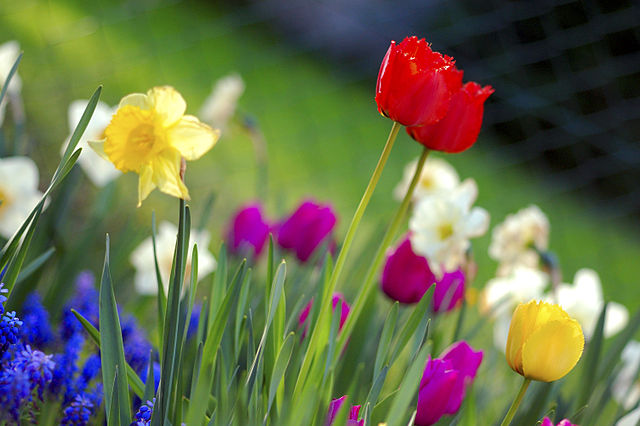
Colorful Spring Garden
Photo:Anita Martinz(Flickr)

The March Equinox marks the moment where the Sun crosses the equator (an imaginary line in the sky above the equator) from south to north and usually occurs between March 19-21 every year. Both the March and September equinoxes are when the Sun shines directly on the equator making night and day nearly equal. This equinox is the transition from winter to spring in the Northern Hemisphere but the reverse in the Southern Hemisphere (summer into fall). Various cultures celebrate March equinox as a time of rebirth. Many spring festivals are timed to coincide with the equinox, and some religious events (Passover and Easter) use specific calculations based on the equinox to help determine the exact day of the event.

A sure sign spring is here is when lambs appear.
Spring Lamb In The Sunshine
Photo: Tanya Hall/publicdomainpictures.net

Meteorologists however start spring on March 1 rather than by the March Equinox. The reason is that they divide the year into four quarters to make it easier to compare data and compile statistics. Meteorological seasons use annual temperature cycles rather than the position of the Sun. While astronomers follow the position of the Sun regarding equinoxes and solstices, meteorologists use the calendar to prevent problems since the dates of equinoxes and solstices can vary each year.

 Early spring is when the Earth’s axis increases its tilt relative to the Sun resulting in more daylight for that part world where it spring is occurring. It is a time when the increased warmth results in more plant growth (spring forth as it used to be said and how spring got its name). The resulting warmth also makes snow melt causing streams to swell and frosts to diminish. For areas that get little or no snow, ground temperatures will increase quickly as well. Despite spring beginning in March, in areas where there is no snow early plant growth can begin as early as February (or August down below). Arctic zones may not experience spring until May.
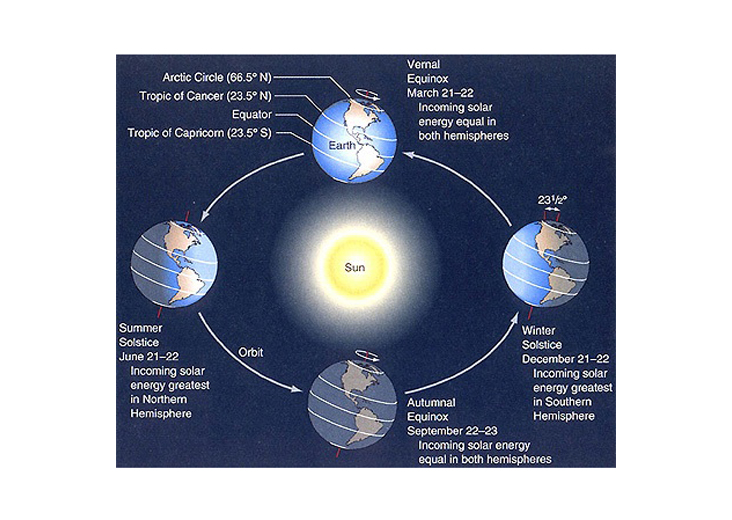
Solstices and Equinoxes
Image: NASA

Due to the reversal of seasons in the Southern Hemisphere, Easter is celebrated in Autumn. The Allhallowtide (Halloween, All Saints’ Day, All Souls’ Day) is celebrated in Spring.

Despite the change of the seasons–both calendar and meteorologically speaking–winter does continue in many places. And with it can come unpredictable weather which my favorite feline Garfield illustrates it perfectly. Garfield is outside. First it is warm and sunny. Then cold and rainy. Then back to warm and sunny. And then rain again and then another dry day. Finally, Garfield yells in exasperation “Will you make up your mind?” The next frame is split with one half having rain and the other half sunny. And it is more accurate than most of us want to believe.

There are two sayings that get the season right, courtesy of The Old Farmer’s Almanac:

Bluebirds are a sign of spring; warm weather and gentle south breezes they bring.

One swallow does not make a spring.

Welcome to Spring!

Sources

“When Is Spring 2026?” Accessed March 19, 2026. https://www.timeanddate.com/calendar/spring-equinox.html.

———. “First Day of Spring 2026: The Spring Equinox.” Almanac.Com. Last modified March 16, 2026. Accessed March 19, 2026. https://www.almanac.com/content/first-day-spring-vernal-equinox.

———. “March Equinox 2026: Here’s All You Need to Know.” EarthSky | Updates on Your Cosmos and World. Last modified March 15, 2026. Accessed March 19, 2026. https://earthsky.org/astronomy-essentials/everything-you-need-to-know-vernal-or-spring-equinox/.
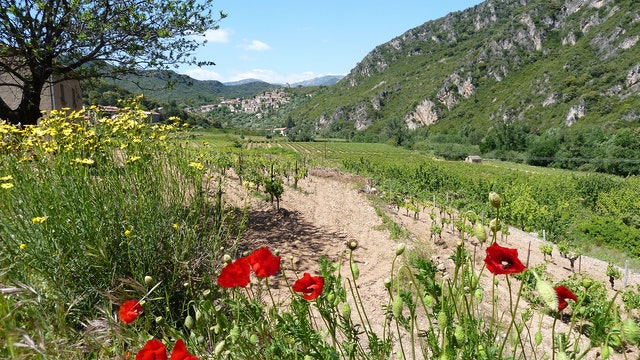
Welcome to April

April, Brevarium Grimani, fol. 5v (Flemish)
circa 1510
Public Domain via Wikipedia Commons

April is the fourth month on the current Gregorian but the fifth month on the old Julian calendar. In the Northern Hemisphere, April is the beginning of spring in many places. In the Southern Hemisphere, April is the equivalent of October. The name April comes from the Latin word Aprilis and was the second month on the old Roman calendar that used to begin in March.

April was seen as a month of both sun and growth by the Romans, which may be how they came up with the name Aprilis. There may be some connection to the Greek goddess Aphrodite as well. Whatever its origin, the name stuck and has come to us as April. With winter over for most in the Northern Hemisphere, it was a time of joy. It started getting warmer, the cold days of rain, snow, and frost receded and replaced by much nicer days.

There are countless festivities in April to celebrate this time of year to be chronicled here. April Fools Day (1 April) is celebrated around the world as a day of playing pranks. It possibly goes back to a time when people, happy to see winter come to an end, would play joyful pranks on their family and friends. Whatever its source, it has become ingrained into culture and tradition. Easter and Passover are often celebrated in April as well.

For those interested, the birthstone for April is the diamond and the birth flowers are the daisy and sweet pea.

Welcome, Spring

Colorful Spring Garden
Photo:Anita Martinz(Flickr)

Spring is finally here! For some it does not seem like it has arrived with rain, sleet or snow still coming down as we head outside. It has arrived and it marks the transition between winter and summer. Temperatures start rising, flowers come into bloom, and the cold of winter starts fading into the background.

Not everyone celebrates spring at the same time. The southern hemisphere is now beginning autumn and the transition to winter.  And while spring equinox marks it on the calendar,  nature has its own calendar owing to local climate and sometimes specific weather. Sports that primarily play in the summer begin their first real games in the spring. Fashion too changes as people begin to put away heavy winter clothing and replace it with lighter clothes. However often it is wise to keep the jacket and umbrella handy. Sometimes spring weather can be a bit unpredictable!

Shop Amazon – Best Selling Products – Updated Every Hour

Today is the Spring Equinox

Solstices and Equinoxes Image: NASAThe Spring or March Equinox is today at 16:15 UTC. This equinox marks the moment where the Sun crosses the equator and usually occurs between March 19-21 every year. Both the March and September equinoxes are when the Sun shines directly on the equator making night and day nearly equal.

The March equinox is the transition from winter to spring in the Northern Hemisphere but the reverse in the Southern Hemisphere (summer into fall). Various cultures celebrate March equinox as a time of rebirth. Many spring festivals are timed to coincide with the equinox and some religious events (Passover and Easter) use specific calculations based on the equinox to help determine the exact day of the event.

Though the equinox marks the changing of the seasons, it is quite common for winter effects to continue in many places far until May or even June.


Spring Equinox

Solstices and Equinoxes Image: NASAThe Spring or March Equinox is today at  04:30 UTC. This equinox marks the moment where the Sun crosses the equator and usually occurs between March 19-21 every year. Both the March and September equinoxes are when the Sun shines directly on the equator making night and day nearly equal.

The March equinox is the transition from winter to spring in the Northern Hemisphere but the reverse in the Southern Hemisphere (summer into fall). Various cultures celebrate March equinox as a time of rebirth. Many spring festivals are timed to coincide with the equinox and some religious events (Passover and Easter) use specific calculations based on the equinox to help determine the exact day of the event.

Though the equinox marks the changing of the seasons, it is quite common for winter effects to continue in many places far until May or even June.


Spring Equinox

Solstices and Equinoxes Image: NASAThe Spring or March Equinox is today at 6:45 PM EDT/22:45 UTC. This equinox marks the moment where the Sun crosses the equator and usually occurs between March 19-21 every year. Both the March and September equinoxes are when the Sun shines directly on the equator making night and day nearly equal.

The March equinox is the transition from winter to spring in the Northern Hemisphire but the reverse in the Southern Hemisphere (summer into fall).  Various cultures celebrate March equinox as a time of rebirth. Many spring festivals are timed to coincide with the equinox and some religious events (Passover and Easter) use specific calculations based on the equinox to help determine the exact day of the event.

Though the equinox marks the changing of the seasons, it is quite common for winter effects to continue in many places far until May or even June.