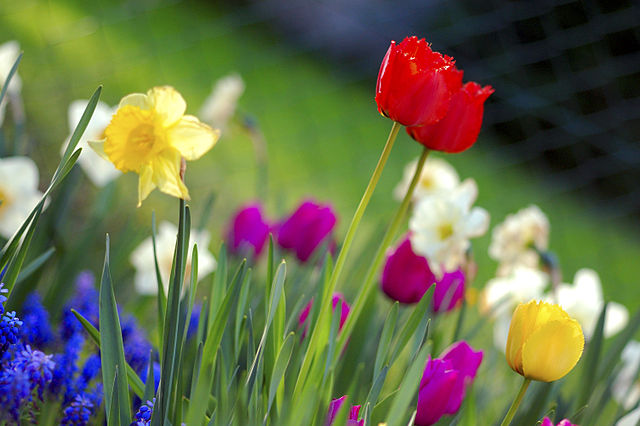
Colorful Spring Garden Photo:Anita Martinz(Flickr)
Today the March Equinox takes place ending winter and ushering in spring. To find out the exact time this will occur where you live, please go to www.timeanddate.com.
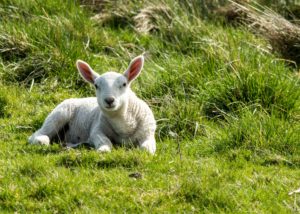
A sure sign spring is here is when lambs appear. Spring Lamb In The Sunshine Photo: Tanya Hall/publicdomainpictures.net
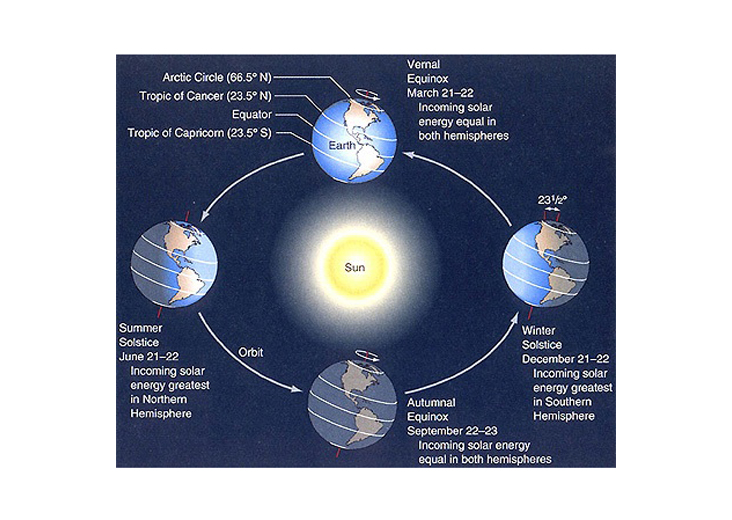
The March Equinox marks the moment where the Sun crosses the equator and usually occurs between March 19-21 every year. Both the March and September equinoxes are when the Sun shines directly on the equator making night and day nearly equal. This equinox is the transition from winter to spring in the Northern Hemisphere but the reverse in the Southern Hemisphere (summer into fall). Various cultures celebrate March equinox as a time of rebirth. Many spring festivals are timed to coincide with the equinox and some religious events (Passover and Easter) use specific calculations based on the equinox to help determine the exact day of the event.
Solstices and Equinoxes Image: NASA
Early spring is when the Earth’s axis increases its tilt relative to the Sun resulting in more daylight for that part world where it spring is occurring. It is a time when the increased warmth results in more plant growth (spring forth as it used to be said and how spring got its name). The resulting warmth also makes snow melt causing streams to swell and frosts to diminish. For areas that get little or no snow, ground temperatures will increase quickly as well. Despite spring beginning in March, in areas where there is no snow early plant growth can begin as early as February (or August down below). Arctic zones may not experience spring until May.
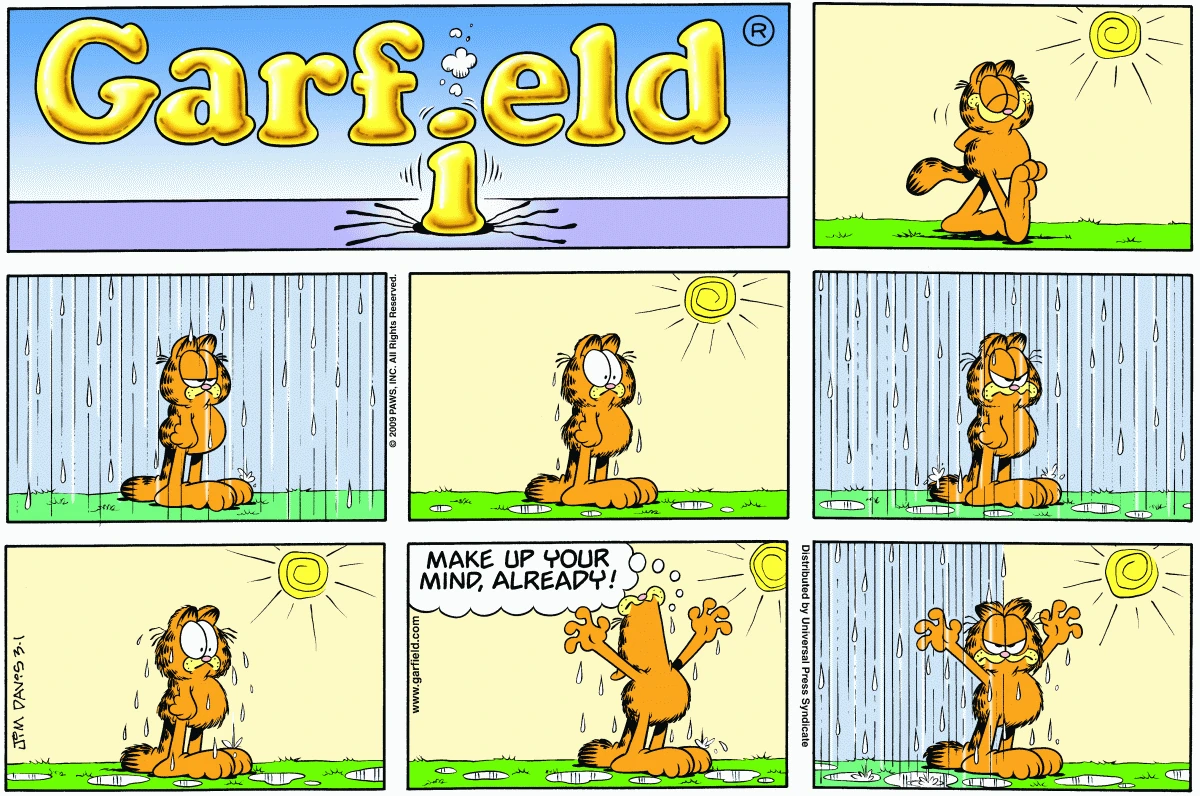
However, despite all this, winter can and does often continue on in many places. And spring also heralds unpredictable weather. There is a funny Garfield cartoon that illustrates it perfectly. Garfield is outside. First it is warm and sunny. Then cold and rainy. Then back to warm and sunny. And then rain again and then another dry day. Finally, Garfield yells in exasperation “Will you make up your mind?” The next frame is split with one half having rain and the other half sunny.
St. Patrick’s Day postcard, 1912 of “Old Weir Bridge” at Dinis Cottage, in Killarney National Park, Ireland. Public Domain/Wikipedia
March is the third month on both the old Julian and current Gregorian calendar. It is the month that begins spring in the Northern Hemisphere and autumn in the Southern Hemisphere. March is believed to be derived from the Roman god Mars (Greek equivalent Ares). Before the advent of the Julian calendar, Romans considered March the first month of the new year. With winter over, it was also the start of military campaigns to resume. Festivals were also held at this time in ancient Rome to honor Mars as well.
The March equinox is usually around March 21-22. Many spring festivals take place in March. Passover and Easter may take place in March, but not always as it is dependent upon very specific calculations and can change from year to year. St. Patrick’s Day is celebrated on March 17. If it falls on a Friday, Catholics are given dispensation to eat meat on that day (at least in Ireland and in areas where the feast is celebrated) If it falls on a Sunday, the diocese that observes the day will do so on Monday. For Ireland, since St. Patrick is its patron saint, it will be celebrated on Sunday replacing the normally observed day of Lent.
The famous Ides of March (March 15) was once a day to pay debts in Rome, but it became infamously associated with the assassination of Julius Caesar on that day in 44 BC. Daylight Saving Time begins in the U.S. and Canada on the second Sunday in March. For most of Europe, this will occur on March 31. The first full moon of March is often called the Worm Moon as many earthworms are being noticed in the Northern Hemisphere.
Today is the March/Spring Equinox. This equinox marks the moment where the Sun crosses the equator and usually occurs between March 19-21 every year. Both the March and September equinoxes are when the Sun shines directly on the equator making night and day nearly equal.
The March equinox is the transition from winter to spring in the Northern Hemisphere but the reverse in the Southern Hemisphere (summer into fall). Various cultures celebrate March equinox as a time of rebirth. Many spring festivals are timed to coincide with the equinox and some religious events (Passover and Easter) use specific calculations based on the equinox to help determine the exact day of the event.
Though the equinox marks the changing of the seasons, it is quite common for winter effects to continue in many places far until May or even June.
And if you live in an agricultural area where sheep abound, a sure sign of Spring is that lambs are born. Lots of them. To this day no scientist has ever figured how the mother can instantly know her offspring in a field where so many lambs abound.
A sure sign spring is here is when lambs appear. Spring Lamb In The Sunshine Photo: Tanya Hall/publicdomainpictures.net
[Due to electricity outages and other issues, I was not able to post much during February. Back to regular posting now.]
St. Patrick’s Day postcard, 1912 of “Old Weir Bridge” at Dinis Cottage, in Killarney National Park, Ireland. Public Domain/Wikipedia
March is the third month on both the old Julian and current Gregorian calendar. It is the month that begins spring in the Northern Hemisphere and autumn in the Southern Hemisphere. March is believed to be derived from the Roman god Mars (Greek equivalent Ares). Before the advent of the Julian calendar, Romans considered March the first month of the new year. The March equinox is usually around March 21-22. Many spring festivals take place in March. Passover and Easter may take place in March, but not always as it is dependent upon very specific calculations and can change from year to year. St. Patrick’s Day is celebrated on March 17. If it falls on a Friday, Catholics are given dispensation to eat meat on that day (at least in Ireland and in areas where the feast is celebrated). The famous Ides of March (March 15) was once a day to pay debts in Rome but it became infamously associated with the assassination of Julius Caesar on that day in 44 BC.
Daylight savings time begins in the U.S. and Canada on the second Sunday in March. March has two birthstones that reflect courage: aquamarine and bloodstone. The flower for March is the daffodil.
Today is the March/Spring Equinox. This equinox marks the moment where the Sun crosses the equator and usually occurs between March 19-21 every year. Both the March and September equinoxes are when the Sun shines directly on the equator making night and day nearly equal.
The March equinox is the transition from winter to spring in the Northern Hemisphere but the reverse in the Southern Hemisphere (summer into fall). Various cultures celebrate March equinox as a time of rebirth. Many spring festivals are timed to coincide with the equinox and some religious events (Passover and Easter) use specific calculations based on the equinox to help determine the exact day of the event.
Though the equinox marks the changing of the seasons, it is quite common for winter effects to continue in many places far until May or even June.
St. Patrick’s Day postcard, 1912 of “Old Weir Bridge” at Dinis Cottage, in Killarney National Park, Ireland. Public Domain/Wikipedia
March is the third month on both the old Julian and current Gregorian calendar. It is the month that begins spring in the Northern Hemisphere and autumn in the Southern Hemisphere. March is believed to be derived from the Roman god Mars (Greek equivalent Ares). Before the advent of the Julian calendar, Romans considered March the first month of the new year. The March equinox is usually around March 21-22. Many spring festivals take place in March. Passover and Easter may take place in March, but not always as it is dependent upon very specific calculations and can change from year to year. St. Patrick’s Day is celebrated on March 17. If it falls on a Friday, Catholics are given dispensation to eat meat on that day (at least in Ireland and in areas where the feast is celebrated). The famous Ides of March (March 15) was once a day to pay debts in Rome but it became infamously associated with the assassination of Julius Caesar on that day in 44 BC.
Daylight savings time begins in the U.S. and Canada on the second Sunday in March. March has two birthstones that reflect courage: aquamarine and bloodstone. The flower for March is the daffodil.
Colorful Spring Garden Photo:Anita Martinz(Flickr)
Spring officially begins today at 12:57 PM EDT (16:57 UTC). Equinoxes occur twice a year, in March and September. When these events happen, the sun shines directly on the equator and the length of day and night are nearly the same. However below the equator the season flips so it is the beginning of autumn in Sydney, Australia. The first full day of spring (or autumn) will be 21 Mar 2014.