All Souls’ Day by Jakub Schikaneder(1855-1924) National Gallery Prague Public Domain/Wikimedia Commons
All Souls’ Day is to commemorate the faithful dead and is celebrated by special mass by Catholics and some Christian denominations (most Protestant churches do not observe it). Catholics believe there are three places souls will go: heaven, purgatory, or hell. Purgatory is the place many souls end up as they have lesser sins and are not in a state of grace. Purgatory is an essential stage where souls are cleansed in preparation to go to heaven. Unlike hell, where the fire is for punishment, purgatory is a place for purification and repose. We pray that the souls of our loved ones, friends, and others will be allowed to leave and enter heaven on this day. We especially pray for those who have no one to pray for them.
All Souls Day is not to be confused Día de Muertos (Day of the Dead) which does remember friends and family who have died but is not a Catholic or Christian religious event(though it takes place from 31 Oct through 2 Nov which coincides with Halloween, All Saints’ and All Souls’ Day).
Suggested Reading
Rutler, George William. 2014. Hints of Heaven: The Parables of Christ & What They Mean for You. Manchester, NH: Sophia Institute Press.
Van Den Aardweg, Gerard JM. 2009. Hungry Souls: Supernatural Visits, Messages, and Warnings from Purgatory. Charlotte NC: Tan Books.
Thigpen, Paul. 2019. Saints and Hell, and Other Catholic Witnesses to the Fate of the Damned. Charlotte NC: Tan Books.
The Forerunners of Christ with Saints and Martyrs (about 1423-24) Fra Angelico (circa 1395–1455) Public Domain via Wikimedia Commons
All Saints’ Day (Solemnity of All Saints, All Hallows, Hallowmas or All Saints’)is celebrated on 1 November by most Western Christians and is to honor all saints known and unknown. In some Catholic countries, it is a holiday. It is a holy day of obligation for most Catholics except when it falls on a Saturday or Monday. In that case it is celebrated on Sunday. Eastern Orthodox is celebrated on the first Sunday after Pentecost and is called All Saints’ Sunday.
Pope Boniface IV formally started All Saints’ Day on May 13, 609 AD. He also established All Souls’ Day to follow All Saints Day. Pope Gregory III (731-741 AD) moved it to 1 November as that was the day the foundation of a new chapel (St. Peter’s Basilica) was being laid. He wanted to dedicate the new chapel to All Saints. Halloween then became part of a three-day period called ‘Days of the Dead” which it is the first day of (the vigil), then followed by All Saints and then by All Souls (those in purgatory). During the reign of Pope Gregory IV (82y-844 AD), he decided to make the feast of All Saints (just celebrated in Rome at that point) universal meaning all dioceses had to observe it.
All Saints Day is a public holiday in Ireland where all schools, businesses and government is closed.
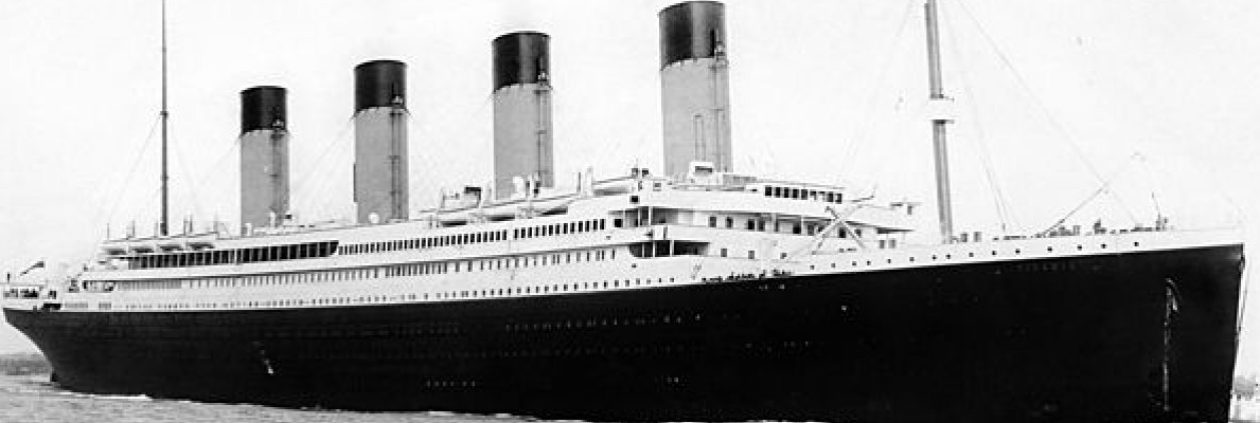
The sell-out Titanic Exhibition, which runs until November 4, drew in large crowds at Worcester Guildhall on the city’s High Street where they had a chance to get close to unusual objects from survivors and from the wreck itself. Crowds have been left spellbound by the haunting photographs and artefacts at the exhibition, which opened on Wednesday, telling her story from her beginning to her tragic end.
One of the world’s largest remaining Edwardian steamships, the S.S. Keewatin, has arrived at its new home at a museum in Kingston, Ont., after sailing through the Great Lakes from Georgian Bay near Barrie. The vessel is older than the Titanic. It had been docked at Port McNicoll in Georgian Bay, which was once a vital stop along a Canadian Pacific Railway shipping route. The museum secured a heritage designation for the Keewatin and will fund about $2 million in major repairs. Later on, Keewatin will open as a museum exhibit in a dry dock.
Titanic Related Ghost Story
Michael Imperioli relates in Celebrity Ghost Stories of encountering a ghost in an old New York hotel. The ghost was of a woman who lost her fiancé on the Titanic. You can watch it and other ghost stories on on YouTube below.
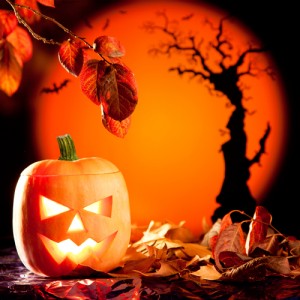
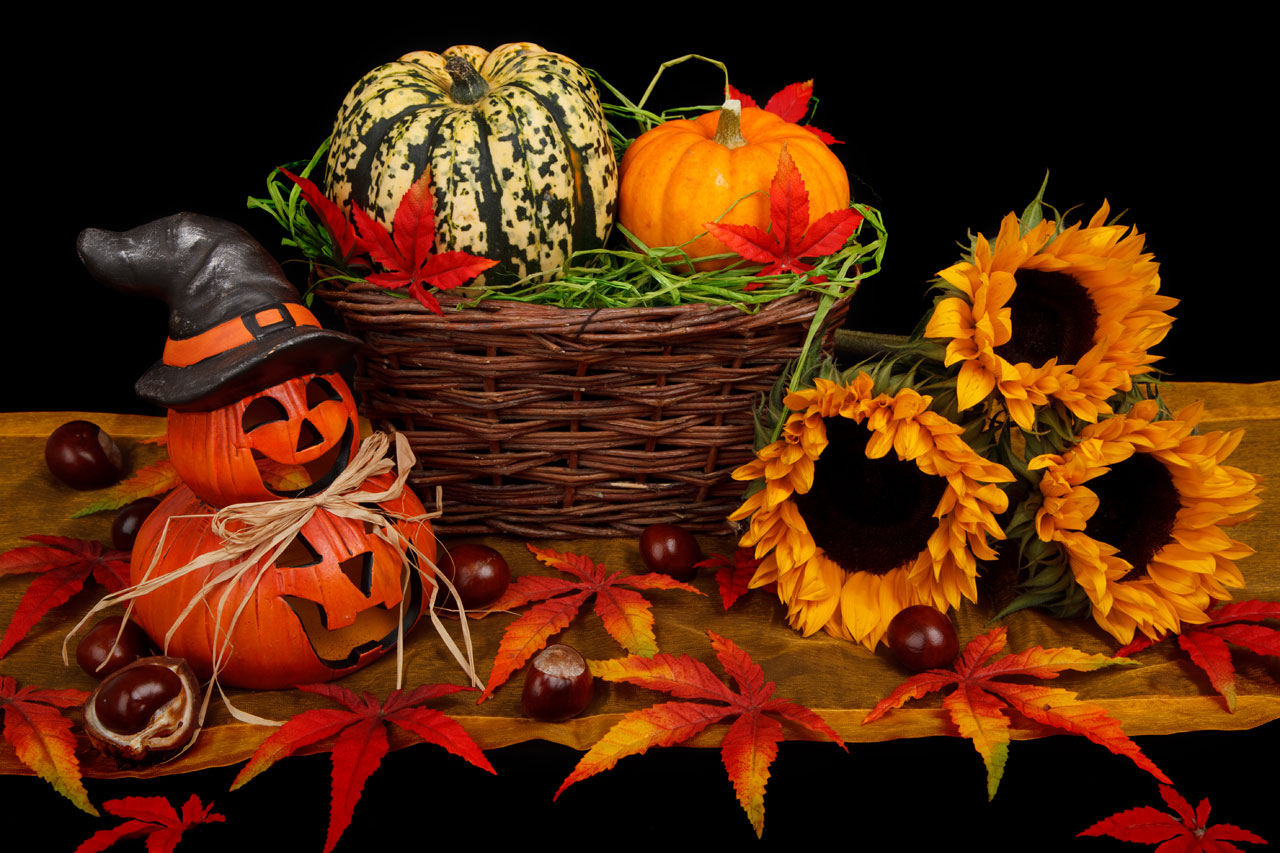
Halloween Decoration in Fall Vera Kratochvil Publicdomainpictures.net
(Note:This has been edited and rewritten in some parts for the 2023 edition. ]
October 31st is set aside as Halloween. It is not an official holiday (meaning government shuts down, banks closed, and many professional offices closed) but is celebrated nearly as one these days. There are really two separate Halloweens, one is secular and the other religious. The secular one most people easily understand. Kids dress up in silly or scary masks and go to homes asking for candy by yelling “trick or treat” to those who open their doors. Pumpkins have become associated with the day along with all kinds of scary decorations as well. Horror movies get shown during this time. Halloween has a religious meaning to that goes back to how the Catholic Church set the day up.
The original meaning of Halloween was All Hallows Eve that got contracted over time to Halloween. All Hallows Eve is the vigil of All Saints Day, a solemnity (meaning a major feast in the Catholic Church’s liturgical calendar). All Saints Day honors all the saints we know by name and any saint in heaven whose name is unknown to us. Originally this feast was celebrated on 13 May, but Pope Gregory III (731-741 AD) moved it to 1 November as that was the day the foundation of a new chapel (St. Peter’s Basilica) was being laid. He wanted to dedicate the new chapel to All Saints. Halloween then became part of a three-day period called ‘Days of the Dead” which it is the first day of (the vigil), then followed by All Saints and then by All Souls (those in purgatory).
All Souls’ Day by Jakub Schikaneder(1855-1924) National Gallery Prague Public Domain/Wikimedia Commons
During the reign of Pope Gregory IV (827-844 AD), he decided to make the feast of All Saints (just celebrated in Rome at that point) universal meaning all dioceses had to observe it. This meant that people with their own cultures would celebrate in their own ways. Since it was customary to have vigils before a major feast day, there was nothing unusual in this. In celebrating these particular holy days, we are reminded of heaven and hell. It reminds us that we have choices to make in this life that can lead to one of two outcomes: heaven or hell. By striving to live good lives by following God’s teachings, we want to go to heaven rather than the other place.
The roots of Halloween thus are not founded in any pagan celebration (such as Samhain or Druid festivals), and it is just coincidence that it occurs during the same time frame. If you study what those festivals were about, they had nothing to do with Christianity and followed a different belief system. Samhain, perhaps the best known, was a harvest festival in Scotland to celebrate the end of the harvest and to prepare for the coming of winter. It was a common belief (and not limited to Scotland, Ireland, or England) that this particular time of year where the transition from light to dark occurred meant also when evil spirits would abound to cause trouble. So they would offer them food at their tables for these invisible guests. Mischief Night grew out of this as well where you would do pranks on your neighbors.
Communal eating during this time meant lots of shared foods given out. The Scottish Halloween Cake was popular was hidden inside was a special prize of three trinkets. Later others celebrating All Souls Day would hand out pastries to those who came to console them on family who had passed away and that to would also add to the idea of handing out food during this time. Many wore masks to cover their faces so evil spirits would not see them. As the celebration of Samhain and others like it faded with the conversion to Christianity, some of the old rituals of having harvest festivals, wearing masks, and asking for food would continue. Creating lanterns too out of turnips and other things would continue. The Irish tradition of the Jack O’ Lantern was imported to the US and, thanks to the wonderful availability of pumpkins (and easier to carve than turnips) became a symbol for Halloween that many adopted as well.
Protestants had a different take on Halloween and All Saint’s and All Soul’s Day. The argument (and there are several different ones, but this is the most basic) is that the Catholic church merely taken over these pagan festivals and incorporated them into the church by renaming them. More zealous Protestant denominations like the Puritans banned Halloween (along with Christmas and Easter) saying they were pagan. In places where such views were strongly held (such as in the northeast of the U.S. or in England when the Puritans were in charge), it had the full power of the state to impose the restrictions. As time went out, and without many Catholics around to push back (in countries like England they were forbidden to practice and adherents who failed to submit to the new Protestant order imprisoned or executed), this became a dominant view of what Halloween was.
The religious origins of Halloween were overtaken and completely secularized as a result.
What the Protestants who hated Halloween didn’t count on was the many peoples who still practiced forms of Halloween immigrating to the U.S. While they had strict controls in New England, many simply landed in other areas where it was allowed and even embraced. The old English and Scottish custom of knocking on doors for Soul Cakes and promising to pray for the departed resumed along with wearing costumes. Likewise, the old customs of holding harvest festivals where people would gather, eat food, and share stories of old would resurrect. Kids would bob for apples, there would be spooky tales told, but most of all it was just a fun time. Halloween, far from being made extinct by like the Puritans, came back. And when the Puritans and those that shared their views fell out of favor and power in England, it came back (though sadly some traditions would remain more secular as a result).
Halloween then became a time of festivity, trick or treating, and putting on funny or sometimes scary outfits. The idea of Halloween parades would come about as a result of trying to curtail some of them more unpleasant sides of Halloween, namely Mischief Night pranks that sometimes got out of hand. Using toilet paper to cover trees, eggs to pelt cars and people, and sometimes more dangerous ones (like a flaming bag of dog poop on a porch) led to the creation of more ways to channel that energy.
Halloween candy, once a small, became national as did pumpkins. No longer were pumpkins just for pumpkin pie but many wanted them for decoration as well. And competition would emerge as to who could grow the biggest one of all. And of course, the selling of costumes and holiday decorations would explode as well. From costumes to candy, pumpkins to Halloween cakes, Halloween became an unofficial but nationally practice holiday that included kids as well as adults. And let us not forget the various Haunted Houses, haunted hayrides, and people decorating their houses in a wide variety of decorations that no doubt future people will ask “what the heck?”
There is a darker side to Halloween practiced by those who want to glorify violence, horror, and sexuality. Some use the time to dabble in such things as fortune telling, seances, using Ouija boards, or even ghost hunting. All of those things most pagans wanted to avoid during their ancient festivals during this time. At best they wanted to placate spirits and avoid the evil ones as much as they could. Yet now many decide to do these things thinking they are harmless, but many find out it is not at all like they thought it would be. This is why people now are trying to reclaim Halloween to make it less dark and more family-friendly rather than just people dressed up as zombies or worse dressed up in some sexually explicit costumes.
Today you see more families doing more things together such as going to haunted hayrides or holding Halloween parties where kids can get treats and have fun as well. During Covid lockdowns, such celebrations were limited but coming back as is trick or treating. Many though are opting to also take the time to revisit what the original Halloween was all about. This is perhaps a natural outgrowth of the overhyping and commercialism of Halloween. The higher costs of many items such as candy as made people revisit some classics from the past such as popcorn, roasted pumpkin seeds, baking cookies, and even making your own candy. It is not as hard as you might think.
While the original meaning of Halloween has been secularized for a long time (like Christmas was before it got its resurgence in the 19th century), it is starting to move away from some of the more excessive parts. And for some, the day does include just a few prayers for the two days of the dead that are to come.
Suggested Reading
Rossetti, Msgr Stephen. Diary of an American Exorcist: Demons, Possession, and the Modern-Day Battle Against Ancient Evil. Sophia, 2021.
Van Den Aardweg, Gerard J. M. Hungry Souls: Supernatural Visits, Messages, and Warnings From Purgatory. Tan Books, 2009.
Baker, Robert Allen and Joe Nickell. Missing Pieces: How to Investigate Ghosts, UFO’s Psychics, & Other Mysteries. Prometheus Books, 1992
Thigpen, Paul. Saints and Hell, and Other Catholic Witnesses to the Fate of the Damned. Tan Books, 2019
1931 theatrical release poster. This is one of several styles used to promote the movie. Public Domain via Wikimedia Commons
Todd Browning’s Dracula is considered a classic movie and is praised for its acting and the atmosphere it connotes. It was not the first movie adaptation of the Bram Stoker novel. Nosferatu was the first but since it was made without permission, was yanked from the theaters, and disappeared for a long time. That movie altered the story in keyways hoping to make it just different enough to pass muster. The 1931 movie borrowed from the stage version, a bit from the book, and a bit from the Nosferatu movie. While the story differs from the book, it makes up for it with great acting and made Bela Lugosi (who had played Dracula on stage) a household name.
For its time, Dracula was quite scary. Unlike today where blood and guts are shown in horror movies (and television or streaming ones as well), it was all about atmosphere to relay the horror of Dracula. The story opens with Renfield (not Jonathan Harker) on his way to meet with Count Dracula. He is warned by people to wait until the next day but says he must go. He is told about how they believe vampires live in that castle, which he scoffs at. He is given a crucifix to protect him. At Borgo Pass he is quickly tossed out with his baggage and the carriage speeds away. A carriage awaits him to take him to Castle Dracula. On the way he leans out and sees a large bat flying where the driver ought to be. When he gets to the castle, the door opens, and we see Dracula walking down the stairs to greet him. The entry is pretty much in ruin, unlike the book, and there is no greeting like the book where he is welcomed. An interesting spooky part is a large spider web that covers one part of the stairs. Dracula passes through it with no issue, but Renfield has to cut through it, and we see a large spider nearby. Dracula makes a comment about the spider living off blood and notes blood is life. The interesting scene (not the in book either) conveys that Dracula is a supernatural being.
After having his meal and showing Dracula the paperwork on Carfax Abbey, he retires to his room but not before cutting his finger and Dracula looking at him in a terrible way. In his room after opening the window, he falls to the ground. Dracula’s brides are there but are sent away by Dracula. The scene shifts to the Demeter where a crazed Renfield is serving his master and is found after the ship is boarded to find the crew dead. He is sent to a sanitarium run by Dr. Seward. We see Dracula attack a young girl before going to the theatre where he meets Dr. Seward, Jonathan Harker and his fiancée Mina Murray, and Lucy Westenra. That night he attacks Lucy while she is sleeping. We shift to what appears to be a medical examination of Lucy by Van Helsing noting that despite transfusions she dies. And the curious marks on her neck get his attention as well.
Meanwhile Renfield’s fascination with consuming flies and then spiders get Van Helsing’s attention. Renfeld wants to be sent away so his cries will not affect Mina. When Van Helsing shows him wolfsbane and how he fears it, he notes it is used to ward off vampires. Van Helsing in a meeting with Seward and others believes a vampire is at work. Meanwhile Dracula starts feeding on Mina causing her to relate strange dreams and her being fatigued. Dracula, who met them at the theatre, shows up. And it is here that Van Helsing’s suspicion that a vampire is about is confirmed. Dracula casts no reflection in the mirror of the cigarette box. Later when Van Helsing opens it in from of him, Dracula quickly tosses it away and for a moment we see his true face. After he regains control, he asks for pardon and departs. Renfield later relates he allowed Dracula to enter the sanitarium as he promised him lots of rats. Dracula returns later to confront Van Helsing by saying Mina is now his and for Van Helsing to return to his own country. Dracula tries to hypnotize him but fails. And Van Helsing uses a crucifix to force Dracula to retreat.
By now Mina knows about Dracula’ biting her and realizes her fate. She tells Jonathan that their love is finished. A vampire bat looms overhead, and she tries attacking Jonathan, but fails. Mina is being protected by wolfsbane around her neck and other protections, but Dracula uses hypnotism to get the maid to remove then and takes Mina. Van Helsing and Harker see Renfield escape and heading towards Carfax Abbey. Dracula believes he led them there and kills him. Van Helsing and Harker search the abbey and Harker finds Mina. Meanwhile Van Helsing finds Dracula in his coffin and kills him (offscreen). Mina then returns to normal, and the movie ends with Dracula dead and Mina free of his control.
The movie is now considered a classic and with good reason. While the story deviated substantially from the source material, it makes up for it with great acting and atmosphere that modern day horror movies fail to convey. And it became a template for vampire movies that would come after it (either made by Universal or by others later). Most vampire movies (with few exceptions) hue to the dusk to dawn nature of the vampire though, in the actual book, Dracula is free to move about during the day. However, the sun limits his abilities, and he has to stay in whatever form he is until sunset. Reviewers were shocked when Francis Ford Coppola had Dracula walking around by day in London in his movie. Had they read the book, they would not have been.
There were subsequent sequels to Dracula by Universal but none of them (except one- Abbott & Costello Meets Frankenstein 1948) had Bela Lugosi in them. After the movie, Lugosi sought to distance himself from the role believing he would be typecast. He did star in many movies with Boris Karloff but failed to grow beyond mad scientist type roles due his thick Hungarian accent. He was diagnosed with sciatic neuritis and became addicted to the prescribed drugs morphine and methadone. The drug dependence and his alcoholism contributed to him not getting major acting roles after 1948 relegating him to low-budget movies like Ed Wood’s Plan Nine from Outer Space (1957) which he died before it came out.
Bela Lugosi died of a heart attack on 16 August 1956 which occurred when he took a nap. His wife and daughter decided to bury him with his Dracula cape and cloak. Some later said he didn’t want that, but his son confirmed it was a decision that both he and his mother made consistent with his wishes. He was nearly broke at the time and his family could not afford his funeral. Frank Sinatra quietly paid the expenses for it. He is buried in the Holy Cross Cemetery in Culver City, California.
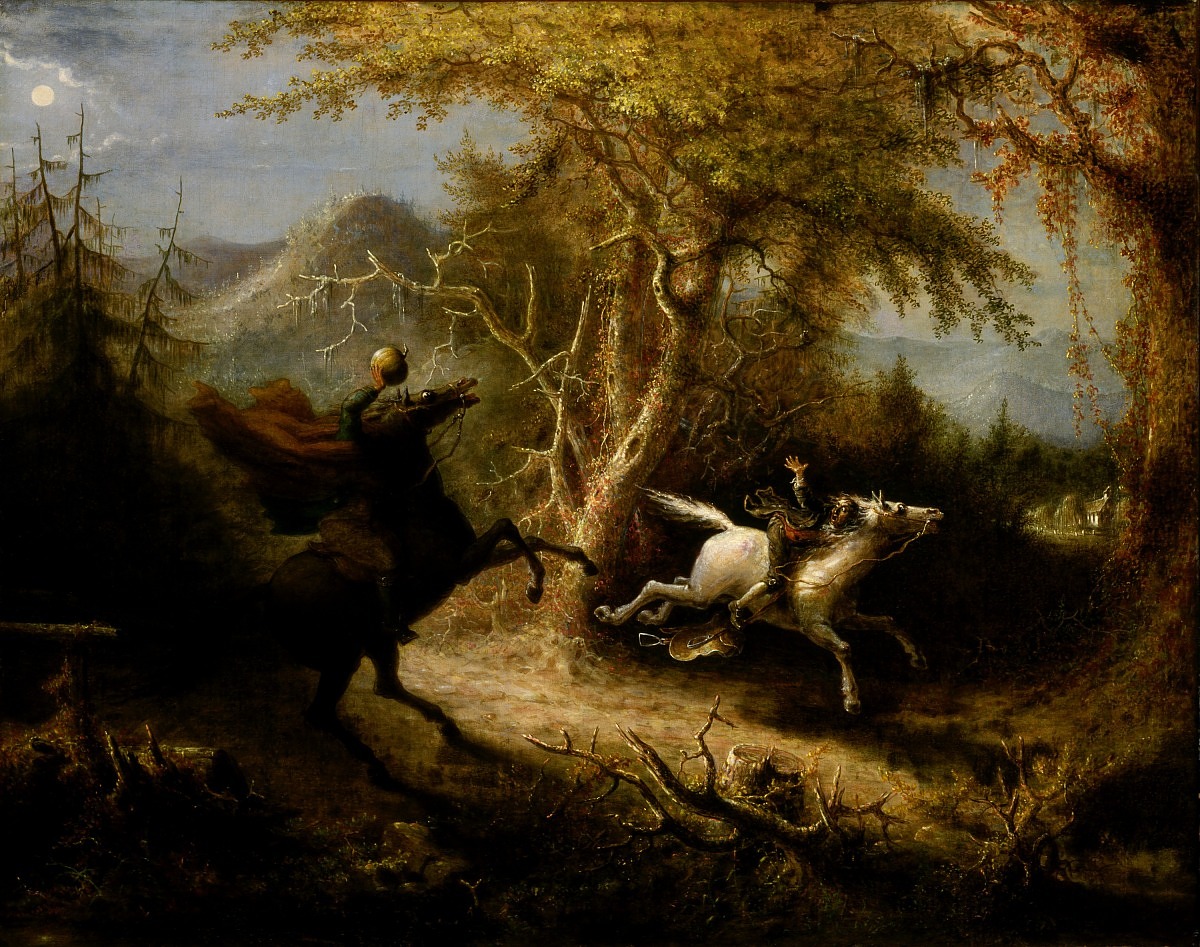
The Headless Horseman Pursuing Ichabod Crane, 1858 John Quidor (1801–1881) Public Domain Smithsonian American Art Museum artwork ID 34285
The dominant spirit, however, that haunts this enchanted region, and seems to be commander-in-chief of the powers of the air, is the apparition of a figure on horseback without a head. It is said by some to be the ghost of a Hessian trooper, whose head had been carried away by a cannonball, in some nameless battle during the Revolutionary War, and who is ever and anon seen by the country folk, hurrying along in the gloom of night, as if on the wings of the wind. (Washington Irving, The Legend of Sleepy Hollow)
The Legend of Sleepy Hollow is a unique American story written by Washington Irving in 1820 and remains popular to this day. The story takes place in a small village in New York called Sleepy Hollow. There in this idyllic location that seems full of enchantment and magic is where the action takes place. And it is here that a wandering teacher arrives to teach the children of the farmers the basics they need to know. Ichabod Crane is a figure of some amusement to the people. He is exceedingly lanky with long arms that came out of sleeves and feet that could be shovels reminding one of a scarecrow, only this one walked. To cap it off he had a small head with large ears with a long nose to boot.
“…tall, but exceedingly lank, with narrow shoulders, long arms and legs, hands that dangled a mile out of his sleeves, feet that might have served for shovels, and his whole frame most loosely hung together. His head was small, and flat at top, with huge ears, large green glassy eyes, and a long snipe nose, so that it looked like a weather-cock perched upon his spindle neck, to tell which way the wind blew.” (The Legend of Sleepy Hallow)
Teaching paid just barely enough for him and as was the custom of the time, he was boarded and lodged with the parents of the children for a week at a time. He wants most desperately to advance and get well situated so he will not starve or be poor again. And he sees in Sleepy Hollow just such a chance in perhaps currying favor with locals and marrying into a family of means. He also considered himself expert on the supernatural having read the important books of his day. He would share is knowledge of it when attending dinners or other events relating interesting anecdotes along the way. And he would hear the story of the Headless Horseman, a Hessian soldier who lost his head in a nameless battle during the Revolution, who rides to and fro at night in search of it and perhaps to collect one from the living.
Crane becomes attracted to Katrina Van Tassel, the daughter of Baltus Van Tassel. He begins courting her in the hopes of marrying her and enjoying the life of a gentleman farmer. He has images in his head of his future life with her and seems confident he will win her heart. Alas there is one wrinkle in the form of Abraham “Bram Bones” Van Brunt, the town rowdy, who wants to marry her. Despite his efforts to humiliate or punish him, Ichabod is undaunted. It is at a harvest festival where things come to a head. He apparently asks her to marry him but alas, it did not go as planned. He leaves the harvest festival “with the air of one who had been sacking a enroots, rather than a fair lady’s heart.” Ouch. It turns out that Katrina was courting him to increase Brom’s desire for her. So, Ichabod leaves feeling quite desolate and not in any hurry to get home.
“Gigantic in height, and muffled in a cloak, Ichabod was horror-struck on perceiving that he was headless! But his horror was still more increased on observing that the head, which should have rested on his shoulders, was carried before him on the pommel of his saddle!” (The Legend of Sleepy Hollow)
It is on his way home that Ichabod encounters the Headless Horseman, who gives him chase as Crane pushes the old stead Gunpowder to move fast. He gets to the bridge where it is said the ghost cannot cross but alas Ichabod does not make it. The Horseman throws his head at him knocking Ichabod off the horse. The horse is found the next day and backtracking they find his hat near the old bridge along with a shattered pumpkin. He is never seen again but many believe he was carried off by the Headless Horseman. However, the account also indicates that Ichabod, frightened by his encounter and not wanting to face his angry landlord (and probably not wanting to see Katrina much again), left that night for parts unknown. It is related he may have become a judge. Meanwhile Katrina marries Brom. And whenever the subject comes up about Ichabod Crane, seems to be “exceedingly knowing” and laughs. Whether he just upped and left or was taken by the Headless Horseman remains a mystery. And makes the tale, now internationally popular, wonderful to read each Autumn and on Halloween.
Screen Adaptations (Selected List)
There is a 1992 silent film called The Headless Horseman and has a young Will Rogers as Ichabod Crane. It was filmed on location in New York’s Hudson Valley. I saw this on Amazon Prime and it was pretty good. It was mostly faithful to the story and well done considering the limitations of the time.
Disney did an adaptation of in its 1949 the Adventures of Ichabod ad Mr. Toad. This light-hearted version has Bing Crosby as the narrator and singing most of the songs. It tones down the story to make it family friendly. The famous chase scene at the end is very well done and longer than the book. And in this adaptation, there really is a ghost Headless Horseman rather than Bram Bones dressed up as the ghost. So, it leaves you in the end with the possibility he was indeed spirited away although rumor may suggest otherwise.
Tim Burton went a very different route in his 1999 movieSleepy Hollow. He decided to change the story entirely making Ichabod Crane a police constable from New York sent to Sleepy Hollow to investigate the murders of several people who had been beheaded. The Horseman is a real ghost raised from the dead and being used to kill those who are claimants for the Van Tassel property. Like the book, Ichabod falls for Katrina (who practices some white magic) and Bram Bones is more sympathetic and gets brutally killed by the Horseman. An excellent movie and has all the usual touches of a Tim Burton movie-whimsy mixed with horror. Note: this movie is not for young children and is very violent at times.
Check out the Halloween Store for deals, candy, and spooky items.
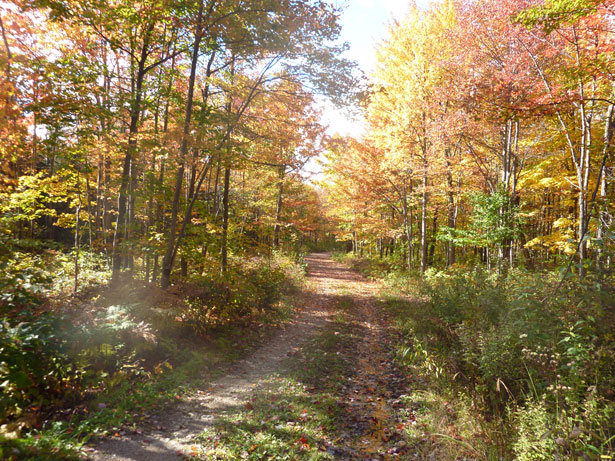
Autumn Landscape Charles Rondeau (publicdomainpictures.net)
Happy Sunday everyone. Summer officially came to an end with the Autumnal Equinox back in September. Some areas, in particular in the American Northeast are seeing the fall colors in full bloom. So much so in some cases that people are traveling long distances to see them in sometimes remote locations, small towns, and often to the distress of locals their own property. A few small towns have decided to limit traffic into their areas due to the large crowds trampling about, causing delays in traffic, and since their are no toilers nearby some choose to relieve themselves in private land.
In most areas signs of Autumn and Halloween are everywhere. Houses are being decorated, pumpkins are being carved, spooky hayrides are taking places, and Haunted Houses are open. That perennial favorite-the Headless Horseman-is supposedly making appearances as well. But appearances of the next holiday season-Christmas-are also being seen. My local grocery store already has the Christmas decorations out and set up displays to merchandise for the holiday. The minute Halloween is over, those items go into the sale bin and replaced. But for the moment we can enjoy the fall even though in some places it is still hot as summer.
October Information
October is the 10th month on the Gregorian and Julian calendars. Under the old Roman calendar this was the eighth month and retained its name. October in the Northern Hemisphere begins the full transition to Autumn while in the Southern Hemisphere it is Spring.
Autumn harvests are underway this month with apples, artichokes, cranberries, pears, and pumpkins becoming widely available in many areas. Pumpkins are important this time of year as decorations and the source for pumpkin pie and delicious roasted pumpkin seeds. Oktoberfest is a major event in Munich, Germany but has spread into Europe, the United States and South America. It began in 1810 to honor a Bavarian royal wedding and now is in many places like a carnival with rides, lots of German themed food and of course beer. Beer of all kinds, especially craft beers find their ways to such events to be judged. Octoberfest usually goes from mid-September to October (it used to end on the first Sunday in October) but it usually goes on later these days. One figure estimates the consumption of beer to be around 1.85 million gallons (7 million liters) of beer. Now that is a lot of beer!
Daylight Savings Time comes to an end in Australia and Europe this month. In the United States, that will occur on the first Sunday in November. Though legislation was passed in the U.S. Senate to change to Daylight Savings Time for the entire year, the House of Representatives did not pass it due to multiple objections. So the United States will remain on using both Standard and Daylight Savings Time.
What used to be a day to prepare for the feast of All Saints Day now has morphed into an event primarily for children to put on masks and ask neighbors for a treat. Haunted House exhibits are open, hayrides through a haunted landscape, and of course scary movies to watch. We get the obligatory Halloween themed commercials and lots of scary themed promos. Many parents opt to have simpler old fashioned celebration with friends and children assembling for food, entertainment, and of course hearing very spooky stories.
Jack O Lantern Petr Kratochvil publicdomainpibtures.net
Why the Jack O Lantern?
When I was a boy, my father carved some impressive jack o lanterns. It was a laborious task for him, and my mother assisted him. It was a family tradition on both sides of the family. More so perhaps on my mother’s side since she was descended from a man who left Ireland to serve in the Union Army during the American Civil War.
In both Ireland and Scotland, the tradition of a carved lantern came about as a way of warding evil spirits from entering the home. Ireland had the tradition of Stingy Jack, a guy who managed to out-hustle the Devil and made a pact with him that he would not take his soul. Unfortunately, Heaven was not thrilled to admit him, being an unsavory creature after all, and that meant he had to walk the earth unable to enter neither Heaven nor Hell. This put him in the same category as the fallen angels doomed to wander the earth as well as demons, which is not great company to be with.
Ireland had turnips, and they were used as jack o’ lanterns as tradition dictated, they be put in the window or an area where it would be seen. Turnips are not easy to carve for this, so it took some skill and real strength (not to mention patience!). Whatever face you put on it-happy, sad, mean etc.-it was enough to tell Jack to just pass the home by. Alas if you did not do this, Jack might decide to pop in and stay for a while. And that was not good since, well, he was not very pleasant about it.
When Irish (and Scots too) came to the United States they found the humble pumpkin. It was a nice sphere and with different sizes too boot. And carving them was much easier than a turnip. You just had to cut it open, pull out the messy insides and voila! Just carve the face and your jack o’ lantern is ready to go for Halloween. As an added bonus, all those seeds could be roasted and with a little salt be made delicious to eat. And everything else you took out could be used as the primary ingredient for pumpkin pie. In other words, the pumpkin had more than one use during Autumn. As the Irish started putting up their lighted pumpkins, others noticed it and started copying the idea. Soon thanks to word of mouth, newspaper reporting, and clever marketing, people were soon buying pumpkins. Pumpkin growers now had a thriving market for these gourds and has remained popular to this day. In many places (like where I live), there is annual pumpkin festival where the largest ones grown are weighed and awarded prizes. Some quip what do you do with such a large pumpkin? Well Willy Wonka had the answer when he was asked if one of the golden eggs his geese laid cracked open. “An omelet fit for a king sir!”
Many people do not carve them anymore and use plastic alternatives. They certainly last longer but lack the spirit of the holiday. Martha Stewart has a clever way to make your carved pumpkin last for many days. You can check it out here.
Halloween Decoration in Fall Vera Kratochvil Publicdomainpictures.net
October 31st is set aside as Halloween. It is not an official holiday (meaning government shuts down, banks closed, and many professional offices closed) but is celebrated nearly as one these days. There are really two separate Halloweens, one is secular and the other religious. The secular one most people easily understand. Kids dress up in silly or scary masks and go to homes asking for candy by yelling “trick or treat” to those who open their doors. Pumpkins have become associated with the day along with all kinds of scary decorations as well. Horror movies get shown during this time. Halloween has a religious meaning to that goes back to how the Catholic Church set the day up.
The original meaning of Halloween was All Hallows Eve that got contracted over time to Halloween. All Hallows Eve is the vigil of All Saints Day, a solemnity (meaning a major feast in the Catholic Church’s liturgical calendar). All Saints Day honors all the saints we know by name and any saint in heaven whose name is unknown to us. Originally this feast was celebrated on 13 May, but Pope Gregory III (731-741 AD) moved it to 1 November as that was the day the foundation of a new chapel (St. Peter’s Basilica) was being laid. He wanted to dedicate the new chapel to All Saints. Halloween then became part of a three-day period called ‘Days of the Dead” which it is the first day of (the vigil), then followed by All Saints and then by All Souls (those in purgatory).
All Souls’ Day by Jakub Schikaneder(1855-1924) National Gallery Prague Public Domain/Wikimedia Commons
During the reign of Pope Gregory IV (827-844 AD), he decided to make the feast of All Saints (just celebrated in Rome at that point) universal meaning all dioceses had to observe it. This meant that people with their own cultures would celebrate in their own ways. Since it was customary to have vigils before a major feast day, there was nothing unusual in this. In celebrating these particular holy days, we are reminded of heaven and hell. It reminds us that we have choices to make in this life that can lead to one of two outcomes: heaven or hell. By striving to live good lives by following God’s teachings, we want to go to heaven rather than the other place.
The roots of Halloween thus are not founded in any pagan celebration (such as Samhain or Druid festivals), and it is just coincidence that it occurs during the same time frame. If you study what those festivals were about, they had nothing to do with Christianity and followed a different belief system. However, some Protestants have made that case (that Halloween was a pagan festival co-opted by the Catholic church for All Saints and All Souls) to deny celebrating those holy days. The Puritans of New England forbade those to be celebrated along with Christmas and Easter. When Catholics from Europe began arriving in America, Protestants denounced such customs (celebrating Halloween, Christmas, and Easter) as pagan.
The English, French and Irish all brought their customs with them. The Irish loved carved Jack-o-Lanterns in turnips (changed to pumpkins since they are easier to carve!). The English had a custom of knocking on doors on Halloween for Soul Cakes and promising to pray for the departed of those who gave them these treats. All of these traditions began to meld here in America becoming the basis of much what is called Halloween today. It was also combined with harvest celebrations as well making it time of fun, spooky tales, bobbing for apples, and enjoying good company. Sadly, All Hallows Eve has been hijacked by those who use it for darker things such as violence, horror, and sexuality. Someone dressing up in sexually explicit garments or glorifying horror is not what Halloween was meant for (either religious or secular).
What has happened is the religious origins of Halloween have been completely overtaken and completely secularized.
That and the over commercialization of Halloween (it is a major marketing season for candy, apparel, haunted houses, and scary movies) has caused many faithful and concerned parents to shun those events and do things differently. That is why you are seeing more family friendly Halloween events and parties where those elements are not present. And doing some prayer in preparation for the feast of All Saints as well. Watching vulgar movies that glorify evil are avoided for ones that show good over evil or just plain fun (like the original Ghostbusters, the Good Witch movies). And telling some excellent ghost stories can also be fun as well.
Suggested Reading
Rossetti, Steven J. 2021. Diary of an American Exorcist: Demons, Possession, and the Modern-Day Battle against Ancient Evil. Manchester, NH: Sophia Institute Press.
Van Den Aardweg, Gerard JM. 2009. Hungry Souls: Supernatural Visits, Messages, and Warnings from Purgatory. Charlotte NC: Tan Books.
Baker, Robert A and Nickell, Joe. Missing Pieces: How to Investigate Ghosts, UFO’s Psychics, & Other Mysteries. 1992. Amherst, NY: Prometheus Books
Thigpen, Paul. 2019. Saints and Hell, and Other Catholic Witnesses to the Fate of the Damned. Charlotte NC: Tan Books.


.jpg)
.jpg)