
Tag Archives: Midsummer

Welcome to June

June calendar from the Très Riches Heures du Duc de Berry
From Très Riches Heures du duc de Berry Folio 6, verso: June
Between 1412 and 1416, circa 1440 or between 1485 and 1486
Public Domain via Wikimedia Commons

June is the 6th month and one of four months with only 30 days. June is named for the Roman goddess Juno.  Juno was high on the pantheon of Roman gods; one of three original gods of Rome. She was the goddess of marriage, fidelity, childbirth, and youth. She was similar but also different in certain aspects than her Greek counterpart Hera.  June heralds the start of summer with the Summer Solstice in the Northern Hemisphere (and the Winter Solstice in the Southern Hemisphere).  Days are longer and warmer making it good for growing crops and for kids, long days of play now that school is out.

Midsummer is celebrated near the Summer Solstice (21-22) or on St. John’s Day on 24 June in Denmark, Finland, Norway, Sweden, Estonia, Latvia, and Lithuania. Father’s Day is celebrated globally but on different days (the U.S. on the 3rd Sunday in June). Juneteenth, a U.S. federal holiday to celebrate the reading of Emancipation Proclamation read in Galveston, Texas, freeing enslaved people on 19 June.

Midsummer bonfire in Norway, 23 June 2014
Photo: Kora27 via Wikimedia Commons

June is a popular month for marriages and festivities, continuing a tradition that comes from the Romans who thought marrying in June was lucky. While summer does not begin astronomically until the solstice, meteorologists use June 1 as the start of the season. The U.S. Hurricane Season also begins on June 1st as well. The birthstones are pearl, alexandrite, and moonstone, with rose and honeysuckle as the flowers.

For Further Information


Welcome to June

June calendar from the Très Riches Heures du Duc de Berry
From Très Riches Heures du duc de Berry Folio 6, verso: June
Between 1412 and 1416, circa 1440 or between 1485 and 1486
Public Domain via Wikimedia Commons


Welcome to June! June is the 6th month on the Gregorian and Julian calendars and is one of four months with 30 days long. It marks the beginning of summer in the Northern Hemisphere and winter in the Southern Hemisphere. The Summer Solstice takes place between June 20-22 and is the longest day of the year. June comes from the Latin Iunius, possibly named for the goddess Juno, and on the old Roman calendar was the fourth month of the year.

Midsummer is celebrated on either the Summer Solstice or St. John’s Day (24 June) in Denmark, Finland, Norway, Sweden, Estonia, Latvia, and Lithuania. Father’s Day is observed globally but with varying dates. The U.S. observes it on the 3rd Sunday in June. Juneteenth, a U.S. federal holiday on June 19, commemorates the Emancipation Proclamation read in Galveston, Texas, freeing enslaved people.

June is popular for weddings and celebrations, a tradition that comes from Roman times when marrying in June was considered lucky. The birthstones are pearl, alexandrite, and moonstone, with rose and honeysuckle as the flowers. Though summer officially begins at the solstice, it is considered to start at the beginning of June for commercial and agricultural purposes

For More Information

Welcome to June

June calendar from the Très Riches Heures du Duc de Berry
From Très Riches Heures du duc de Berry Folio 6, verso: June
Between 1412 and 1416, circa 1440 or between 1485 and 1486
Public Domain via Wikimedia Commons

June is the sixth month on both the Gregorian and Julian calendars.  June is one four months to be only 30 days long. June marks the beginning of summer in the Northern Hemisphere (and the reverse below the equator.) The Summer Solstice usually occurs between the 20-22 of the month and is the longest day of the year. June gets its name from the Latin Iunius, which was used on the old Roman calendar (which June was the fourth month since March used to be the first month) and believed to be named for the Roman god Juno. Juno was the wife and sister of Jupiter (the Roman version of Zeus, king of the gods). Juno was the protector of the nation and watched over women. She was also associated with youth.

Midsummer is celebrated in June on the summer solstice or St. John’s Day on 24 June. It is mainly celebrated in Denmark, Finland, Norway, and Sweden but the Baltic countries of Estonia, Latvia, and Lithuania celebrate it as well.  Father’s Day is celebrated around the world in June but not on the same date. 19 June is Juneteenth, a federal holiday  in the United States, which commemorates the Emancipation Proclamation read aloud in Galveston, Texas. This freed the enslaved people in the state that had been outside of Union Army control.
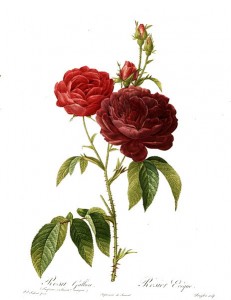
Rose is the June Flower.
Les Roses by Pierre-Joseph Redouté (1759-1840)
Photo:Public Domain (US Library of Congress: lccn.loc.gov/50049695)

It is a month of celebrations and weddings are very popular during this month. During Roman times getting married during the month of June was considered lucky and has become traditional since then as the month for preferred weddings. The June symbols are pearl, alexandrite and moonstone for the birthstones, with the rose and honeysuckle for the flowers. Although officially summer does not begin until the solstice, for commercial and agricultural purposes summer begins when the month begins.

Sources

“The Month of June 2024: Holidays, Fun Facts, Folklore.” Almanac.com, 29 May 2024, www.almanac.com/content/month-june-holidays-fun-facts-folklore.

The Month of June. www.timeanddate.com/calendar/months/june.html.

—. June – Wikipedia. 2 June 2024, en.wikipedia.org/wiki/June.