All Souls’ Day by Jakub Schikaneder(1855-1924) National Gallery Prague Public Domain/Wikimedia Commons
All Souls’ Day is to commemorate the faithful dead and is celebrated by special mass by Catholics and some Christian denominations (most Protestant churches do not observe it). Catholics believe there are three places souls will go: heaven, purgatory, or hell. Purgatory is the place many souls end up as they have lesser sins and are not in a state of grace. Purgatory is an essential stage where souls are cleansed in preparation to go to heaven. Unlike hell, where the fire is for punishment, purgatory is a place for purification and repose. We pray that the souls of our loved ones, friends, and others will be allowed to leave and enter heaven on this day. We especially pray for those who have no one to pray for them.
Day of The Dead by William Bouguereau (1825-1905) Public Domain (Wikimedia Commons)
All Souls Day is not to be confused with Día de Muertos (Day of the Dead) which does remember friends and family who have died but is not a Catholic or Christian religious event (though it takes place from 31 Oct through 2 Nov which coincides with Halloween, All Saints’ and All Souls’ Day).
Titanic News Channel is a participant in the Amazon Services LLC Associates Program, an affiliate advertising program designed to provide a means for sites to earn advertising fees by advertising and linking to Amazon.com.
The Forerunners of Christ with Saints and Martyrs (about 1423-24) Fra Angelico (circa 1395–1455) Public Domain via Wikimedia Commons
All Saints’ Day (Solemnity of All Saints, All Hallows, Hallowmas or All Saints’)is celebrated on 1 November by most Western Christians and is to honor all saints known and unknown. In some Catholic countries, it is a holiday. It is a holy day of obligation for most Catholics except when it falls on a Saturday or Monday. In that case it is celebrated on Sunday. Eastern Orthodox is celebrated on the first Sunday after Pentecost and is called All Saints’ Sunday.
Pope Boniface IV formally started All Saints’ Day on May 13, 609 AD. He also established All Souls’ Day to follow All Saints Day. Pope Gregory III (731-741 AD) moved it to 1 November as that was the day the foundation of a new chapel (St. Peter’s Basilica) was being laid. He wanted to dedicate the new chapel to All Saints. Halloween then became part of a three-day period called ‘Days of the Dead” which it is the first day of (the vigil), then followed by All Saints and then by All Souls (those in purgatory). During the reign of Pope Gregory IV (82y-844 AD), he decided to make the feast of All Saints (just celebrated in Rome at that point) universal meaning all dioceses had to observe it.
All Saints Day is a public holiday in Ireland where all schools, businesses and government are closed.
For More Information
“All Saints’ Day | Definition, History, Catholic, Holy Day of Obligation, Observances, & Facts,” Encyclopedia Britannica, last modified October 28, 2025, accessed October 29, 2025, https://www.britannica.com/topic/All-Saints-Day.
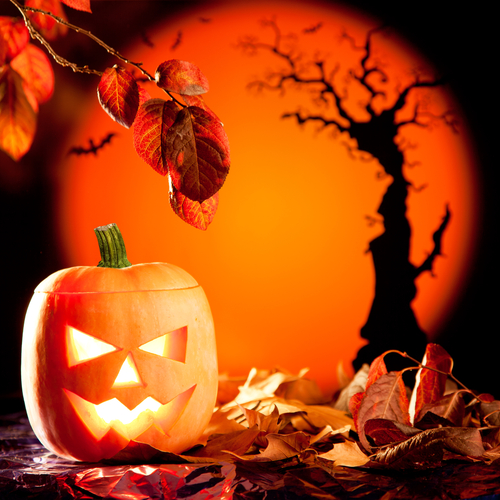
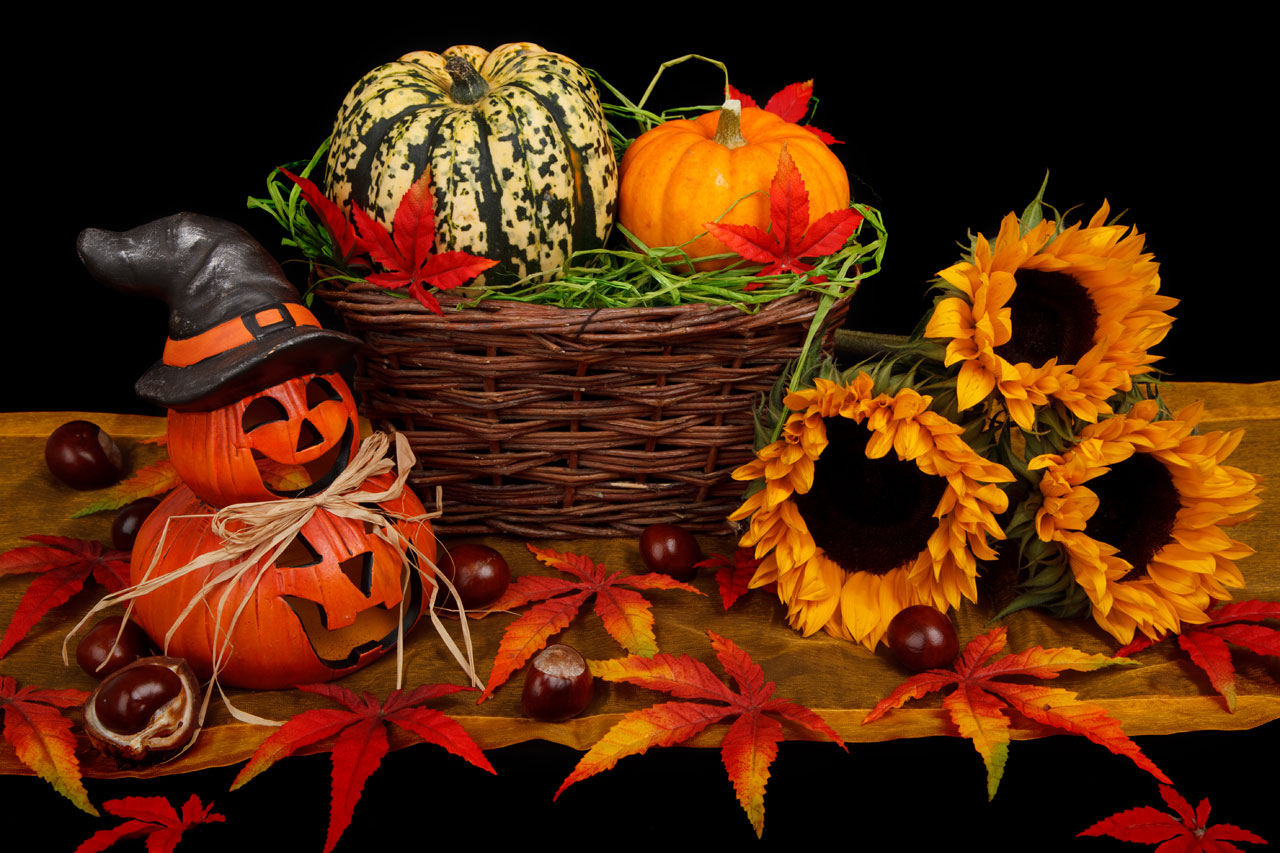
Halloween Decoration in Fall Vera Kratochvil Publicdomainpictures.net
October 31st is set aside as Halloween. It is not an official holiday (meaning government shuts down, banks closed, and many professional offices closed) but is celebrated nearly as one these days. There are really two separate Halloweens, one is secular and the other religious. The secular one most people easily understand. Kids dress up in silly or scary masks and go to homes asking for candy by yelling “trick or treat” to those who open their doors. Pumpkins have become associated with the day along with all kinds of scary decorations as well. Horror movies get shown during this time. Halloween has a religious meaning to that goes back to how the Catholic Church set the day up.
The original meaning of Halloween was All Hallows Eve that got contracted over time to Halloween. All Hallows Eve is the vigil of All Saints Day, a solemnity (meaning a major feast in the Catholic Church’s liturgical calendar). All Saints Day honors all the saints we know by name and any saint in heaven whose name is unknown to us. Originally this feast was celebrated on 13 May, but Pope Gregory III (731-741 AD) moved it to 1 November as that was the day the foundation of a new chapel (St. Peter’s Basilica) was being laid. He wanted to dedicate the new chapel to All Saints. Halloween then became part of a three-day period called ‘Days of the Dead” which it is the first day of (the vigil), then followed by All Saints and then by All Souls (those in purgatory).
During the reign of Pope Gregory IV (827-844 AD), he decided to make the feast of All Saints (just celebrated in Rome at that point) universal meaning all dioceses had to observe it. This meant that people with their own cultures would celebrate in their own ways. Since it was customary to have vigils before a major feast day, there was nothing unusual in this. In celebrating these holy days, we are reminded of heaven and hell. It reminds us that we have choices to make in this life that can lead to one of two outcomes: heaven or hell. By striving to live good lives by following God’s teachings, we want to go to heaven rather than the other place.
All Souls’ Day by Jakub Schikaneder(1855-1924) National Gallery Prague Public Domain/Wikimedia Commons
The roots of Halloween thus are not founded in any pagan celebration (such as Samhain or Druid festivals), and it is just coincidence that it occurs during the same time frame. If you study what those festivals were about, they had nothing to do with Christianity and followed a different belief system. Samhain, perhaps the best known, was a harvest festival in Scotland to celebrate the end of the harvest and to prepare for the coming of winter. It was a common belief (and not limited to Scotland, Ireland, or England) that this time of year where the transition from light to dark occurred meant also when evil spirits would abound to cause trouble. So, they would offer them food at their tables for these invisible guests. Mischief Night grew out of this as well where you would do pranks on your neighbors.
Jack O Lantern Petr Kratochvil publicdomainpibtures.net
Communal eating during this time meant lots of shared foods given out. The Scottish Halloween Cake was popular was hidden inside was a special prize of three trinkets. Later others celebrating All Souls Day would hand out pastries to those who came to console them on family who had passed away and that to would also add to the idea of handing out food during this time. Many wore masks to cover their faces so evil spirits would not see them. As the celebration of Samhain and others like it faded with the conversion to Christianity, some of the old rituals of having harvest festivals, wearing masks, and asking for food would continue. Creating lanterns too out of turnips and other things would continue. The Irish tradition of the Jack O’ Lantern was imported to the US and, thanks to the wonderful availability of pumpkins (and easier to carve than turnips) became a symbol for Halloween that many adopted as well.
Protestants had a different take on Halloween and All Saints’ and All Souls’ Day. The argument (and there are several different ones, but this is the most basic) is that the Catholic church merely took over these pagan festivals and incorporated them into the church by renaming them. More zealous Protestant denominations like the Puritans banned Halloween (along with Christmas and Easter) saying they were pagan. In places where such views were strongly held (such as in the northeast of the U.S. or in England when the Puritans were in charge), it had the full power of the state to impose the restrictions. As time went out, and without many Catholics around to push back (in countries like England they were forbidden to practice and adherents who failed to submit to the new Protestant order imprisoned or executed), this became a dominant view of what Halloween was.
What the Protestants didn’t count on was the many peoples who celebrated Halloween and other holy days emigrated to America and settled outside where they had direct control (New England). The old English and Scottish custom of knocking on doors for Soul Cakes and promising to pray for the departed resumed along with wearing costumes. Likewise, the old customs of holding harvest festivals where people would gather, eat food, and share stories of old would resurrect. Kids would bob for apples, there would be spooky tales told, but most of all it was just a fun time. Halloween, far from being made extinct by like the Puritans, came back. And when the Puritans and those that shared their views fell out of favor and power in England, it came back (though sadly some traditions would remain more secular as a result).
What happened is the religious origins of Halloween have been completely overtaken and completely secularized.
Halloween then became a time of festivity, trick or treating, and putting on funny or sometimes scary outfits. The idea of Halloween parades would come about because of trying to curtail some of them more unpleasant sides of Halloween, namely Mischief Night pranks that sometimes got out of hand. Using toilet paper to cover trees, eggs to pelt cars and people, and sometimes more dangerous ones (like a flaming bag of dog poop on a porch) led to the creation of more ways to channel that energy.
Halloween candy, once a small, became national as did pumpkins. No longer were pumpkins just for pumpkin pie but many wanted them for decoration as well. And competition would emerge as to who could grow the biggest one of all. And of course, the selling of costumes and holiday decorations would explode as well. From costumes to candy, pumpkins to Halloween cakes, Halloween became an unofficial but nationally practice holiday that included kids as well as adults. And let us not forget the various Haunted Houses, haunted hayrides, and people decorating their houses in a wide variety of decorations.
There is a darker side to Halloween practiced by those who want to glorify violence, horror, and sexuality. Some use the time to dabble in such things as fortune telling, seances, using Ouija boards, or even ghost hunting. All those things most pagans wanted to avoid during their ancient festivals during this time. At best they wanted to placate spirits and avoid the evil ones as much as they could. Yet now many decide to do these things thinking they are harmless, but many find out it is not at all like they thought it would be. This is why people now are trying to reclaim Halloween to make it less dark and more family-friendly rather than just people dressed up as zombies or worse dressed up in some sexually explicit costumes.
Today you see more families doing more things together such as going to haunted hayrides or holding Halloween parties where kids can get treats and have fun as well. During Covid lockdowns, such celebrations were limited but coming back as is trick or treating. Many though are opting to also take the time to revisit what the original Halloween was all about. This is perhaps a natural outgrowth of the overhyping and commercialism of Halloween. The higher costs of many items such as candy as made people revisit some classics from the past such as popcorn, roasted pumpkin seeds, baking cookies, and even making your own candy. It is not as hard as you might think.
While the original meaning of Halloween has been secularized for a long time (like Christmas was before it got its resurgence in the 19th century), it is starting to move away from some of the more excessive parts. And for some, the day does include just a few prayers for the Days of the Dead that are to come.
Titanic News Channel is a participant in the Amazon Services LLC Associates Program, an affiliate advertising program designed to provide a means for sites to earn advertising fees by advertising and linking to Amazon.com.
October, meaning eight in Latin, is the 10th month in Julian and Gregorian calendars. Originally it was the eighth month under the old Roman calendar and retains its name. The month begins the full transition to autumn in the Northern Hemisphere but spring in the Southern Hemisphere.
Harvests are underway in October, and seasonal produce appears in the grocery stores. Apples, artichokes, cranberries, pears, and pumpkins are part of this season along with others as well. Autumn festivals are starting to appear as well to celebrate the harvest. A major Autumn festival is Oktoberfest, an annual event that began in 1810 in Munich, Germany. Originally a royal marriage event, it has blossomed into a two-week festival the showcases agriculture, fun games and entertainment lots of food, and of course beer. Lots of beer. The Munich festival, which every major beer brewer in Munich participates, sees over 2 million gallons consumed. When Germans migrated to other countries, the festival came with them, and many cities now have the event.
Another rite of October is pumpkin carving. Back in Ireland, turnips were carved and a candle lit nearby to keep a rather disreputable wandering spirit named Stingy Jack from entering their homes. When the Irish migrated to America, they discovered a unique squash called pumpkin that was much easier to carve. Already useful for pumpkin pie and roasted pumpkin seeds, they started carving their Jack O’ Lanterns and placing them out for people to see. Others liked it and to the delight of pumpkin growers, people wanted more pumpkins to do their own versions. Now it has become its own unique American seasonal hobby to carve the most interesting or scary pumpkin face. Many festivals feature pumpkin carving contests. And today there are serious competitions each year. A related one, but without carving, is the growing of the largest pumpkin. Each year growers try to make a few reach that gargantuan size that will beat the previous year. Half Moon Bay in California is one such place where it takes place annually.
October, of course, is the countdown to All Hallow’s Eve or just Halloween. A time for kids to trick or treat, for parents to fret about all the candy they need to hand out, and of course to watch scary movies. Costumes vary from the simple to the very creative. Thoughtful parents get together and have an event together so that kids can have some fun, eat some creepy looking candy suited for the occasion and hear ghost stores when the lights are turned low. Perhaps that sound of a horse approaching outside is the Headless Horseman!
At any rate, welcome to October and may it be fun for you!
All Souls’ Day by Jakub Schikaneder(1855-1924) National Gallery Prague Public Domain/Wikimedia Commons
All Souls’ Day is to commemorate the faithful dead and is celebrated by special mass by Catholics and some Christian denominations (most Protestant churches do not observe it). Catholics believe there are three places souls will go: heaven, purgatory, or hell. Purgatory is the place many souls end up as they have lesser sins and are not in a state of grace. Purgatory is an essential stage where souls are cleansed in preparation to go to heaven. Unlike hell, where the fire is for punishment, purgatory is a place for purification and repose. We pray that the souls of our loved ones, friends, and others will be allowed to leave and enter heaven on this day. We especially pray for those who have no one to pray for them.
Day of The Dead by William Bouguereau (1825-1905) Public Domain (Wikimedia Commons)
All Souls Day is not to be confused with Día de Muertos (Day of the Dead) which does remember friends and family who have died but is not a Catholic or Christian religious event (though it takes place from 31 Oct through 2 Nov which coincides with Halloween, All Saints’ and All Souls’ Day).
Titanic News Channel is a participant in the Amazon Services LLC Associates Program, an affiliate advertising program designed to provide a means for sites to earn advertising fees by advertising and linking to Amazon.com.
The Forerunners of Christ with Saints and Martyrs (about 1423-24) Fra Angelico (circa 1395–1455) Public Domain via Wikimedia Commons
All Saints’ Day (Solemnity of All Saints, All Hallows, Hallowmas or All Saints’)is celebrated on 1 November by most Western Christians and is to honor all saints known and unknown. In some Catholic countries, it is a holiday. It is a holy day of obligation for most Catholics except when it falls on a Saturday or Monday. In that case it is celebrated on Sunday. Eastern Orthodox is celebrated on the first Sunday after Pentecost and is called All Saints’ Sunday.
Pope Boniface IV formally started All Saints’ Day on May 13, 609 AD. He also established All Souls’ Day to follow All Saints Day. Pope Gregory III (731-741 AD) moved it to 1 November as that was the day the foundation of a new chapel (St. Peter’s Basilica) was being laid. He wanted to dedicate the new chapel to All Saints. Halloween then became part of a three-day period called ‘Days of the Dead” which it is the first day of (the vigil), then followed by All Saints and then by All Souls (those in purgatory). During the reign of Pope Gregory IV (82y-844 AD), he decided to make the feast of All Saints (just celebrated in Rome at that point) universal meaning all dioceses had to observe it.
All Saints Day is a public holiday in Ireland where all schools, businesses and government are closed.
For More Information
The Editors of Encyclopaedia Britannica. “All Saints’ Day | Definition, History, & Facts.” Encyclopedia Britannica. Last modified July 20, 1998. https://www.britannica.com/topic/All-Saints-Day.
Halloween Decoration in Fall Vera Kratochvil Publicdomainpictures.net
October 31st is set aside as Halloween. It is not an official holiday (meaning government shuts down, banks closed, and many professional offices closed) but is celebrated nearly as one these days. There are really two separate Halloweens, one is secular and the other religious. The secular one most people easily understand. Kids dress up in silly or scary masks and go to homes asking for candy by yelling “trick or treat” to those who open their doors. Pumpkins have become associated with the day along with all kinds of scary decorations as well. Horror movies get shown during this time. Halloween has a religious meaning to that goes back to how the Catholic Church set the day up.
The original meaning of Halloween was All Hallows Eve that got contracted over time to Halloween. All Hallows Eve is the vigil of All Saints Day, a solemnity (meaning a major feast in the Catholic Church’s liturgical calendar). All Saints Day honors all the saints we know by name and any saint in heaven whose name is unknown to us. Originally this feast was celebrated on 13 May, but Pope Gregory III (731-741 AD) moved it to 1 November as that was the day the foundation of a new chapel (St. Peter’s Basilica) was being laid. He wanted to dedicate the new chapel to All Saints. Halloween then became part of a three-day period called ‘Days of the Dead” which it is the first day of (the vigil), then followed by All Saints and then by All Souls (those in purgatory).
All Souls’ Day by Jakub Schikaneder(1855-1924) National Gallery Prague Public Domain/Wikimedia Commons
During the reign of Pope Gregory IV (827-844 AD), he decided to make the feast of All Saints (just celebrated in Rome at that point) universal meaning all dioceses had to observe it. This meant that people with their own cultures would celebrate in their own ways. Since it was customary to have vigils before a major feast day, there was nothing unusual in this. In celebrating these particular holy days, we are reminded of heaven and hell. It reminds us that we have choices to make in this life that can lead to one of two outcomes: heaven or hell. By striving to live good lives by following God’s teachings, we want to go to heaven rather than the other place.
The roots of Halloween thus are not founded in any pagan celebration (such as Samhain or Druid festivals), and it is just coincidence that it occurs during the same time frame. If you study what those festivals were about, they had nothing to do with Christianity and followed a different belief system. Samhain, perhaps the best known, was a harvest festival in Scotland to celebrate the end of the harvest and to prepare for the coming of winter. It was a common belief (and not limited to Scotland, Ireland, or England) that this particular time of year where the transition from light to dark occurred meant also when evil spirits would abound to cause trouble. So they would offer them food at their tables for these invisible guests. Mischief Night grew out of this as well where you would do pranks on your neighbors.
Communal eating during this time meant lots of shared foods given out. The Scottish Halloween Cake was popular was hidden inside was a special prize of three trinkets. Later others celebrating All Souls Day would hand out pastries to those who came to console them on family who had passed away and that to would also add to the idea of handing out food during this time. Many wore masks to cover their faces so evil spirits would not see them. As the celebration of Samhain and others like it faded with the conversion to Christianity, some of the old rituals of having harvest festivals, wearing masks, and asking for food would continue. Creating lanterns too out of turnips and other things would continue. The Irish tradition of the Jack O’ Lantern was imported to the US and, thanks to the wonderful availability of pumpkins (and easier to carve than turnips) became a symbol for Halloween that many adopted as well.
Protestants had a different take on Halloween and All Saint’s and All Soul’s Day. The argument (and there are several different ones, but this is the most basic) is that the Catholic church merely taken over these pagan festivals and incorporated them into the church by renaming them. More zealous Protestant denominations like the Puritans banned Halloween (along with Christmas and Easter) saying they were pagan. In places where such views were strongly held (such as in the northeast of the U.S. or in England when the Puritans were in charge), it had the full power of the state to impose the restrictions. As time went out, and without many Catholics around to push back (in countries like England they were forbidden to practice and adherents who failed to submit to the new Protestant order imprisoned or executed), this became a dominant view of what Halloween was.
The religious origins of Halloween were overtaken and completely secularized as a result.
What the Protestants who hated Halloween didn’t count on was the many peoples who still practiced forms of Halloween immigrating to the U.S. While they had strict controls in New England, many simply landed in other areas where it was allowed and even embraced. The old English and Scottish custom of knocking on doors for Soul Cakes and promising to pray for the departed resumed along with wearing costumes. Likewise, the old customs of holding harvest festivals where people would gather, eat food, and share stories of old would resurrect. Kids would bob for apples, there would be spooky tales told, but most of all it was just a fun time. Halloween, far from being made extinct by like the Puritans, came back. And when the Puritans and those that shared their views fell out of favor and power in England, it came back (though sadly some traditions would remain more secular as a result).
Halloween then became a time of festivity, trick or treating, and putting on funny or sometimes scary outfits. The idea of Halloween parades would come about as a result of trying to curtail some of them more unpleasant sides of Halloween, namely Mischief Night pranks that sometimes got out of hand. Using toilet paper to cover trees, eggs to pelt cars and people, and sometimes more dangerous ones (like a flaming bag of dog poop on a porch) led to the creation of more ways to channel that energy.
Halloween candy, once a small, became national as did pumpkins. No longer were pumpkins just for pumpkin pie but many wanted them for decoration as well. And competition would emerge as to who could grow the biggest one of all. And of course, the selling of costumes and holiday decorations would explode as well. From costumes to candy, pumpkins to Halloween cakes, Halloween became an unofficial but nationally practice holiday that included kids as well as adults. And let us not forget the various Haunted Houses, haunted hayrides, and people decorating their houses in a wide variety of decorations that no doubt future people will ask “what the heck?”
There is a darker side to Halloween practiced by those who want to glorify violence, horror, and sexuality. Some use the time to dabble in such things as fortune telling, seances, using Ouija boards, or even ghost hunting. All of those things most pagans wanted to avoid during their ancient festivals during this time. At best they wanted to placate spirits and avoid the evil ones as much as they could. Yet now many decide to do these things thinking they are harmless, but many find out it is not at all like they thought it would be. This is why people now are trying to reclaim Halloween to make it less dark and more family-friendly rather than just people dressed up as zombies or worse dressed up in some sexually explicit costumes.
Today you see more families doing more things together such as going to haunted hayrides or holding Halloween parties where kids can get treats and have fun as well. During Covid lockdowns, such celebrations were limited but coming back as is trick or treating. Many though are opting to also take the time to revisit what the original Halloween was all about. This is perhaps a natural outgrowth of the overhyping and commercialism of Halloween. The higher costs of many items such as candy as made people revisit some classics from the past such as popcorn, roasted pumpkin seeds, baking cookies, and even making your own candy. It is not as hard as you might think.
While the original meaning of Halloween has been secularized for a long time (like Christmas was before it got its resurgence in the 19th century), it is starting to move away from some of the more excessive parts. And for some, the day does include just a few prayers for the two days of the dead that are to come.
Titanic News Channel is a participant in the Amazon Services LLC Associates Program, an affiliate advertising program designed to provide a means for sites to earn advertising fees by advertising and linking to Amazon.com.
Halloween Decoration in Fall Vera Kratochvil Publicdomainpictures.net
October is the 10th month on the Gregorian and Julian calendars. Under the old Roman calendar this was the eighth month and retained its name. October in the Northern Hemisphere begins the full transition to Autumn while in the Southern Hemisphere it is Spring.
Jack-o-lantern Pumpkins Glowing in the Dark Petr Kratochvil, publicdomainpictures.net
Autumn harvests are underway this month with apples, artichokes, cranberries, pears, and pumpkins becoming widely available in many areas. Pumpkins are important this time of year as decorations and the source for pumpkin pie and delicious roasted pumpkin seeds. In Ireland they used to use turnips to keep old Stingy Jack from entering their homes this time of the year. Carving them into menacing faces and with a candle near them, it would send old Stingy Jack (and any other ghost) away! When the Irish came to America, they found the pumpkin. Unlike a turnip, which is not so easy to carve, the pumpkin was much easier to use. And you could put a candle inside it was well. Soon this tradition, and many others they brought with them, would end up becoming a major Halloween icon in the United States.
October also brings with it Oktoberfest, a major event in Munich, Germany that spread into Europe, the United States and South America. It began in 1810 to honor a Bavarian royal wedding and now is in many places like a carnival with rides, lots of German themed food and of course beer. Beer of all kinds, especially craft beers find their ways to such events to be judged. Octoberfest usually goes from mid-September to October (it used to end on the first Sunday in October) but it usually goes on later these days. One figure estimates the consumption of beer to be around 1.85 million gallons (7 million liters) of beer. Now that is a lot of beer!
The first full moon of October is often called Hunter’s Moon. For 2024, it will be a super moon. During October the Moon orbits closer to Earth than any other time of the year. In the years when it is a super moon, it will look bigger and brighter than usual. And near sunset, it can appear larger and more orange. It certainly is important for this time of year when, according to some beliefs, the walls separating dimensions seems to thin allowing for ghosts and other things to be seen. In Ray Bradbury’s Something Wicked This Way Comes, it is this time of year that a traveling carnival appears looking for souls to ensnare.
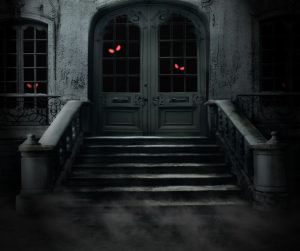
Haunted House JL Field publicdomainpictures.net
Of course, the big event in October is Halloween or more properly All Hallows Eve on October 31. What used to be a day to prepare for the feast of All Saints and All Souls Days now has morphed into an event primarily for children to put on masks and ask neighbors for a treat. Haunted House exhibits are open, hayrides through a haunted landscape, and of course scary movies to watch. We get the obligatory Halloween themed commercials and lots of scary themed promos. Many parents opt to have simpler old-fashioned celebration with friends and children assembling for food, entertainment, and of course hearing very spooky stories.

_-_The_Day_of_the_Dead_(1859).jpg)