Tag Archives: Greece

Remembering the Victims of MS Express Samina (26 Sep 2000)

On September 26, 2000, the MS Express Samina struck the Portes Islets rocks in the Parikia Bay near Paros Island, Aegean Sea resulting in 81 dead. This preventable disaster, due to poor judgment and complacency shocked Greece.

Express Samina in Piraeus in July 2000
Peter J. Fitzpatrick via Wikimedia Commons


The French-built MS Express Samina launched in 1966 had several names and owners. Initially MS Corse (1966-1982), then Golden Verginia (1982-1999), it was renamed MS Express Samina by her last owner Minoan Flying Dolphins. A RoPax ferry for both cars and passengers, it was ideal for Greek island routes. On Tuesday September 26, 2000, it left the Port of Piraeus, Greece bound for the islands of Paros, Naxos, Ikaria, Samos, Patmos and Lipsi in the Aegean Sea. She had 473 passengers and 61 crew members aboard.

At 10 p.m., the Express Samina approached Parikia, the port on Paros Island. Winds measured 8 on the Beaufort scale, indicating near gale-force conditions. The ship was on autopilot, but a required crew member was not on watch. Equipped with fin stabilizers to minimize motion, the ship could handle these conditions, but the port stabilizer was malfunctioning. This caused the ship to drift off course. A crew member arrived on the bridge but too late to correct it

At 10:22 p.m., the Samina struck the Portes islets reef, two miles from Parikia, traveling at 18 knots or 20 mph. It tore a six-foot-long, three-foot-high hole above the waterline. A stabilizer fin bent backward by the impact tore into the ship below the waterline near the engine room. The water disabled the main generators, cutting off electrical power. The open compartment doors unable to be closed remotely allowed water to spread into the ship. The sudden collision surprised passengers and crew. No emergency siren or announcement was made. Panic erupted. Due to the ship tilt, only three lifeboats launched. Crew failed to aid passengers leaving them to fend for themselves. The emergency generator failed leaving the ship in darkness. Many jumped into the stormy water. Some clung to each other or safety devices they managed to obtain.

No emergency distress call was made. A flare was fired which got attention in port. Nearby fishermen were alerted as well, initiating rescue operations. Tour vessels and ships from a NATO exercise also assisted. Darkness made finding survivors difficult and many floating in the water complicated the situation. Ships moved cautiously to avoid injuring survivors. Strong waves made reaching some impossible. Survivors were brought ashore and taken to the local medical facility. Bodies of those recovered were taken to a local Orthodox church which served as a temporary morgue. Some awoke the next day to learn family members with them had perished in the sinking.

News of the sinking shocked Greece. This was a well-traveled route, so it raised questions as to how it happened.

A report issued a year later answered those questions. There were seven principal reasons for the sinking. First, there was not a continuous watch on the bridge especially on autopilot. When a person arrived, it was too late to correct the situation. Second, the watertight compartment doors where routinely left unsealed by crew in violation of safety rules. Neither the captain nor other ship officers enforced it. Third, the engine room crew failed to notify the captain immediately about the water coming in. They also failed to close the compartment doors in their area to prevent flooding the ship. Fourth, there was no alarm sounded to evacuate, nor did the crew assist the passengers.  Fifth, the life buoys were not all correctly marked and missing the required safety whistles. Sixth, the ship never sent out a distress call hampering rescue operations not knowing the exact location of the sinking. Seventh, the emergency generator ceased operation as the ship was sinking causing total darkness.

Greece enacted new regulations, imposed stricter inspection schedules, and pushed ship owners to either retire their old ferries or upgrade them with new safety equipment. All ferries now have Voyage Data Recorders to monitor ship operations. Legal action was taken against several ship officers and crew including its captain. Several company representatives of Minoan Flying Dolphins also were prosecuted. The charges ranged from manslaughter to negligence. Company president Pantelis Sfinias committed suicide by leaping out of his sixth- floor office distraught over the sinking.

Today the sinking is still remembered by both survivors and rescuers. Two American passengers from Seattle, WA- 26-year-old Heidi Hart and 32-year-old Christine Shannon–would be commended for their heroism. Survivors recount how dark it was and how strong the waves and winds were. Some describe the panic aboard ship and in the water as desperate people tried frantically to keep from drowning. One rescuer recounted how hard it was to carefully maneuver in the water to rescue people, and how saddened he was when a wave swept a mother and a daughter away from him unable to save them. The people of Paros have not forgotten it either as 81 people died on their doorstep.

Sources

Elena Karanatsi, “Survivors of Ferry Wreck Recall a Horrible Night of Terror and Tragedy,” Kathimerini, September 27, 2002, https://www.ekathimerini.com/news/8810/survivors-of-ferry-wreck-recall-a-horrible-night-of-terror-and-tragedy/.

Philip Chrysopoulos, “Tragedy of ‘Samina’ Shipwreck Leaving 81 Dead, Remembered,” GreekReporter.Com, last modified January 25, 2021, accessed September 29, 2025, https://greekreporter.com/2017/09/26/tragedy-of-samina-shipwreck-leaving-81-dead-remembered/.

“Minoan Ferry Sinking Cited as Worst Maritime Disaster in 35 Years,” MarineLink, https://www.marinelink.com/news/maritime-disaster-sinking319709.

Nick Kampouris, “Samina Ferry Disaster Haunts Greece 25 Years Later – GreekReporter.com,” GreekReporter.Com, last modified September 26, 2025, https://greekreporter.com/2025/09/26/samina-ferry-sinking-greece/.

Bill Giannopoulos, “Flashback in Maritime History: Express Samina Greek Ferry Disaster, Claiming 82 Lives, 26 Sept. 2000,” Greek City Times, last modified September 9, 2023, accessed September 29, 2025, https://greekcitytimes.com/2023/09/26/flashback-in-maritime-history-express-samina-greek-ferry-disaster-claiming-82-lives-26-sept-2000/.

Allovergreece, “Wreck MS Express Samina,” Allovergreece.Com, accessed September 29, 2025, https://www.allovergreece.com/Wreck/Descr/36/en.

Wikipedia contributors, “MS Express Samina,” Wikipedia, August 3, 2025, accessed September 29, 2025, https://en.wikipedia.org/wiki/MS_Express_Samina.

Documentaries/Videos

Mayday: Air Disaster, “Nightmare at Sea – Terrifying Collision That Haunted the ’Express Samina’! | Mayday: Air Disaster,” Video, YouTube, December 1, 2023, https://www.youtube.com/watch?v=oFw6rfTXH00.

Britannic To Become Underwater Tourist Attraction?

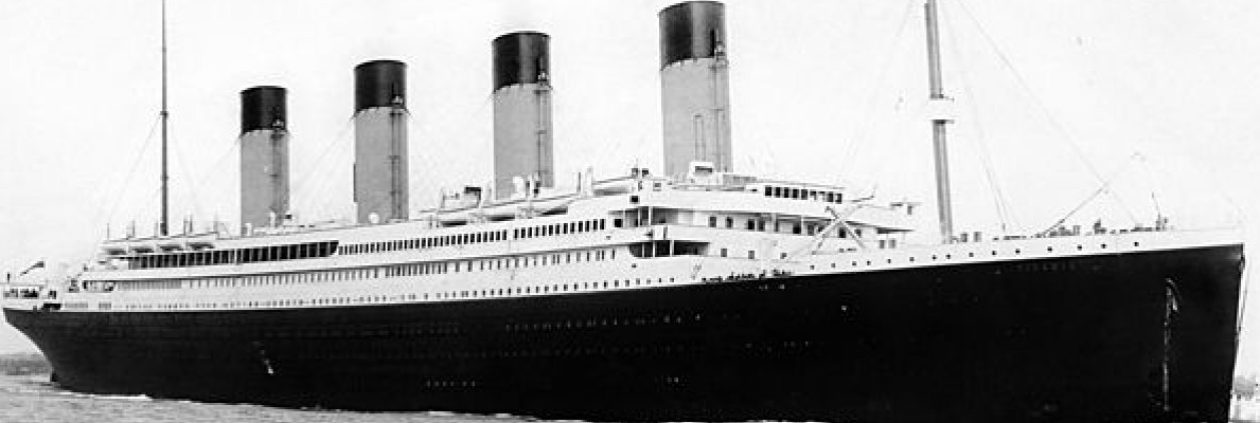
HMHS Britannic seen during World War I. Image:public domain
HMHS Britannic seen during World War I.
Image:public domain

HMHS Britannic, which sank in 1916 off the Greek coast likely by a mine, could become an underwater diving park. It has been declared a war grave and the Greek government has made it difficult to get permits to dive to it even for legitimate research purposes. That appears to have changed. The Greek economy is not doing well and there is a serious effort underway to make it an historical attraction with museum, hotel, and diving school. Unlike Titanic, there is not likely to be any salvage and would be treated as a historical exhibition you can dive to.
Source: Could the wreck of Titanic’s sister ship help save Greece’s sinking economy? (Daily Telegraph,18 Oct 2016)

Additional Information
World War I: HMHS Britannic (militaryhistory.about.com)

Titanic’s Sister Ship HMHS Britannic Was Launched 100 Years Ago Today

HMHS Britannic seen during World War I. Image:public domain
HMHS Britannic seen during World War I.
Image:public domain

HMHS Britannic was the third ship in the Olympic class ocean liner built by White Star Line, and the sister ship of RMS Olympic and RMS Titanic. Due to World War I, she was never used as a transatlantic passenger liner and ended being used as a hospital ship in 1915. On 21 Nov 1916, the ship was sunk likely by an underwater mine off the Greek island of Kea. Of the 1.066 people aboard, 30 lost their lives. Since it sank in shallow waters, the wreck is easily accessible to divers and numerous expeditions have taken place. Although the wreck is in Greek waters, the British have designated it as a war grave and both governments must approve expeditions to the wreck. In 1996 the wreck itself was sold to author Simon Mills whose desire is to leave it as is.

Sources:
1. HMHS Britannic(Wikipedia)
2. Nova Online: Titanic’s Lost Sister